The obsession with last-mile delivery optimization in modern logistics is a distraction. While companies fight over the final three kilometers of a delivery route, the middle mile remains a relic of mid-century aviation. We are currently transporting 21st-century semiconductors and life-saving biologics using jet engines that essentially operate on the same principles as those from the 1950s. Why do we accept a fourteen-hour transit time between Tokyo and London when the physics of the upper atmosphere allow for something radically different?
Sub-orbital freight is not simply a faster airplane; it is a complete departure from atmospheric flight. By accelerating to Mach 20 and exiting the dense layers of the atmosphere, a cargo vehicle avoids the drag that limits conventional jets. At 20,000 kilometers per hour, the earth effectively shrinks. The distance between any two points on the globe becomes a matter of minutes rather than hours or days. This isn't about convenience; it is about the collapse of spatial friction.
The Erosion of Geographic Advantage
For decades, the wealth of nations has been tied to their role as logistics nodes. Cities like Singapore, Dubai, and Memphis grew because they were efficient stops in a hub-and-spoke network. Their value is derived from being the most convenient place to sort and redirect cargo. However, sub-orbital transit is inherently point-to-point. When a vehicle can travel from Nairobi to Sao Paulo in under an hour, the need for a regional sorting hub vanishes. The 'stop' is no longer an asset; it is a delay.
This structural reorganization forces a rethink of industrial real estate. If a critical component can be delivered from a factory in Germany to a production line in Mexico in 40 minutes, the incentive to maintain massive safety stocks in regional warehouses disappears. We are looking at the potential end of the distribution center as a primary asset class. Inventory becomes a flow rather than a hoard, allowing companies to operate with near-zero local stockpiles of high-value parts.
| Metric | Conventional Air Freight | Sub-Orbital Freight |
|---|---|---|
| Average Speed | 900 km/h | 20,000 km/h |
| NY to London Transit | 7 Hours | 35 Minutes |
| Primary Constraint | Atmospheric Drag | Thermal Reentry |
| Inventory Model | Regional Buffering | Just-in-Time Global |
| Cost per kg | Low to Medium | Extreme |
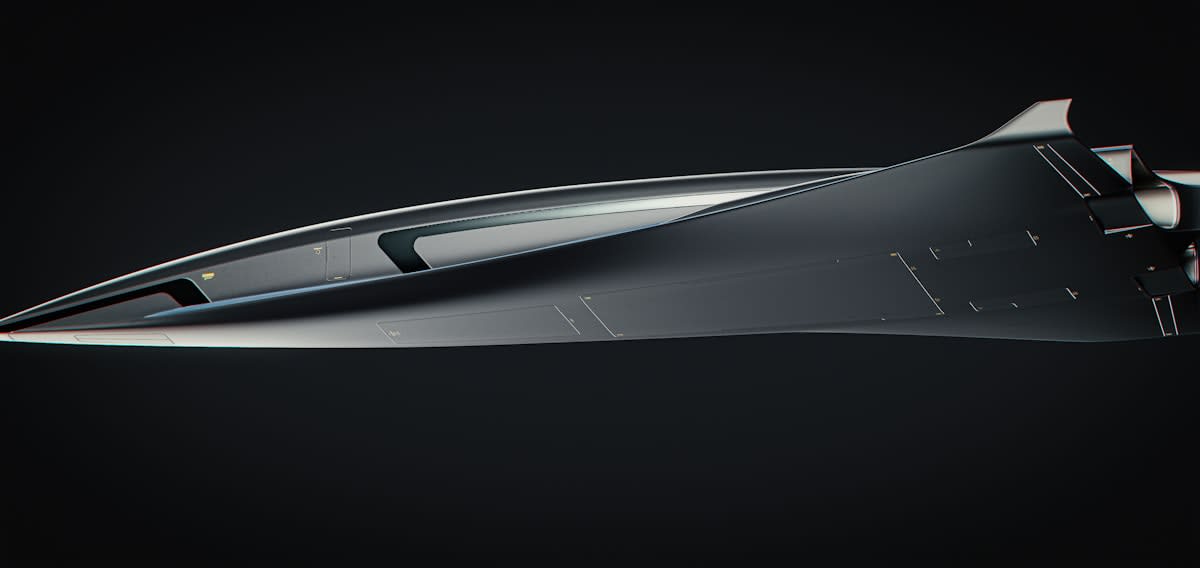
Does this mean the cargo ship is dead? Absolutely not. The physics of cost-per-ton still favor the ocean for bulk commodities like iron ore or grain. But for the top 1% of global trade by value—pharmaceuticals, precision electronics, and emergency aerospace parts—the trade-off changes. The cost of a production line sitting idle for twelve hours often exceeds the extreme cost of a sub-orbital launch. In these instances, speed is not a luxury; it is a hedge against catastrophic downtime.
Consider the cold chain for organ transplants or rare isotopes. Current logistics rely on a frantic series of hand-offs between couriers, ambulances, and planes. A sub-orbital link would replace this fragmented chain with a single, direct trajectory. By eliminating the hand-offs, we reduce the probability of temperature excursions and human error. The biological clock of the cargo finally matches the speed of the transport.
"We are moving from an era of managing distances to an era of managing trajectories. When the transit time is shorter than the customs clearance time, the bottleneck is no longer the engine, but the bureaucracy."— Dr. Aris Thorne, Orbital Logistics Analyst
The regulatory environment, however, remains a chaotic mess. Current airspace is governed by national sovereignty and ICAO standards designed for subsonic flight. A vehicle crossing multiple borders at 5 kilometers per second does not 'enter' airspace in the traditional sense; it skims the edge of space. This creates a legal vacuum. Who owns the trajectory? How do you enforce customs when the cargo arrives before the digital manifest has even been processed by the receiving port?
Moreover, the physical requirements of these ports—spaceports—are vastly different from airports. They require massive exclusion zones for noise and safety, and they must be situated away from densely populated urban centers. This pushes the logistics infrastructure further out, creating a new tension between the speed of the flight and the speed of the ground transport to the final destination. The efficiency gain in the air could be eaten by a slow drive from the spaceport to the city center.
The Physicality of Velocity
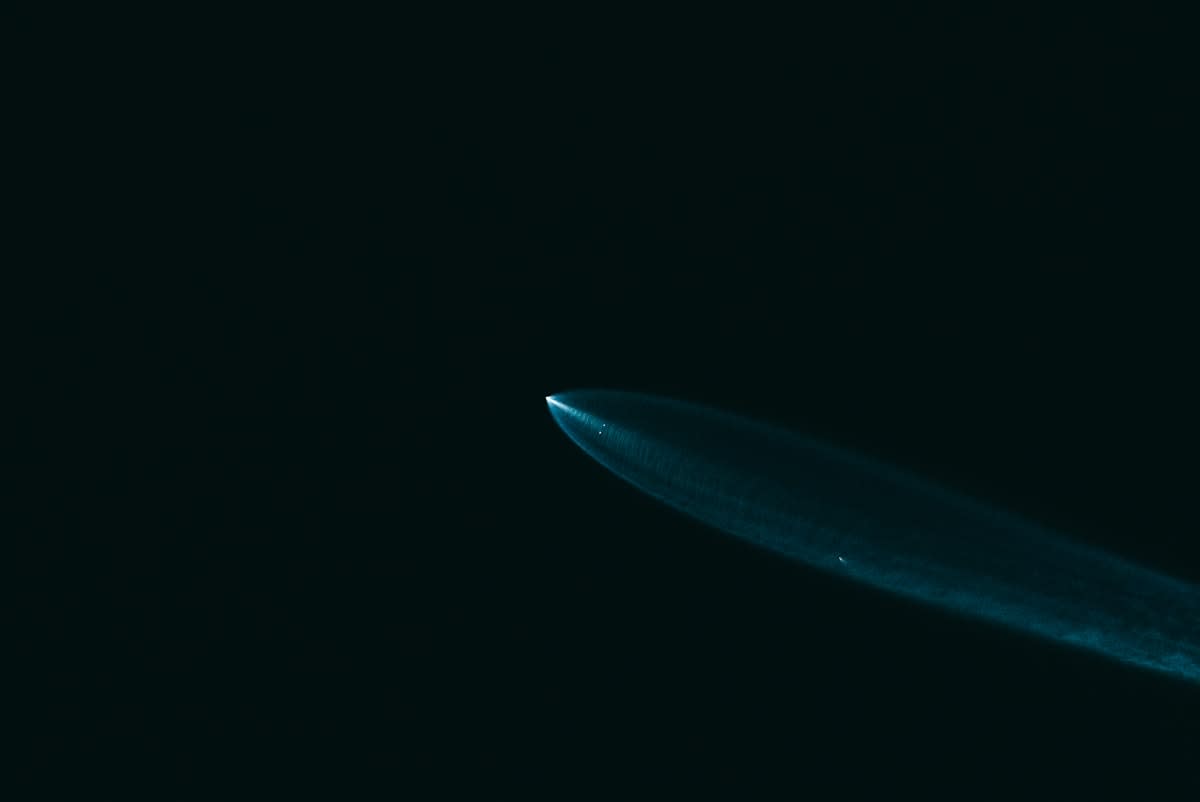
The engineering challenge is not just about getting to Mach 20; it is about surviving the return. Reentry creates plasma shields that block communication and generate heat that would melt standard aerospace alloys. For cargo, this introduces a new variable: structural integrity under extreme thermal and G-load stress. We cannot simply put a pallet of electronics in a rocket; we need specialized containment units that can maintain a stable internal environment while the exterior is glowing white-hot.
This necessitates a new class of 'smart packaging' that is essentially a miniature spacecraft. These containers must be able to withstand 5-8 Gs of acceleration and deceleration without shifting the center of gravity of the vehicle. If a single heavy crate shifts during reentry, the trajectory deviates, and the vehicle becomes a kinetic weapon rather than a freighter. Precision in loading becomes a matter of flight safety, not just organization.
The energy cost is the final hurdle. Launching mass into a sub-orbital trajectory requires an order of magnitude more energy than a standard takeoff. To make this economically viable, the industry must move toward fully reusable first and second stages. The goal is to drive the cost of launch down to a point where the time-savings for a $10 million piece of equipment justify a $100,000 shipping fee. Until reusability is perfected, this remains a niche service for governments and the ultra-wealthy.
The Economic Logic
The Time-Value Equation: If the cost of a factory stoppage is $50,000 per hour and the difference between air freight and sub-orbital freight is 10 hours, the sub-orbital option saves $500,000 in lost productivity, easily absorbing a high launch premium.
Parallel to the technical hurdles is the human element. The role of the freight forwarder changes from a coordinator of schedules to a manager of trajectories. The expertise required shifts from knowing which airline has the best rates to understanding launch windows and orbital mechanics. We are seeing the birth of a new professional class: the orbital logistics controller.
Ultimately, sub-orbital freight creates a two-tier global economy. There will be the slow lane—the ships and trucks that move the bulk of human existence—and the fast lane, where the most critical assets move at the speed of physics. This divide will not just be about money, but about resilience. Nations with spaceport infrastructure will be able to respond to crises in minutes, while others remain tethered to the slow crawl of atmospheric flight.
Will this lead to a total abandonment of regional hubs? Not entirely, but it will strip them of their monopoly on speed. The value will shift from the 'place' to the 'platform'. The winners will not be the cities that happen to be in the middle of a map, but the entities that control the launch and recovery technology. The geography of power is moving from the coastlines to the launchpads.