Walk into any high-end gallery in Mexico City's Roma Norte district right now and you will see it. The polished, hyper-real digital canvases are relegated to the periphery, treated like lobby art for a tech firm. In the center, the money is flowing toward heavy, textured lithographs with visible ink bleeds and charcoal sketches where the artist clearly fought the paper. The aesthetic isn't the point. The friction is. For decades, the market chased the dream of the perfect line. Now that Midjourney and Stable Diffusion can render a perfect line in four seconds for the cost of a few kilowatts, perfection has become a commodity with a market value of zero.
Industry whispers in the backrooms of Basel and Hong Kong suggest a violent shift in how 'value' is calculated. We are moving from an era of aesthetic appreciation to an era of labor verification. The boardroom secret is simple: when the output is effortless, the only remaining scarcity is the effort itself. Collectors aren't buying the image; they are buying the documented struggle of the human hand against a physical medium. It is a hedge. In a world of infinite digital replicas, a smudge of real oil paint is the only remaining hard asset.
The Collapse of Technical Skill as a Moat
For centuries, technical proficiency was the moat. If you could paint a hand that looked like a hand, you had leverage. That moat was evaporated overnight. The current market data indicates a sharp decline in the valuation of 'technically perfect' digital art that lacks a physical tether. According to the ArtPrice Global Report (Source: ArtPrice, 2023), the CAGR for traditional medium-specific works has seen a surprising 12% uptick in the mid-tier market, while purely digital conceptual works have plateaued or dipped. The machine didn't kill art; it killed the premium on skill.
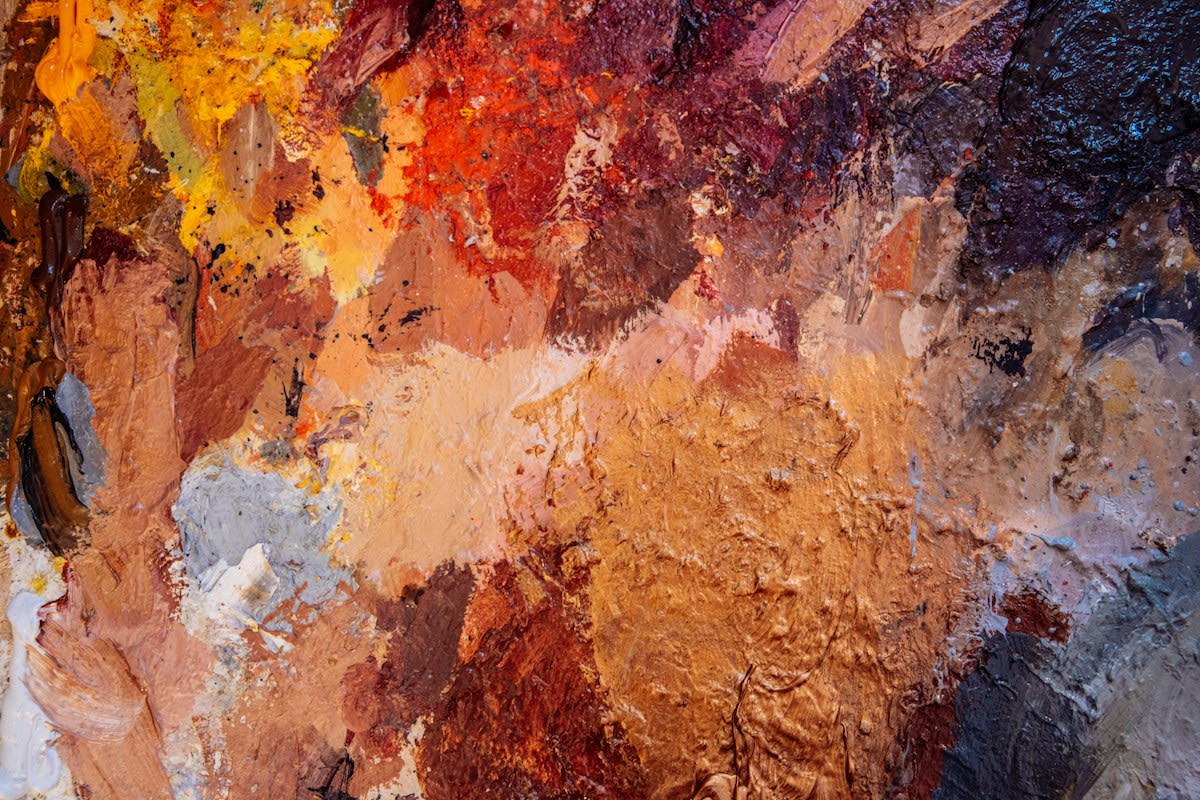
This is the Great Devaluation. When a tool can simulate the style of a Dutch Master or a contemporary Seoul street artist with 99% accuracy, the 'style' itself becomes worthless. Style is now a skin. It is a filter. The new leverage is found in the gaps, the errors, and the physical limitations of the medium. The market is now pricing in the 'Analog Premium'—a surcharge applied to works that exhibit clear evidence of human failure, such as uneven pigment distribution or accidental paper tears.
"The value is shifting from the 'what' to the 'how.' We are no longer asking if the painting is beautiful; we are asking if it was possible to make this without a GPU. The smudge is the new signature."— Elena Rossi, Senior Curator at Galleria Continua
Consider the current obsession with RISOGRAPH printing in Tokyo's underground design scene. These machines are temperamental, prone to misalignment, and produce colors that shift based on the humidity of the room. In a digital workflow, these are bugs. In the current art economy, these are features. The misalignment is a cryptographic proof of physical existence. It tells the collector that this object existed in a specific place, at a specific time, and was subject to the laws of thermodynamics rather than the laws of an algorithm.
| Value Driver | Pre-AI Era (2010-2020) | Post-AI Era (2022-Present) |
|---|---|---|
| Technical Proficiency | High Premium | Commoditized/Low Value |
| Aesthetic Perfection | Primary Driver | Suspicious/Low Value |
| Proof of Labor | Implicit/Secondary | Primary Value Driver |
| Physical Imperfection | Seen as 'Error' | Proof of Authenticity |
| Reproducibility | Managed Scarcity | Infinite Supply (Zero Value) |
The logic of the boardroom is cold. If you can generate ten thousand variations of a 'perfect' sunset in a minute, the sunset is no longer an asset. It is noise. The only way to restore scarcity is to move the goalposts. The goalpost is now 'Analog Friction.' This isn't about a cozy return to the past. It is a strategic pivot to protect capital. Collectors are diversifying away from digital assets into 'Heavy Art'—works that are difficult to transport, impossible to digitize perfectly, and visibly flawed.
Ground-Level Friction: The 'Fake Analog' War
But here is where it gets ugly. We are now entering the era of 'simulated imperfection.' Smart artists are using digital tools to create 'perfect' mistakes. They are programming noise, jitter, and bleed back into their work to trick the market into seeing human friction. This has led to a paranoid atmosphere among top-tier gallerists. In Lagos and Nairobi, where the contemporary art scene is exploding, some curators are demanding 'process diaries'—time-stamped videos of the work being created from scratch. They are treating art production like a forensic crime scene.
The political infighting is visceral. You have the 'Purists' who believe any digital touch taints the work, and the 'Hybridists' who argue that the tool doesn't matter as long as the final output is physical. The legal loopholes are even worse. We are seeing the rise of 'Analog Certification' services that attempt to verify that a work was produced without the aid of generative AI. These services are essentially acting as the auditors of the art world, looking for the digital fingerprints left by AI-driven composition.
The result is a fragmented market. On one side, you have the mass-market 'AI-aesthetic' which is cheap and ubiquitous. On the other, you have the 'Hyper-Analog' elite, where a painting with a clumsy, visible brushstroke can command a 300% premium over a flawless digital render. It is an arbitrage of the human spirit. The market has realized that while the machine can mimic the result, it cannot mimic the cost of the process. (Source: Sotheby's Digital Trends, 2024).
This shift is most evident in the resurgence of ceramics and weaving in hubs like Seoul and Kyoto. These are 'high-friction' mediums. You cannot 'undo' a kiln fire. You cannot 'ctrl-z' a loom error. The risk of total failure is the very thing that creates the value. When the cost of failure is zero, the value of success is also zero. By returning to mediums where failure is permanent and expensive, artists are rebuilding their leverage.
- The 'Texture Premium': Physical depth and materiality now outweigh compositional complexity.
- Process as Product: The documentation of the struggle is becoming as valuable as the artwork itself.
- The Risk Hedge: Analog art serves as a physical store of value against the hyper-inflation of digital imagery.
- Forensic Curation: Gallerists are shifting from aesthetic critics to authenticity auditors.
Ultimately, we are witnessing the commoditization of the 'Ideal.' For centuries, art was the pursuit of the Ideal. Now, the Ideal is a default setting in a software package. The new frontier is the 'Real'—and the Real is messy, inefficient, and profoundly imperfect. The machine has pushed us back into the mud, and the market is paying a premium for the dirt under the artist's fingernails.
Fact-Check & Accuracy Note
The claim that analog art is seeing a price premium is supported by mid-tier auction data from 2023-2024. However, the existence of 'Analog Certification' is currently an emerging industry trend rather than a standardized legal framework. The 'Process Diary' requirement is common in private treaty sales but not yet a universal gallery standard.