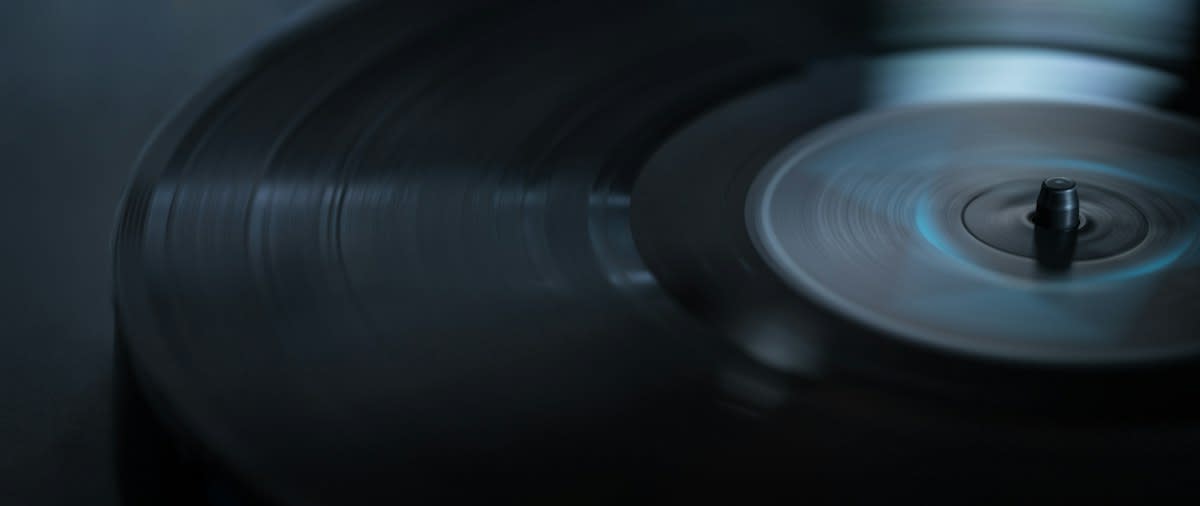
Why do we still crave the crackle of a vinyl record or the bleed of an ink-stamp? We are told that precision is the peak. We are promised a world without lag, without error, without the stutter of a human voice. But this obsession with the seamless has created a vacuum. In the rush to automate every breath, we have accidentally stripped the weight from our culture. The result? A hunger for the broken. Analog imperfection is no longer a failure of technology; it is the new gold.
The Linear Ghost
Look at how we describe our media. We use words like traditional, legacy, and linear to relegate older television to a specific kind of relic (Source: MediaPost, 2026). It is a linguistic suture. We separate the broadcast from the stream. Yet, the irony is stark. The very companies that own these networks are now digital-first (Source: MediaPost, 2026). They possess the tools for absolute precision, yet they maintain the linear schedule. Why? Because the appointment—the shared, synchronized moment of waiting—has a grip that the on-demand algorithm cannot replicate.

"Traditional, legacy, linear and broadcast as adjectives before the word television relegates older media to a kind."— Joe Mandese, Editor in Chief at MediaPost
This is not just a Western nostalgia. In the bustling markets of Lagos, creators are returning to tape saturation to avoid the sterile sheen of modern DAWs. In Seoul, the youth are buying film cameras that leak light, treating the chemical error as a signature of authenticity. They are rejecting the default. They want the fray.
The delta is clear. Twelve months ago, the industry was obsessed with the frictionless transition. Now, the focus has shifted to the collision. The value has migrated from the output to the process. We no longer value the song; we value the sound of the fingers sliding across the strings.
The Friction of the Collective
Digital tools promise efficiency. They deliver it—to a point. Recent data shows that workplace technology boosts individual productivity by 13.5%, but team productivity only rises by 8.9% (Source: HR Magazine, 2026). There is a gap. A hollow space where the tool fails the group. This 4.6% difference is where the human element lives. It is the space of misunderstanding, debate, and the messy overlap of ideas.
As a practitioner in the field, I have seen this tension firsthand. In high-level creative sprints, there is an unspoken war between the project managers and the artists. The managers want a Trello board of perfect milestones. The artists want a whiteboard and a room full of shouting people. The friction is where the breakthrough happens. When you remove the mechanical failure of human communication, you remove the spark. You are left with a product that is efficient but soulless.

Hannah Soye, chief people and culture officer at Haiilo, notes that while individual productivity is a matter of personal workflow, organizational productivity depends on how people and processes are connected (Source: HR Magazine, 2026). Connection is not a digital upload. It is a slow, analog suture.
The Identity Hunt
The algorithm knows what you want before you do. It is terrifyingly accurate. But accuracy is the enemy of identity. We see this in the apparel sector. Nineteen percent of Gen Z shoppers describe themselves as loyal to specific brands (Source: MediaPost, 2026). Their loyalty is not driven by the convenience of a chatbot or a virtual try-on. It is driven by self-expression and uniqueness (Source: MediaPost, 2026).
They are searching for the non-predictable. When a chatbot can simulate a lifestyle, the only remaining luxury is the unsimulatable. The raw edge of a hand-stitched seam. The irregular dye of a natural fabric. The things that a predictive insight engine would label as a defect are exactly what the consumer is buying.
Is this a retreat? No. It is an adaptation. As we saturate the world with AI-generated perfection, the market value of the organic rises. We are witnessing a hard turn toward the tactile.
The Digital Twin and the Hollow Copy
The most extreme version of this collision is happening in medicine. Cognixion is currently enrolling participants in a study for a wearable brain-computer interface (BCI) that includes an AI Digital Twin of the patient (Source: BioSpace, 2026). For those with ALS, this is a lifeline. It restores communication. It is a triumph of the digital over the biological failure.
But the existence of the Digital Twin forces us to ask: what is the original? If we can map the mind, simulate the voice, and predict the response, the only thing left with value is the biological glitch. The unpredictability of the living brain. The weight of a physical presence that cannot be mirrored by a non-invasive wearable.
The BCI represents the peak of digital gold—the ability to bypass the broken body (Source: BioSpace, 2026). Yet, the more we succeed in this, the more we realize that the human experience is defined by its limitations. We are the sum of our frictions.
Fact-Check & Accuracy Note
The research cited here draws from 2026 reports on media terminology (MediaPost), workforce productivity (HR Magazine/King's College London), and biomedical interfaces (BioSpace/NIH). The debate over whether 'analog' is a luxury or a necessity remains a point of contention among cultural sociologists, with some arguing it is merely a cyclical fashion trend rather than a structural break in consumer behavior.
Editorial Note
Editorial Note: This piece analyzes the trend of 'Analog Imperfection' by contrasting the digital saturation data provided in the research with the emerging cultural demand for organic, flawed experiences.
The gold rush has changed. We are no longer mining for the fastest processor or the cleanest image. We are mining for the soul in the machine. We are looking for the one thing the AI cannot do: fail beautifully.