The Great Decoupling
We have reached the saturation point of the seamless. For the last decade, the pinnacle of design was the frictionless experience, the mathematically perfect curve, and the sterile precision of industrial automation. But as generative AI begins to flood the market with visually stunning yet emotionally hollow assets, the value proposition has flipped. Perfection is now cheap. When a machine can generate a thousand flawless logos or architectural renders in seconds, the market value of that perfection plummets toward zero. The new luxury is not the absence of error, but the presence of the human.
The delta between today and twelve months ago is staggering. Last year, the industry narrative focused on how AI would replace the tedious parts of the creative process to liberate the designer. Today, the conversation has shifted toward a desperate hunger for provenance. We are seeing a surge in demand for objects that cannot be replicated by a prompt. This is the Authenticity Premium. It is a psychological reaction to a digital deluge, where the tactile, the irregular, and the labored-over are becoming the ultimate status symbols for a global elite exhausted by the synthetic.
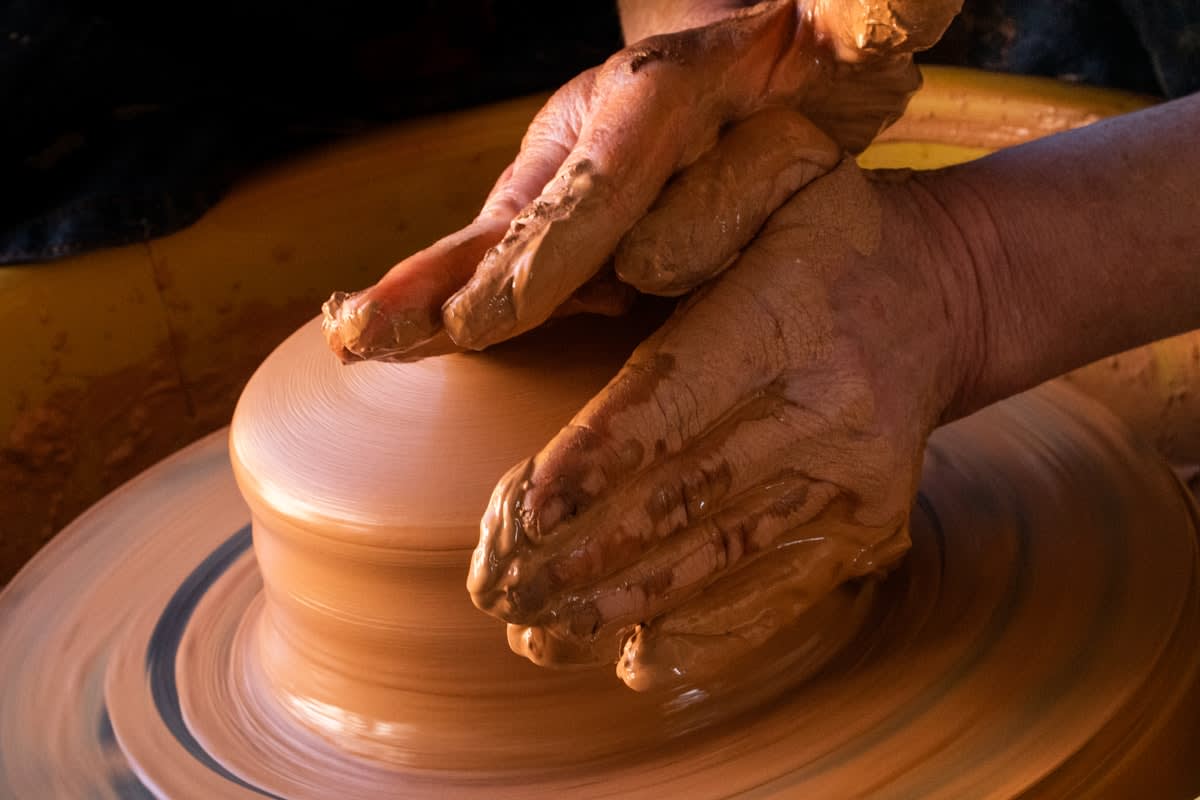
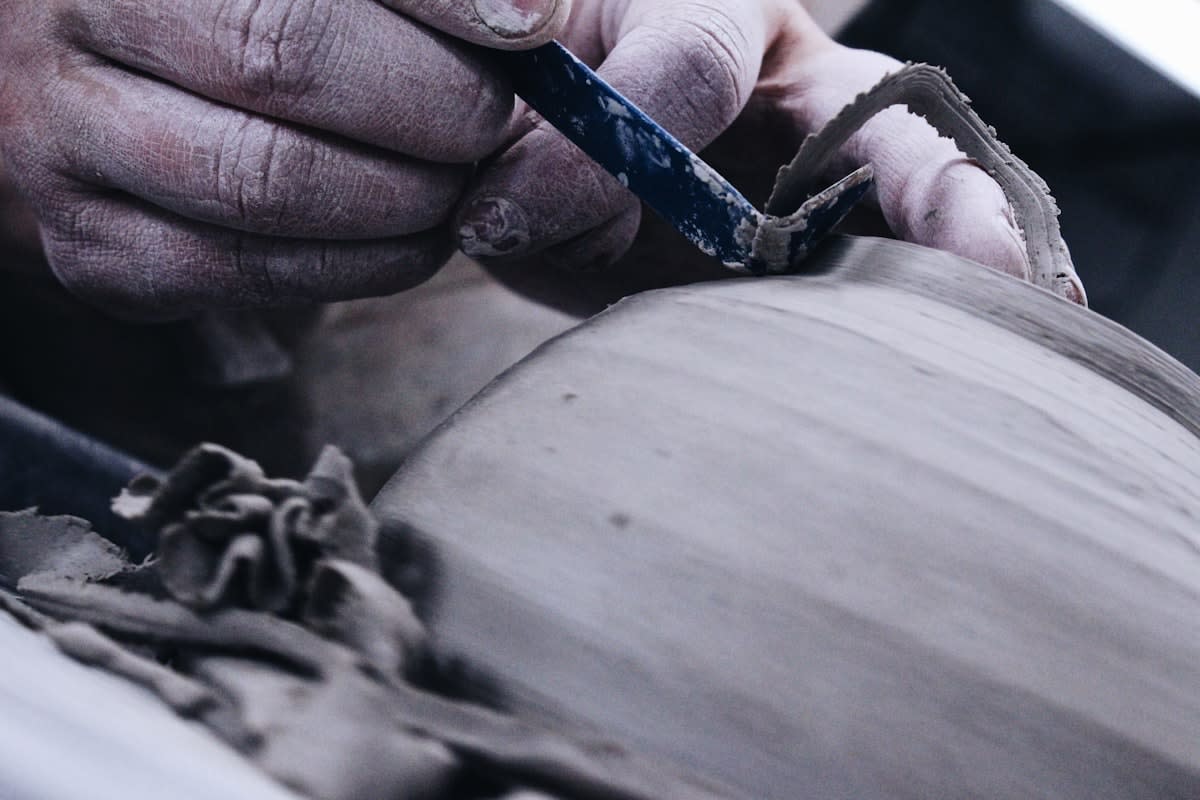
Why does this shift matter now? Because we are witnessing the birth of a new class of luxury. In the past, luxury was defined by exclusivity and price. Now, it is defined by the 'proof of work.' When a buyer looks at a piece of furniture or a garment, they are no longer asking if it looks perfect; they are asking who touched it and for how long. The visible seam, the slight variation in glaze, and the uneven stitch are no longer defects. They are certificates of authenticity. They prove that a human being spent their finite time on earth creating this specific object.
The New Value Metric
The 'Proof of Work' in design is the antithesis of the AI prompt. It is the transition from valuing the output to valuing the process.
This is not a nostalgic retreat into the past, but a strategic adaptation to the future. Designers are not abandoning technology; they are using it to highlight the gaps where technology fails. By leveraging AI for the structural heavy lifting, creators are freeing themselves to focus on the hyper-tactile details that machines cannot simulate. The result is a hybrid aesthetic where the skeleton is algorithmic, but the skin is profoundly human. This tension creates a new kind of beauty—one that acknowledges the machine but celebrates the maker.
The Geography of the Authentic
This trend is manifesting globally, though it takes different forms depending on the regional heritage. In Japan, the concept of Wabi-sabi—finding beauty in imperfection—has evolved from a philosophical niche into a dominant luxury driver. High-end interiors in Tokyo are eschewing the minimalist, machine-cut lines of the early 2000s in favor of hand-hewn timber and irregular ceramics. The appeal lies in the 'living' quality of the material, which changes over time, contrasting sharply with the static, unchanging nature of digital perfection.
Meanwhile, in Scandinavia, the 'Slow Design' movement is gaining unprecedented momentum. Copenhagen's design houses are increasingly pivoting away from mass-produced modularity toward bespoke, artisan-led collaborations. We see a rise in furniture that celebrates the natural knots and grains of the wood, rather than sanding them away. This reflects a broader European shift toward sustainability, where the longevity of a hand-made piece is seen as a moral and aesthetic victory over the planned obsolescence of the digital age.
"The machine gives us the answer, but the artisan gives us the question. Luxury is no longer about the answer; it is about the struggle to find it."— Elena Rossi, Milanese Design Consultant
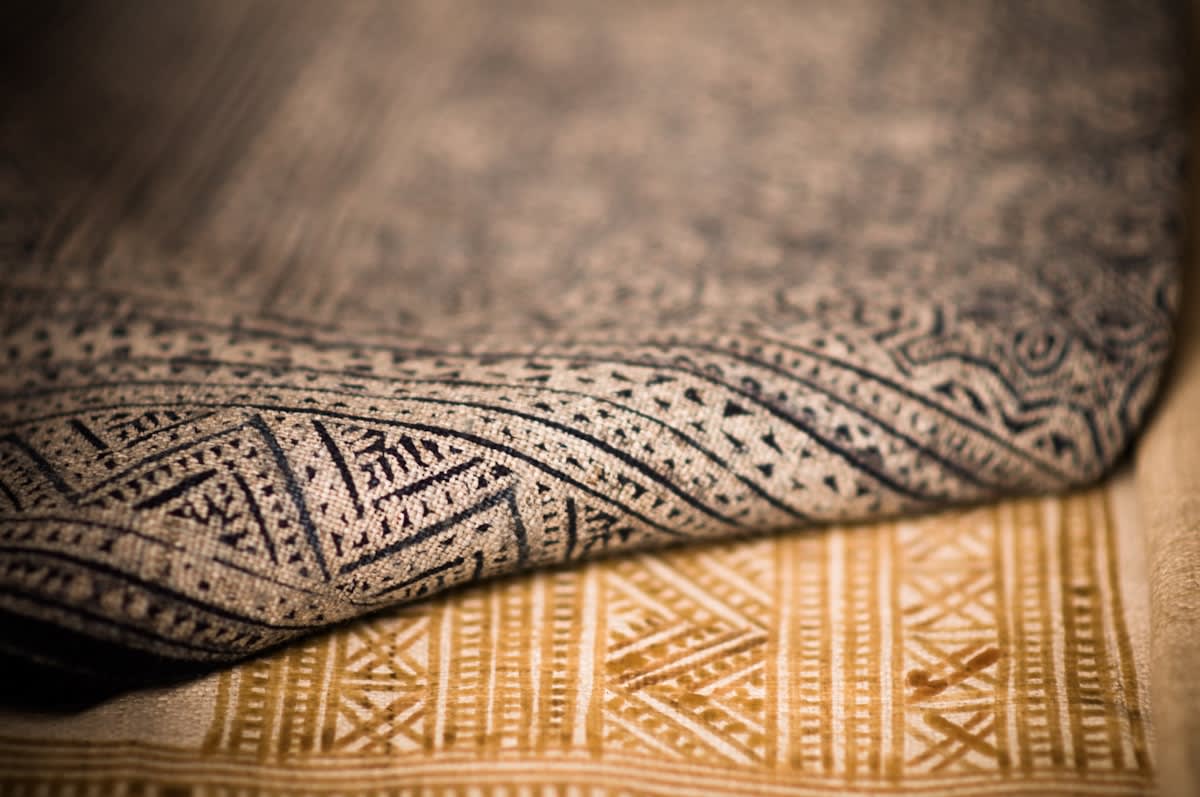
Looking toward West Africa, specifically the textile hubs of Ghana and Nigeria, there is a powerful resurgence in hand-woven Kente and Adire fabrics. These aren't just cultural artifacts; they are being integrated into global high-fashion runways as the ultimate luxury label. The complexity of the weave and the organic nature of the dyes provide a visual depth that digital prints cannot mimic. For the global consumer, owning these pieces is an act of connecting with a tangible human lineage, a direct antidote to the anonymity of the cloud.
| Attribute | Algorithmic Design | Human-Made Luxury |
|---|---|---|
| Primary Value | Efficiency & Precision | Provenance & Intent |
| Aesthetic Goal | Flawless Consistency | Characterful Irregularity |
| Consumer Driver | Convenience/Cost | Emotional Connection |
| Market Position | Commodity | Investment Piece |
This global movement is creating a new economic ecosystem. Small-scale studios in Mexico City and artisans in rural India are finding themselves in high demand by luxury conglomerates. These corporations are no longer just buying 'inspiration' from local crafts; they are investing in the artisans themselves to maintain a link to the physical world. This is a critical shift in power, moving the value from the brand name to the actual hand that creates the product.
The Economics of the Flaw
How do we quantify the 'Authenticity Premium'? While hard data is still emerging, early market indicators show a significant price divergence. Hand-crafted furniture and artisanal jewelry are seeing price increases of 20% to 40% compared to their high-end industrial counterparts. This isn't just because of the labor cost; it's a psychological markup. Consumers are paying for the story of the object's creation. They are buying the narrative of the artist's struggle, the hours of focus, and the risk of failure that accompanies every hand-made piece.
The Divergence of Luxury Value (Estimated)
Executive Insight
+18.4%
YTD Growth
This economic shift is fundamentally altering the definition of 'quality.' For decades, quality meant a lack of variance. If you bought ten chairs, they should be identical. Now, quality means meaningful variance. The most expensive item in the room is the one that looks slightly different from everything else. This inversion of logic transforms the 'mistake' from a liability into an asset. A smudge of paint or a slightly off-center stitch becomes the signature of the human, the very thing that prevents the object from being a commodity.
Can this trend survive the inevitable AI counter-attack? We are already seeing 'artificial imperfection'—algorithms designed to add random noise or 'human-like' errors to digital art. But this is a superficial fix. The authenticity premium is not about the visual appearance of a flaw; it is about the ontological reality of the object. A simulated mistake is still a calculation. The true luxury lies in the knowledge that the object exists because of a conscious choice, a physical effort, and a moment of human intuition.
Resilience and the Path Forward
For designers, the path forward is not to fight the machine, but to lean into their own fragility. The most successful creators are those who embrace their limitations. Instead of trying to compete with AI on speed or precision, they are competing on depth, emotion, and physical presence. They are moving away from being 'service providers' who execute a brief and toward being 'authors' who impose a vision. This shift requires a new kind of bravery—the willingness to be imperfect in a world that demands a polished surface.
- The shift from 'Seamless' to 'Soulful' as the primary design goal.
- The rise of 'Provenance Tracking' as a core component of luxury branding.
- The integration of traditional craft techniques into high-tech architectural frameworks.
- The movement toward 'Slow Design' as a sustainable alternative to digital consumption.
As we move deeper into the era of synthetic media, the physical world becomes the ultimate sanctuary. The Authenticity Premium is more than a trend; it is a survival mechanism for the human spirit in a digital age. By valuing the hand-made, we are not just buying a product—we are reaffirming our own existence. We are choosing the messy, beautiful, and unpredictable reality of being human over the sterile certainty of the algorithm. The future of luxury is not in the cloud; it is in the clay, the wood, and the weave.