
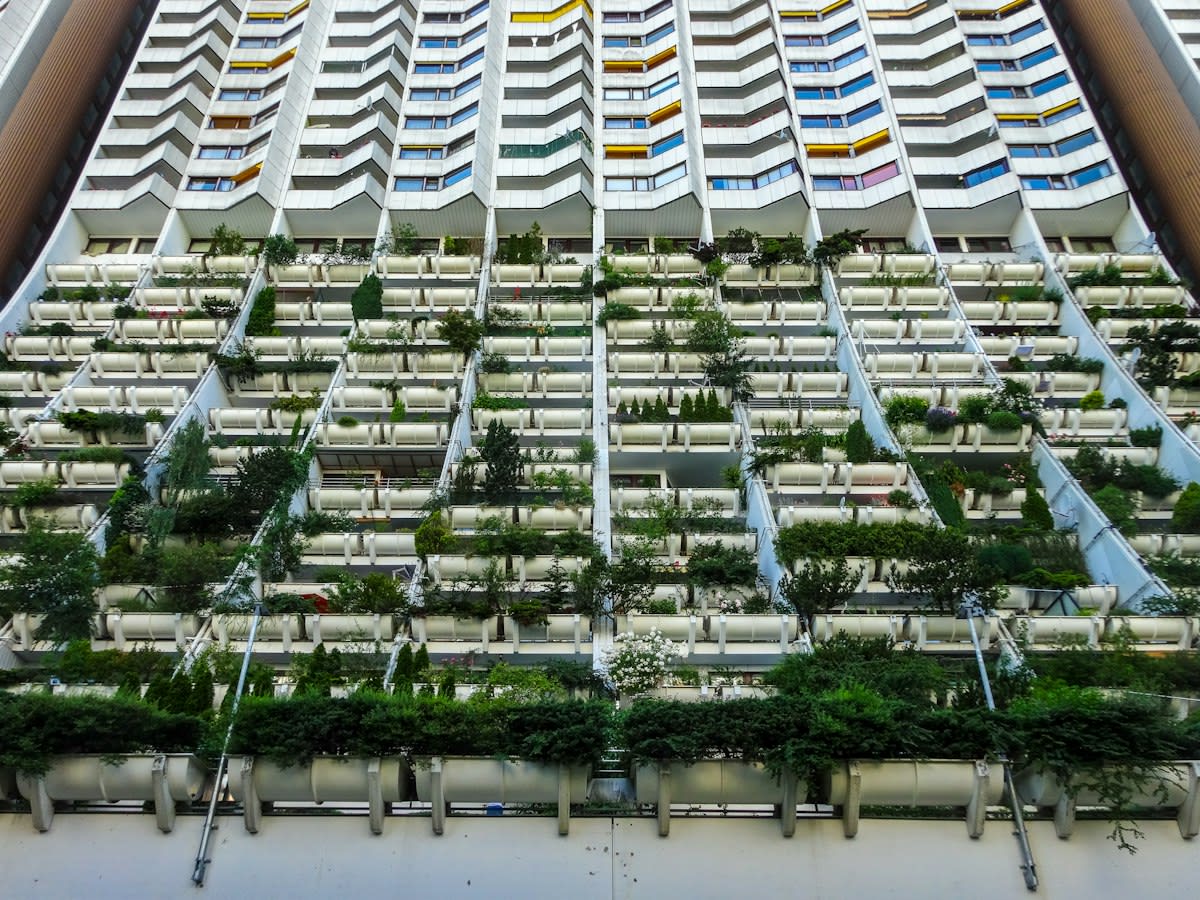
Do we actually believe a skyscraper can be a closed loop? The industry loves to pitch circular economy architecture as an inevitable evolution. They show us renders of modular buildings that disassemble like Lego sets and materials that breathe. It is a lie. In high-density cities, the grip of existing infrastructure and the weight of regulatory defaults make true circularity nearly impossible. We are trying to fit a fluid, organic process into a rigid, concrete grid that was never designed to let things go back.
Look at Taiwan. The government is pushing hard. They have approved sector-wide Greenhouse Gas Reduction Programmes for 2026-2030 and are aggressively promoting resource efficiency to reach a green industrial transition (Source: Indian Newslink, 2026). On paper, it is a masterstroke of governance. But the collision between these high-level goals and the physical terrain of a hyper-dense island creates a brittle reality. When every square centimeter of land is contested, where do you put the disassembly hubs? Where does the material wait for its next life? The loop requires space, and the city has none.

The Measurement Mirage
You cannot close a loop if you cannot find the beginning. This is the mechanical failure currently plaguing California's attempt to regulate plastics. Senate Bill 54 was meant to be a landmark law, yet the source reduction baseline—the very number that decides how much plastic must be cut—was set significantly lower than previous estimates (Source: LA Times, 2026). Specifically, the baseline is just one-third of what the state estimated in a 2024 report (Source: LA Times, 2026). If the state cannot even agree on how much waste exists, the idea of 'designing out' that waste in architecture is a fantasy. We are building circular dreams on hollow data.
This isn't just a plastic problem. It is a data problem. In the architectural world, we call this the 'passport gap'. Architects specify a sustainable timber or a recycled composite, but by the time the building is demolished forty years later, the record of that material is gone. The material becomes generic rubble. It loses its identity. It becomes waste again because the information loop broke long before the physical loop could close.
Fact-Check & Accuracy Note
The failure of California's source reduction baseline (Source: LA Times, 2026) serves as a critical warning for circular architecture: without an immutable, transparent ledger of materials, 'circularity' is merely a marketing term used to justify higher project premiums.
The industry is currently fighting an invisible war over who owns this data. Developers hate material passports because they create long-term liability. Contractors hate them because they add hours of administrative weight to a project already squeezed by thin margins. I have sat in meetings where the 'circular' vision was stripped away line by line until the project looked exactly like every other concrete box in the city. The dispute isn't about the environment; it is about who pays for the tracking.
The Permanent vs. The Perishable
Some are trying to embrace the decay. On South Korea's Jeju Island, studio stpmj built an arch from rose-colored salt bricks specifically designed to dissolve in the summer rain (Source: Designboom, 2026). It is a poetic gesture. It acknowledges that architecture can be temporary. But can you imagine a salt-brick apartment complex in Tokyo or New York? The urban default demands permanence. We build for eternity because land value is too high to allow for a building that disappears.
"Decarbonisation should be viewed as a business strategy rather than solely an environmental initiative."— World Economic Forum, Decarbonizing Manufacturing and Supply Chains for Growth Report
The World Economic Forum argues that industrial decarbonization must drive operational efficiency and long-term growth to be viable (Source: Manufacturing Management, 2026). This is the only way circularity survives. It must stop being a 'green' add-on and start being a cost-saving mechanical necessity. If a building is designed to be disassembled because it makes the owner money in 30 years, it will happen. If it is done for the sake of a LEED certification, it will fail the moment the budget tightens.
Consider the resurgence of highway lids. Firms like EHDD are creating public spaces over freeways in San Francisco, Dallas, and Pittsburgh (Source: Building Design + Construction, 2026). The Klyde Warren Park in Dallas cost $110 million to bridge two neighborhoods (Source: Building Design + Construction, 2026). These projects are brilliant for community engagement. They suture the city back together. But are they circular? No. They are massive infusions of new concrete and steel to hide old concrete and steel. They are a spatial fix, not a material one.
We are seeing a structural break in how we define urban success. For decades, success was growth. Now, we pretend success is 'circularity' while continuing to build with the same linear mindset. We add parks on top of highways and call it progress, while the basements of our cities continue to saturate with non-recyclable composites.
| Circularity Metric | The Theoretical Ideal | The Urban Reality | Primary Failure Point |
|---|---|---|---|
| Material Recovery | 100% Re-use via Passports | Downcycled or Landfilled | Data Loss/Admin Burden |
| Lifecycle | Designed for Disassembly | Built for Maximum Permanence | Real Estate Value Pressure |
| Waste Stream | Zero Waste (Taiwan Goal) | Baseline Under-reporting (CA) | Measurement Inaccuracy |
| Economic Driver | Environmental Stewardship | Operational Efficiency (WEF) | Short-term ROI Focus |
The transition requires a hard turn in how we value the city. In Colorado, the clean energy industry already accounts for over 70 percent of energy and vehicle-related jobs (Source: VailDaily, 2026). This shows that the workforce is ready. The capacity exists. What is missing is the courage to build buildings that aren't meant to last forever. We need to stop fighting the fray and start designing for the eventual collapse.
Can we accept a city that breathes? A city where buildings are leased from the material manufacturers rather than owned by developers? This is the only way the loop closes. When the manufacturer owns the steel, they have every incentive to get it back. The current ownership model is the ultimate barrier. It encourages the 'build and forget' mentality that has defined the last century of urbanism.
The staying power of circular architecture will not come from government promises or architectural manifestos. It will come from the moment when it becomes more expensive to dump a building than to dismantle it. Until then, we are just decorating the linear path to the landfill with a few salt bricks and some highway parks.
Editorial Note
Editorial Note: This analysis challenges the prevailing optimism of 'Green City' initiatives by highlighting the gap between policy goals (e.g., Taiwan's GHG programs) and the operational failures of material tracking (e.g., California's plastic baselines).