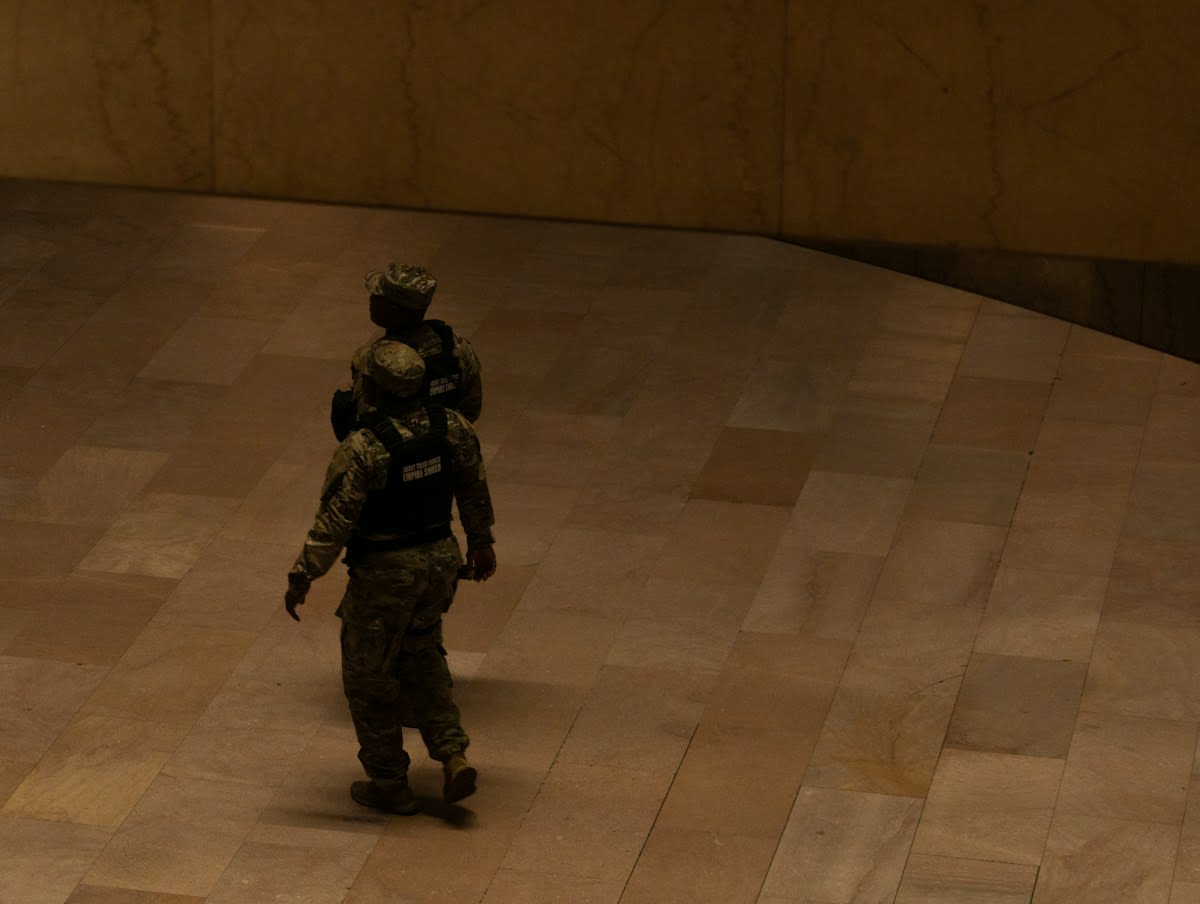
We assume digital tools amplify the self. They do not. Instead, they provide a sophisticated veil. Whether it is a soldier wearing multispectral fabrics to vanish from a radar or a student in Shanghai losing their sense of self to a screen, the trend is the same: disappearance. We are witnessing a collision between the desire to be unseen and the terror of being forgotten. Identity is no longer a solid core; it is a series of filters designed to blend into a specific terrain.
The Materiality of Absence
The physical world is becoming a ghost. In the military sector, the grip of digital printing has transformed how humans occupy space. The demand for multispectral concealment is no longer a niche requirement for elite units but a broad market driver (Source: IndexBox, 2026). We see the rise of 3D textured patterns for helmet covers and radar-absorbent materials integrated into decoy systems. These are not just clothes. They are tools of erasure.
The technical ambition is absolute. Companies like Carrington Textiles, Concordia Textiles, Milliken & Company, and Seyntex are pushing the boundaries of synthetic fibers to ensure the wearer becomes a void (Source: IndexBox, 2026). They prioritize moisture-wicking and flame-retardant properties, but the core goal is the suppression of the human silhouette. When the body is treated as a signature to be managed, the human identity is the first thing to be stripped away.
| Camouflage Application | Primary Technical Driver | Identity Impact |
|---|---|---|
| Ghillie Suits | Multispectral concealment | Total environmental blend |
| Helmet Covers | 3D and textured patterns | Facial silhouette erasure |
| Decoy Systems | Radar-absorbent materials | Substitution of human with object |
This physical erasure creates a brittle psychological state. If your professional survival depends on your ability to be invisible, how do you reclaim your visibility at home? The transition is rarely seamless. The weight of the mask lingers.
The Algorithmic Veil
The camouflage is not only fabric. It is code. In the digital realm, algorithms act as a psychological suture, binding users to curated versions of reality that hollow out the authentic self. This is most evident in the rising tide of Internet Addiction (IA). It is a behavioral disorder. It is a mechanical failure of the will. Users lose the capacity to regulate their online usage, leading to dysfunction in academic and interpersonal spheres (Source: Frontiers in Psychiatry, 2026).
"How do we foster connectedness amid algorithms that fuel isolation and violence?"— Iza Calzado, Mental Health Advocate at Social Good Summit 2026
The data from China reveals a harrowing correlation. Among university students, each unit increase in an Internet Addiction score raises the risk of depressive symptoms by 31% (Source: Frontiers in Psychiatry, 2026). This is not a linear decline. It is a collapse. For only children, the risk increase is even more pronounced, reaching an odds ratio of 1.34 (Source: Frontiers in Psychiatry, 2026). The screen becomes a digital ghillie suit, hiding the user from the pain of isolation while simultaneously deepening it.

The Social Good Summit 2026 in Manila highlighted this exact tension. The event, titled We, The Humans, sought to unpack the psychological toll of an age where algorithms prioritize engagement over empathy (Source: Rappler, 2026). When we blend into the digital noise, we are not connecting; we are merely saturating a network with ghosts of ourselves.
The Invisible Friction
Inside the industry, there is a silent war. Textile engineers argue that total invisibility is the ultimate protection. They view the human body as a flaw in the system—a heat signature that needs to be quenched. Meanwhile, behavioral psychologists argue that this obsession with erasure is bleeding into the civilian world. They see the same drive for invisibility in the way youth use digital personas to hide their vulnerabilities. The friction lies in the definition of safety. Is safety the ability to be unseen, or the courage to be known?
This struggle is most acute in boarding school environments. Research indicates that boarding schools strongly modify the effect of internet addiction, worsening the impact on students (Source: Frontiers in Psychiatry, 2026). In these high-pressure settings, the digital veil is not a choice; it is a survival mechanism. Students use the web to create a secondary identity because the primary one is too brittle to withstand the institutional weight.
Fact-Check & Accuracy Note
The research on Internet Addiction (IA) in Chinese university students emphasizes a non-linear relationship with depression, suggesting that once a certain threshold of addiction is reached, the psychological decline accelerates rapidly. This is a key area of academic debate regarding whether IA is a symptom or a cause of depressive disorders. (Source: Frontiers in Psychiatry, 2026).
Reclaiming the Silhouette
We must stop treating invisibility as a default. The trend toward multispectral fabrics and algorithmic isolation is a response to a world that feels too hostile to inhabit authentically. But the cost of this camouflage is the erasure of the human. When we blend perfectly into the terrain, we cease to exist as distinct entities.
The opportunity lies in the hard turn toward intentional visibility. By recognizing the psychological toll of the digital age, we can begin to tear the veil. This requires more than just limiting screen time. It requires a fundamental redesign of the algorithms that currently reward our disappearance.
Editorial Note
Editorial Note: This report connects the literal application of digital camouflage in military textiles with the metaphorical application of digital masks in social media and internet addiction to illustrate a broader cultural trend of identity erasure.