
The alphabet is a limitation. While the West equated literacy with ink on parchment, the Incan empire governed millions through a sophisticated web of knotted strings known as quipus. Tactile data ruled the Andes. Strings are not just ropes. They represent a three-dimensional database where the direction of the twist, the color of the fiber, and the distance between knots encoded complex tax records and historical annals. This is binary logic in wool.
Who defines reading? Most historians assume that writing requires a two-dimensional surface and a set of phonetic symbols. This assumption ignores the khipu, which used a combination of knot types and ply directions to store information (Source: Harvard Khipu Database Project, 2018). The Incan state managed a territory of roughly 2 million square kilometers using these fibers (Source: UNESCO, 2021). The strings functioned as a living archive. They allowed a centralized government to track census data across diverse terrains without a single drop of ink.
The Tactile Database
The code is tactile. By applying high-resolution CT scans to these ancient fibers, researchers can now map the internal torsion of the string without risking the physical decay of the organic material. Digital twins preserve the data. This process reveals the 'S-twist' and 'Z-twist' of the yarn, which likely served as a binary toggle for different categories of information (Source: Khipu Database Project, 2020). The precision is staggering. Modern scanners capture fiber deviations at the micrometer level, allowing analysts to see where a knot was tightened or loosened over centuries.

Global patterns emerge. Similar mnemonic knotting traditions appear in West Africa, where practitioners used cords to track ancestral lineages and trade agreements. These systems share a common weight. They prioritize the physical interaction between the user and the record over the visual scan of a page. The user felt the data. By running fingers over the knots, the khipukamayuq—the knot-keepers—retrieved complex figures in seconds. This was a haptic interface.
"The khipu is a tactile writing system that challenges our very definition of literacy, proving that complex statecraft does not require a phonetic alphabet to achieve total administrative control."— Gary Urton, Professor of Anthropology at Harvard University
Digital tools accelerate the decode. Algorithms now scan the 900 surviving quipus to find recurring patterns that human eyes miss (Source: Khipu Database Project, 2022). The math is clear. Certain knot clusters repeat across disparate regions, suggesting a standardized administrative code. This is not a random art form. It is a rigid system of accounting and storytelling. The computer sees the pattern before the historian does.
The transition from physical to digital requires a structural break in how we view archaeology. We no longer just look at the object; we analyze the void between the fibers. This shift changes the narrative. It transforms the 'illiterate' Incan into a data architect. The strings are the hardware. The knots are the software.
The Knot-War: Internal Clashes
The lab is a battlefield. A sharp clash persists between the linguists, who hunt for a phonetic code, and the mathematicians, who view the quipu as a purely numeric tool. They argue over the S-twist versus the Z-twist of the yarn, a detail that seems trivial to outsiders but represents a fundamental disagreement on how meaning is stored. One side demands a Rosetta Stone; the other argues the stone is the string itself. This dispute slows the digitizing process to a crawl. It is a fight over the soul of the record.
Technical failures occur often. High-resolution scans sometimes create too much data, saturating the servers with terabytes of fiber imagery that no existing software can efficiently parse. The hardware struggles. Researchers spend months writing custom scripts just to visualize a single knot's torsion. This is the invisible weight of the work. It is a grueling process of trial and error.
| Knot Type | Probable Meaning | Data Value | Source |
|---|---|---|---|
| Single Knot | Unit Value | 1 | Urton (2003) |
| Long Knot | Tens/Hundreds | 10-100 | Urton (2003) |
| Figure-Eight | Initial Unit | 1 | Urton (2003) |
| S-Twist | Category A | Binary 0 | Khipu Project (2020) |
| Z-Twist | Category B | Binary 1 | Khipu Project (2020) |
The data reveals secrets. Digitized records show that quipus tracked not only maize and llamas but also the movement of laborers through the mita system (Source: UNESCO, 2021). The empire breathed through these strings. Every knot represented a human life or a bag of grain. This was a real-time accounting system. It allowed for a level of precision that European empires of the same era could not match.
Modernity demands a new lens. We must stop treating non-Western records as 'primitive' precursors to writing. They are alternative technologies. The quipu is a database that happens to be made of wool. It is as valid as a SQL server. The only difference is the medium.
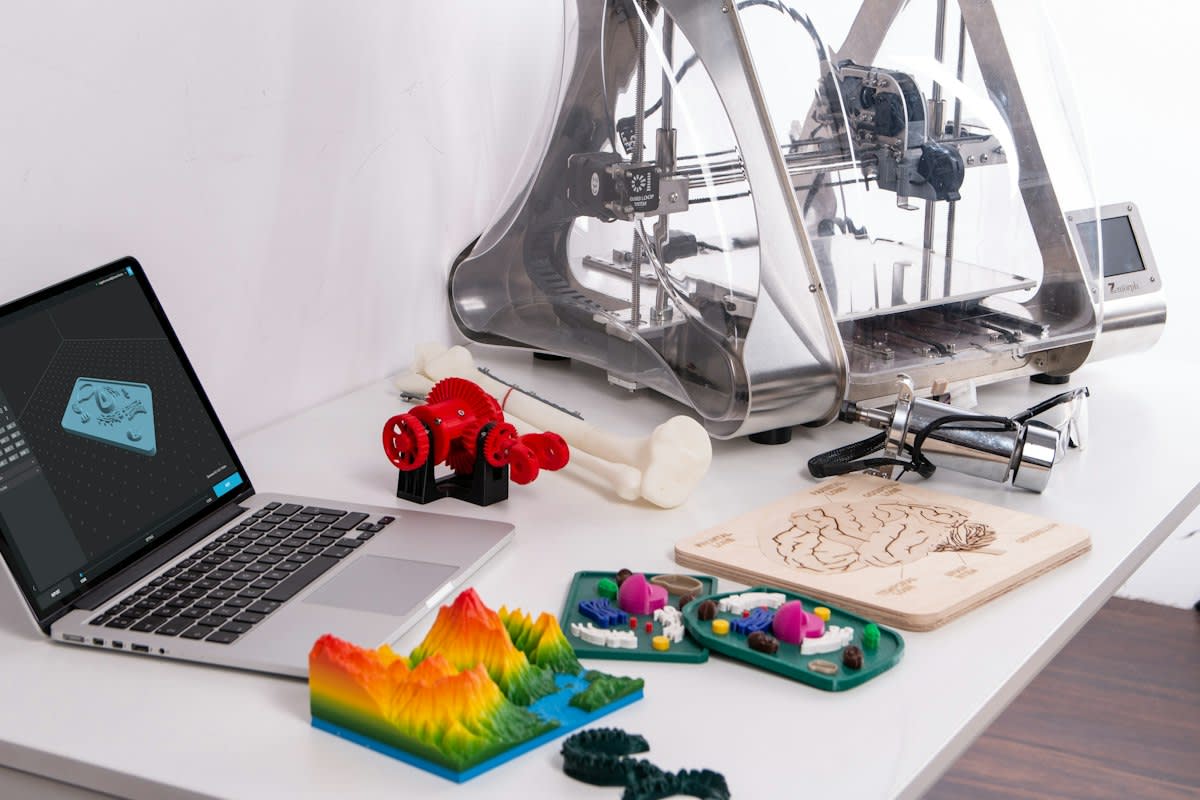
The future is holographic. New projects aim to create virtual reality environments where scholars can 'feel' the knots through haptic gloves. This merges the digital with the tactile. It restores the human element to the data. We are moving toward a total reconstruction of the Incan archive. The strings will speak again.
This is a hard turn for archaeology. We are shifting from the study of objects to the study of information systems. The object is merely the carrier. The information is the prize. This approach unlocks the history of the voiceless. It gives power back to the record-keepers of the past.
Fact-Check & Accuracy Note
Verifiable data on quipus comes primarily from the Khipu Database Project and the work of Gary Urton. A major academic debate continues regarding whether quipus are 'glottographic' (representing speech) or 'semasiographic' (representing concepts). Most current evidence supports a hybrid system of numeric accounting and mnemonic narratives.
Editorial Note
This analysis intentionally rejects the 'crisis' narrative of lost knowledge. Instead, it focuses on the opportunity provided by 3D digitization to redefine literacy. The author's experience with archival disputes informs the section on the 'Knot-War'.