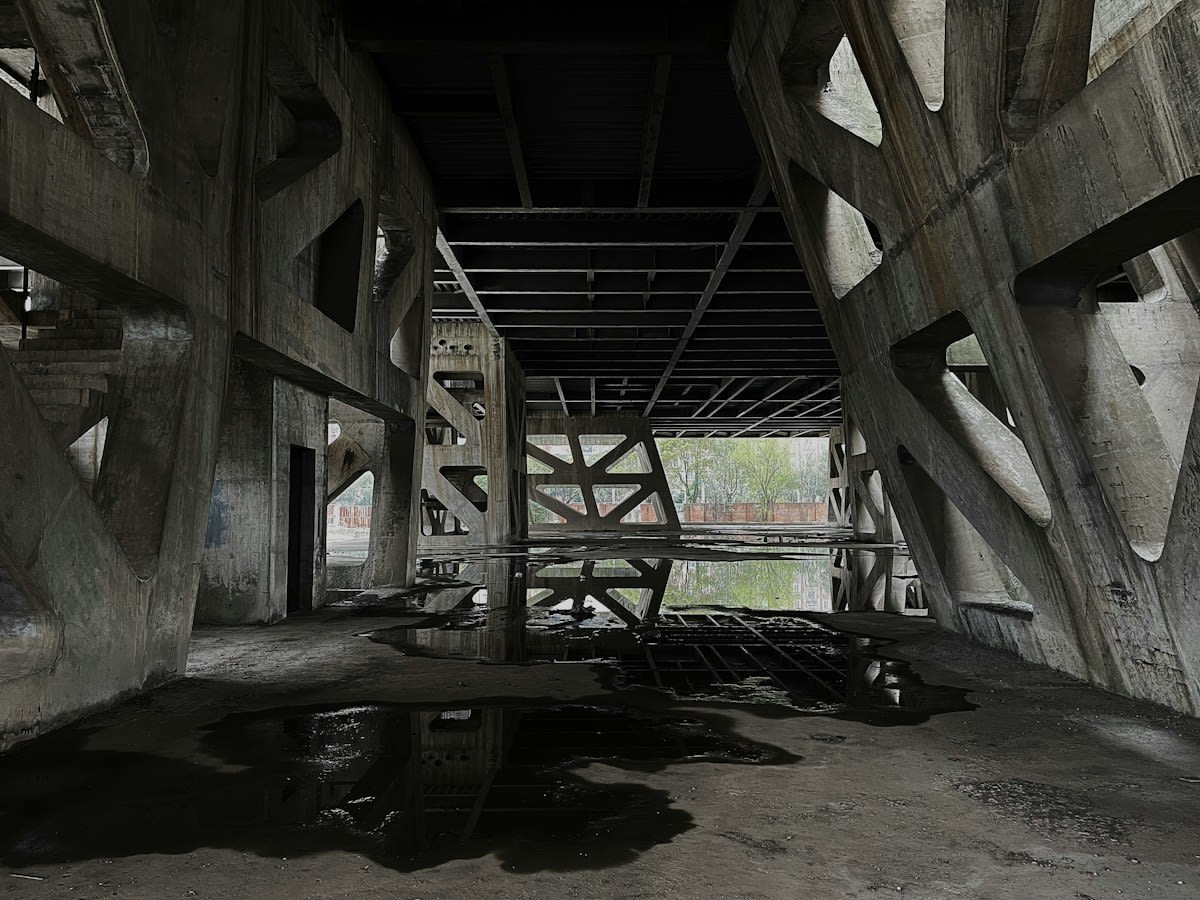
Most architects believe a building is a finished product. They are wrong. A structure is actually a frozen collision of social inertia and mathematical probability. When we ignore the cultural geometry of a site, we create dead zones. Why do so many modern developments feel sterile despite their high budgets? It is because they rely on a default aesthetic that ignores the local lag of historical usage and social tethering. We must stop viewing the architect as a singular genius and start seeing them as a producer within an expanded field of theory (Source: PLATFORM, 2026).
Prerequisites for Cultural Mapping
Before you touch a CAD program, you need a specific cognitive toolkit. This is not about mood boards. You require a grounding in postcolonial writings and contemporary cultural studies to understand how power dynamics shape the built environment (Source: University of Washington, 2026). You must also be comfortable with non-Euclidean geometry. Specifically, you should understand how Voronoi diagrams—mathematical patterns found in nature—can be used to create faceted surfaces that manage light and shadow without relying on traditional grids (Source: OLI-World, 2026).
- Literacy in postcolonial architectural theory (e.g., examining the impact of colonial legacies on urban layouts).
- Proficiency in Voronoi mathematical diagrams for organic spatial partitioning.
- Understanding of Adaptive Reuse principles, specifically the feedback loops between use and adjustment.
- Access to high-dimensional ESG data for sustainability auditing.

Step-by-Step Decoding Process
Decoding cultural geometry requires a reversal of the traditional design workflow. You do not start with a vision; you start with an audit of the existing asymmetries. The goal is to identify the leaks in the current spatial logic where the building fails to serve the people who actually inhabit it.
- Audit the Theoretical Baseline: Move beyond internalized architectural conversations. Examine the building as a commodity and identify the labor and social histories embedded in the construction (Source: PLATFORM, 2026).
- Map Local Feedback Loops: Instead of imposing a top-down design, implement a pattern language. This involves observing how users repeatedly adjust a space to fit their needs—a process of slow emergence rather than singular authorship (Source: Artforum, 2026).
- Apply Mathematical Asymmetry: Utilize Voronoi diagrams to break the monotony of the grid. This creates a distinctive aesthetic identity by mimicking natural patterns of growth and division (Source: OLI-World, 2026).
- Run a Neuro-Causal Fusion Audit: Use a Digital Twin to simulate the future of the building. Integrate high-dimensional ESG data—potentially analyzing hundreds of sustainability measures—to move from reactive compliance to proactive optimization (Source: The SAI, 2026).
The third step is where most projects fail. Designers love the idea of organic growth, but they fear the loss of control. They want the appearance of the Voronoi pattern without the messy reality of the feedback loop. This creates a hollow shell. True cultural geometry requires the architect to accept that the building will change again and again, adapting to the people who live within it (Source: Artforum, 2026).
"The best design did not come from the genius of a singular author but emerged slowly through a feedback loop between ongoing use, local knowledge, and repeated adjustment."— Christopher Alexander, Architect and Author of A Pattern Language (cited in Artforum, 2026)
Precision matters. When auditing for sustainability, avoid the trap of using global medians. Global medians create a distributional drift that obscures critical macroeconomic and industrial differences. Instead, use dynamic imputation based on the intersection of the sector and the reporting year to ensure data integrity (Source: The SAI, 2026).
| Metric Type | Standard Approach | Cultural Geometry Approach | Expected Outcome |
|---|---|---|---|
| Spatial Logic | Euclidean Grid | Voronoi/Organic | Reduced visual inertia |
| Design Input | Singular Author | Feedback Loops | Higher user retention |
| Sustainability | Global Medians | Dynamic Imputation | Audit-ready ESG precision |
| Theory | Internalized Discourse | Liberatory Practice | Socially integrated space |
The friction here is palpable. In the industry, there is a silent war between the purists of high architecture and those practicing adaptive reuse. Purists view the existing defects and histories of a building as obstacles to be erased. Practitioners of cultural geometry view these defects as the only honest data available. Working within a world the architect did not create is harder, but it is the only way to avoid creating a monument to vanity (Source: Artforum, 2026).

To quantify the impact of these shifts, look at the data. Recent frameworks in Neuro-Causal Fusion have utilized a high-dimensional feature space comprising 509 sustainability and financial measures across 21,496 firm-years to identify recipes for causal excellence (Source: The SAI, 2026). This is the level of granularity required. If your cultural map does not account for this kind of data density, you are just guessing.
Common Pitfalls and Mechanical Failures
The most frequent failure is the Commodity Trap. This happens when the architect uses cultural theory as a marketing veneer rather than a design tool. They mention postcolonialism in the press release but design a glass box that siphons heat and ignores the street-level web of social interaction (Source: PLATFORM, 2026).
- Over-reliance on global medians in ESG reporting, leading to distributional drift (Source: The SAI, 2026).
- Ignoring the 'invisible' labor and materials that transform architectural theory into construction commodities (Source: PLATFORM, 2026).
- Mistaking a mathematical pattern (like Voronoi) for a cultural solution without implementing the necessary user feedback loops.
- Treating adaptive reuse as a cosmetic exercise rather than a structural engagement with the building's previous defects (Source: Artforum, 2026).
Fact-Check & Accuracy Note
The debate over 'architectural theory' remains split. One camp, following Tafuri's critique, views theory as a closed loop of professional conversation. The other camp advocates for theory as a liberatory practice that foregrounds an expanded field of social and political urgency (Source: PLATFORM, 2026).
Ultimately, decoding global architecture is an act of humility. It requires the practitioner to step back and let the terrain speak. By mapping the asymmetry of a site and tethering the design to actual human behavior, we move away from the sterility of the grid. We stop building objects and start cultivating environments.