
The Architecture of the Micro-Moment
Stop thinking about cinema. Start thinking about pulses. The modern viewer does not grant you their attention; they lease it in increments of milliseconds. When we talk about micro-drama, we are not discussing a shortened version of a feature film, but a distinct biological hack. You are fighting a war against the thumb. Statistics show that approximately 65% of viewers will swipe away within the first three seconds if the visual or auditory hook fails to trigger an immediate dopamine response. This is not a loss of attention span—it is an evolution of curation. The audience has become an expert editor, slicing through noise to find the signal.
The Critical Rule
The Golden Window: The first 3 seconds are not the introduction; they are the entire value proposition. If you haven't established the stakes by second three, you've already lost.
Why does this matter now? Because the global consumption of short-form video has shifted from a novelty to a primary source of narrative satisfaction. From the hyper-paced streets of Seoul to the creative hubs of Lagos, the micro-drama is the new lingua franca. It requires a surgical approach to storytelling where every frame must justify its existence. If a shot does not move the plot forward or deepen the emotional stakes, it is dead weight. You cannot afford the luxury of a slow build. You must start at the boiling point.
Prerequisites for the Micro-Storyteller
Before you hit record, you need more than just a camera. You need a psychological framework that prioritizes impact over exposition. The amateur tries to tell a story; the master practitioner engineers an experience. You must be comfortable with ambiguity and trust that your audience is intelligent enough to fill in the gaps. You aren't building a world; you are dropping the viewer into the middle of a crisis.
- High-fidelity audio capture: Sound is 50% of the drama; bad audio is an immediate swipe.
- Vertical-first framing: Design for the 9:16 aspect ratio to maximize intimacy and focus.
- Rapid-prototyping software: Tools like CapCut or Premiere Rush for aggressive pacing.
- A 'Hook Library': A curated collection of visual and auditory triggers that stop the scroll.
- Emotional Mapping: A script that tracks the viewer's expected mood second-by-second.
Once the tools are in place, the focus shifts to the rhythm. Have you ever noticed how the most viral clips feel like they are breathing? They expand and contract. They accelerate toward a climax and then pause for a heartbeat of reflection. This rhythmic variance prevents the viewer from zoning out. It keeps the brain alert, anticipating the next shift.
The Four-Phase Execution Framework
To master the 60-second window, you must abandon the traditional linear narrative. Instead, use this compressed framework to ensure maximum emotional density.
- The Inciting Shock (0-3 Seconds): Begin with a visual or auditory contradiction. A scream in a library, a tear in a celebratory crowd, or a question that challenges the viewer's worldview. This is the hook that stops the thumb.
- The Rapid Escalation (3-30 Seconds): Introduce the conflict immediately. Use a series of quick cuts (1-3 seconds each) to build tension. Every shot must raise the stakes. If the character is running, show us what is chasing them—or better yet, show us the fear on their face and let the viewer imagine the monster.
- The Pivot/Climax (30-50 Seconds): This is where the micro-drama earns its keep. Deliver a twist or an emotional revelation that recontextualizes everything the viewer has seen so far. The pivot must be earned but unexpected.
- The Echo/Resolution (50-60 Seconds): Do not linger. Provide a sharp resolution or a lingering question that forces the viewer to think about the clip after it ends. This is where you plant the seed for a re-watch.
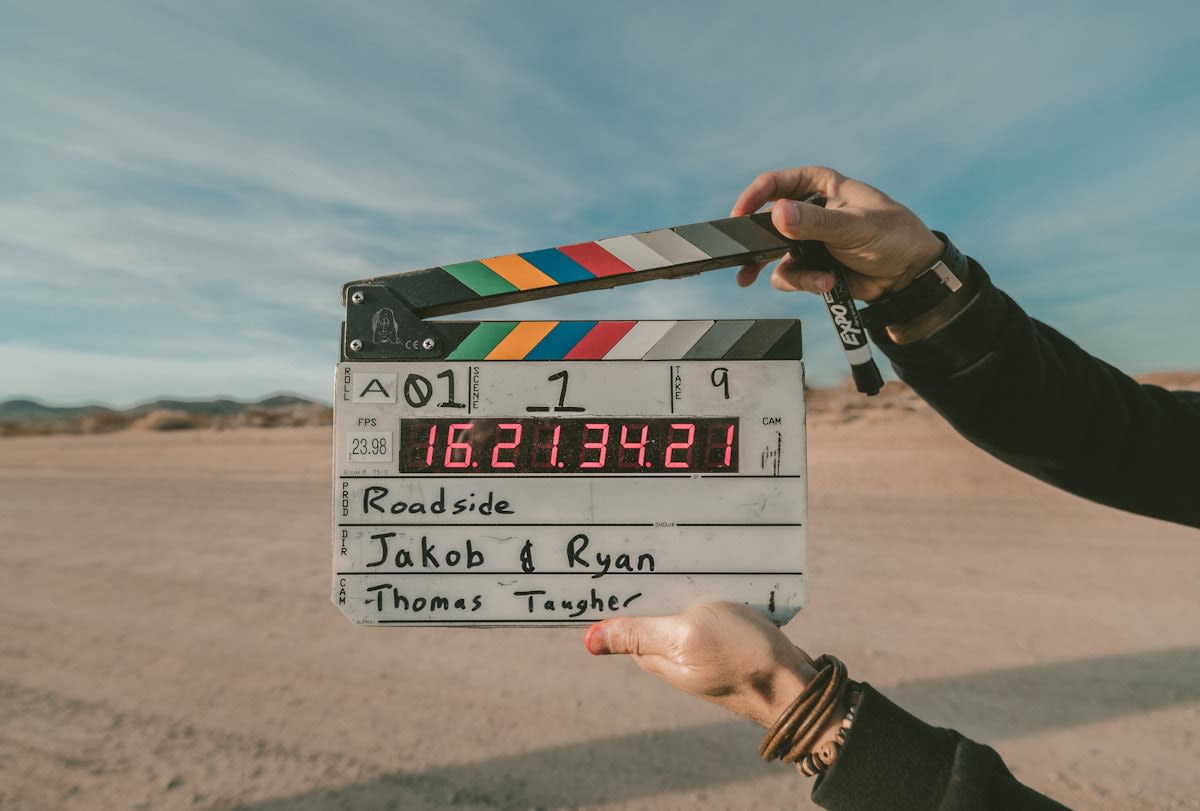
Consider the power of the visual hook. In a recent analysis of high-performing short-form content, videos that utilized a 'pattern interrupt'—something visually jarring or out of place in the first two seconds—saw a 40% higher completion rate than those with standard introductions. Why? Because the human brain is wired to notice anomalies. If you show a man in a tuxedo eating a burger in a bathtub, the brain demands to know why. You have successfully bought yourself another ten seconds of attention.
"Brevity is not the absence of detail; it is the distillation of essence."— Industry Standard Narrative Theory
Audio is your secret weapon. While the eyes are captured by the hook, the ears are captured by the atmosphere. Synchronized audio cues—a sudden silence, a sharp intake of breath, or a bass drop—act as emotional punctuation marks. Data suggests that 80% of users engage more deeply when audio is used to signal a narrative shift rather than just as background music. Use sound to tell the viewer how to feel before the image even tells them what is happening.

Global Perspectives on Compression
Different cultures approach the micro-drama with varying rhythms. In South Korea, the influence of K-drama has led to a style of short-form content that emphasizes extreme emotional proximity—ultra-close-ups and heightened melodic scores. In contrast, creators in Brazil often leverage high-energy social commerce storytelling, where the drama is tied to a rapid-fire demonstration of value and desire. India's short-form ecosystem often utilizes theatrical gestures and vivid color palettes to convey complex social narratives in under a minute. The common thread? A ruthless commitment to the core emotion.
| Element | Traditional Narrative | Micro-Drama |
|---|---|---|
| Introduction | Slow build/World-building | Instant shock/The Hook |
| Pacing | Linear progression | Rhythmic pulses/Rapid cuts |
| Conflict | Developed over time | Immediate and acute |
| Resolution | Detailed denouement | The Echo/The Loop |
One of the most sophisticated techniques in the modern toolkit is the 'Infinite Loop.' By designing the final second of your video to flow seamlessly back into the first second, you trick the viewer's brain into watching the story a second or third time. This isn't just a gimmick; it's a growth engine. Content that successfully implements a seamless loop often sees a 20% increase in total completion rates, signaling to platform algorithms that the content is highly engaging, which in turn pushes it to a wider global audience.
Common Pitfalls of the Amateur
The most frequent mistake is the Exposition Trap. Amateurs spend the first fifteen seconds explaining who the characters are and where they are. This is fatal. In a micro-drama, character is revealed through action, not explanation. If a character is angry, don't tell us they had a bad day—show them smashing a glass. The viewer will deduce the rest. Every second spent explaining is a second the viewer spends looking for the 'swipe up' gesture.
- Over-editing: Using too many transitions that distract from the emotional core.
- Lack of Contrast: Maintaining the same energy level for 60 seconds, leading to viewer fatigue.
- Ignoring the Mute Button: Failing to use on-screen text for those watching without sound.
- The 'Slow Fade': Ending the video with a slow fade-to-black, which kills the momentum of the loop.
Ultimately, the art of the micro-drama is the art of subtraction. You are not adding elements to make a story better; you are removing everything that isn't the story. When you strip away the fluff, you are left with the raw, beating heart of the narrative. That is what resonates. That is what stops the thumb. Master the subtraction, and you master the medium.