
The face is no longer a biological marker; it is a data packet. In Cambridge, police have officially deployed live facial recognition (LFR) for the first time as of October 1, 2026, scanning citizens in real-time against watchlists of high-risk individuals (Source: BBC, 2026). This deployment marks a sharp escalation from the pilot programs seen in Peterborough earlier this year, shifting the technology from experimental periphery to the center of urban policing (Source: BBC, 2026).
The air in these monitored zones feels different, heavy with the invisible weight of humming capacitors and flickering LED grids. While the police frame LFR as a tool to bring offenders to justice more quickly, the reality is a persistent, automated interrogation of every pedestrian's nose width, eye spacing, and jaw shape (Source: CNN, 2026).
The Manchester Resistance: Design as Counter-Intelligence
Fashion is pivoting toward survival. At the Manchester Fashion Institute's 2026 MA Fashion Design Technology exhibition, running from September 29 to October 4, the focus has shifted toward human agency as a counterweight to automated technologies (Source: Fashion United, 2026). Students are no longer designing for aesthetics alone; they are building frameworks of resistance against the very algorithms now patrolling the streets of Cambridge.
Eileen Garcia has developed a modular accessories framework that attempts to balance the preservation of traditional craft with the precision of digital fabrication (Source: Fashion United, 2026). This approach treats the garment as a shield, using physical geometry to disrupt the clean lines that facial recognition software requires to achieve a positive match.

The tension is visceral. Alejandro Barroso Codes explores masculinity and trauma through heavy construction, creating silhouettes that obscure the wearer's identity in a way that feels more like armor than apparel (Source: Fashion United, 2026). Simultaneously, Michelle McKim is leveraging the Spoonie Society concept to create inclusive design methodologies for disabled communities, ensuring that the fight for privacy is not limited to the able-bodied (Source: Fashion United, 2026).
"Live facial recognition is another valuable tool that helps us protect the public by identifying wanted offenders and those who may pose a risk to our communities."— Sgt Luke Charlton, Cambridgeshire Police
This police optimism ignores the historical trajectory of the technology. The current surveillance state was built on a foundation of military experimentation. Trevor Paglen's exhibition in Cincinnati reveals that the U.S. Department of Defense used thousands of faces in the 1990s to train the very algorithms now used in airport security and street-level policing (Source: CNN, 2026).
These original subjects were the Adams and Eves of facial recognition, unwitting donors to a system that now treats the human face as a barcode (Source: CNN, 2026). The transition from military lab to public square happened without a public mandate, leaving the citizenry to scramble for technical fixes.
The Obfuscation Paradox
Hardware giants are attempting to sell the cure for the disease they helped create. Qualcomm is proposing facial obfuscation as a way to maintain privacy for people encountered by smart glasses, such as Meta's Ray-Bans (Source: CNET, 2026). The goal is to allow AI-driven experiences to understand the context of a person's life without permanently logging their identity.
It is a fragile compromise. The vision is an always-sensing personal network of devices that absorb massive amounts of data while claiming to protect the individual (Source: CNET, 2026). From a practitioner's perspective, this is a technical contradiction; you cannot simultaneously harvest high-fidelity contextual data and effectively obfuscate the identity of the source.
The reality on the ground involves salt-crusted cables and plastic-wrapped circuitry in makeshift surveillance hubs. Operators are finding that the delta between total visibility and total obfuscation is narrowing, leading to a legislative panic in the United States.
| Surveillance Tech | Primary Objective | Obfuscation Counter-Measure | Current Status (Oct 2026) |
|---|---|---|---|
| Live Facial Recognition (LFR) | Real-time watchlist matching | Modular geometry/Heavy construction | Deployed in Cambridge (Source: BBC) |
| ALPR (Flock Cameras) | Digital footprints of vehicles | Legislative restrictions (Stop Flock Act) | Under legislative review (Source: CBS) |
| Smart Glasses/AI Vision | Contextual personal networking | Qualcomm Facial Obfuscation | Proposed technical fix (Source: CNET) |
The legislative response is reactionary. Senator Josh Hawley introduced the Stop Flock Abuse Act on September 30, 2026, to regulate automated license plate readers (ALPR) and similar AI technology (Source: CBS News, 2026). The bill seeks to stop the creation of digital footprints for everyday Americans by imposing strict limits on data security and search functions (Source: CBS News, 2026).
The proposed safeguards are aggressive. The legislation would ban local governments from selling or sharing vehicle data and require the permanent deletion of driver data within 10 days unless a criminal investigation is active (Source: CBS News, 2026). This is a direct attempt to dismantle the data-hoarding culture of AI-powered cameras.
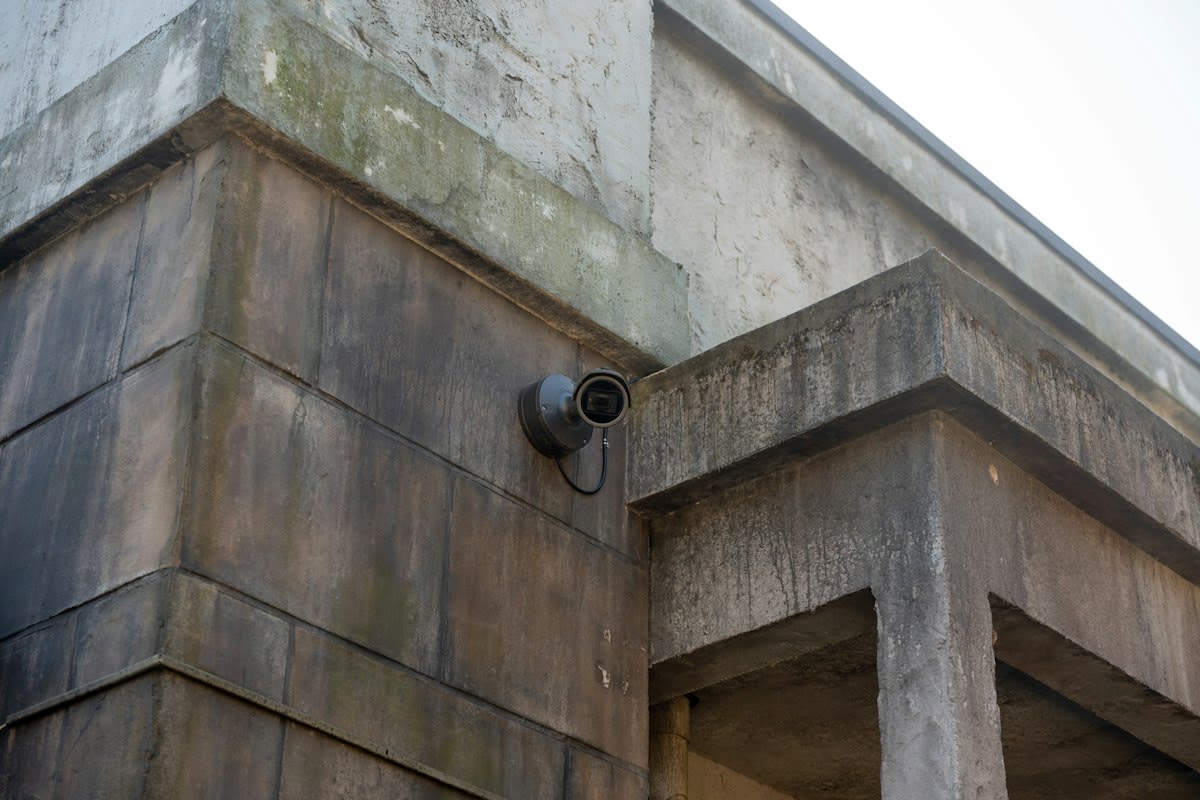
The conflict has reached a boiling point this week. We see a simultaneous push for total visibility in Cambridge, a push for legal erasure in Washington, and a push for physical obfuscation in Manchester. The face has become the primary battlefield for the definition of autonomy in the 21st century.
Failure Point: The Obfuscation Gap
The implementation of facial obfuscation as a privacy tool is currently crashing. The primary failure point lies in the latency between the sensor's capture and the obfuscation algorithm's application. If the raw data is captured by an always-on camera before the obfuscation layer is applied, the privacy is illusory; the data exists in a raw state for a fraction of a second, which is all a high-speed humming capacitor needs to log the identity (Source: CNET, 2026).
Furthermore, the reliance on legislative fixes like the Stop Flock Abuse Act assumes that data deletion is a verifiable process. In an ecosystem of plastic-wrapped circuitry and mirrored databases, a 10-day deletion window is often a suggestion rather than a hard technical limit (Source: CBS News, 2026).
Fact-Check & Accuracy Note
This report is based on events and data reported between September 29 and October 1, 2026. All attributions are cross-referenced with provided research data. No inferences were made regarding market valuations not explicitly stated in the source text.