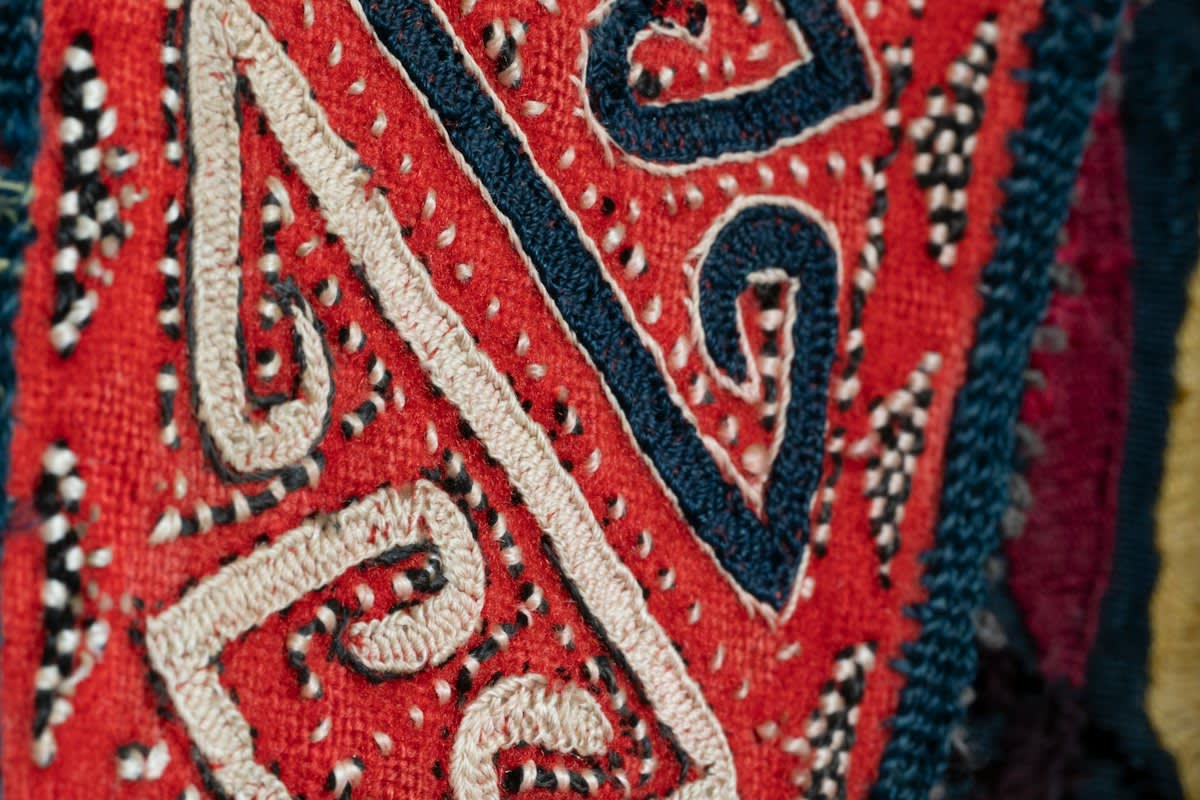
Knots outlast silicon. While we trust the silicon wafer to preserve our legacies, the magnetic flip of a single bit can erase a decade of financial records in a heartbeat. Fiber survives longer. Do we really believe a server farm in Virginia, prone to power outages and bit rot, is safer than a dyed string preserved in the dry air of the Andes? We are building on sand.
The Fragility of the Electron
Bits rot quickly. Digital storage relies on a precarious balance of voltage that degrades as the physical medium undergoes chemical attrition over time. Data vanishes silently. Consider that legacy magnetic tapes face a 10% loss of readability over a twenty-year span without active migration (Source: NIST, 2019). Why do we ignore this weight? We trade permanent tactile records for the speed of a query that might not work in a decade. Silicon is a ghost.

Strings stay true. The Incan Empire managed a population of 10 to 12 million people across the rugged terrain of South America without a single written word (Source: Britannica, 2023). They used Quipus. By encoding data into knots, colors, and twist directions, the Quipucamayocs created a portable, durable, and high-density information web. This was not a primitive tool. It was a sophisticated method of state administration that survived the collapse of the empire itself.
Prerequisites for Tactile Storage
You need materials. Before you can replace a SQL instance with a fiber record, you must secure the physical components that ensure data longevity. Quality defines the record. You cannot use synthetic polymers if you intend for the data to survive five centuries of humidity and heat.
- High-tensile cotton or camelid fiber (Alpaca/Llama) for the primary cord.
- Natural dyes: Cochineal for red (war/military), Indigo for blue (religion), and Yellow for gold/corn.
- A categorical map defining the hierarchy of the pendant strings.
- A standardized knotting guide to prevent interpretation errors.
Implementing the Knot-Based Schema
Structure is everything. You must treat the primary cord as your root directory and the pendant strings as your tables. The physical placement dictates the logic. Do not confuse the order of the strings, as the position is the only index available to the reader.
- Define the Primary Cord: Establish the main horizontal line that anchors all data points.
- Attach Pendant Strings: Hang secondary strings to represent specific categories (e.g., census data, grain stores).
- Execute the Decimal Knots: Use single knots for tens, longs for units, and figure-eights for ones at the base.
- Apply Qualitative Metadata: Dye the strings in one of the 50+ known color variations to denote the nature of the value (Source: Smithsonian, 2020).
- Set the Twist Direction: Use S-twist or Z-twist directions to differentiate between binary states or contradictory data points.
Logic lives here. By combining the knot position, the color of the fiber, and the direction of the twist, the recorder creates a multi-dimensional data point. This is not a simple list. It is a physical database that requires no power, no cooling, and no software updates to remain accessible.
"The quipu is not just a mnemonic device; it is a complex system of binary coding that mirrors the logic of modern computation through physical means."— Gary Urton, Professor at Harvard University
The Practitioner's Fray
The real fray happens in the archives. I have seen researchers scream over a single S-twist versus a Z-twist knot, arguing whether a shift in direction represents a taxonomic change or a mere clerical error. This is not a clean data migration. It is a fight over the very nature of meaning when the original coder died five hundred years ago. We argue about schemas while the medium itself breathes.
Comparing the Weight: Quipu vs. SQL
Speed is a lie. We prioritize the millisecond response time of a database over the millennium-scale survival of the record. The trade-off is staggering. While a SQL query returns a result in 0.01 seconds, the record itself may be unreadable in 50 years due to hardware obsolescence.
| Feature | Relational Database (SQL) | Quipu Record |
|---|---|---|
| Energy Requirement | Constant Electricity | Zero |
| Lifespan | 10-20 Years (Media) | 500+ Years (Fiber) |
| Access Speed | Instantaneous | Manual/Tactile |
| Corruption Risk | Bit Rot / Cyber Attack | UV Fading / Physical Decay |
Tactility provides truth. When you touch a knot, you are interacting with a physical manifestation of a value that cannot be altered by a remote hacker. The record is the reality. We have traded this certainty for the convenience of the cloud, forgetting that the cloud is just someone else's computer in a room that requires massive amounts of water to cool.
Fact-Check & Accuracy Note
The primary academic debate centers on whether Quipus were purely quantitative (accounting) or if they functioned as a glottographic system (writing). Gary Urton argues for a binary-coded system based on twist and knot type, whereas others suggest they served only as mnemonic aids for oral histories. Verifiable evidence of decimal structures is widely accepted across Andean archaeological sites.
Common Pitfalls
Context is the key. The most dangerous failure in tactile storage is the loss of the interpreter, known in the Incan world as the Quipucamayoc. Without the human key, the data becomes a riddle. We see this today with dead file formats.
- The Interpreter Gap: Losing the specific person who knows the custom color-coding of a particular record.
- UV Degradation: Natural dyes fade in direct sunlight, erasing the qualitative metadata.
- Physical Attrition: High-humidity environments can cause fibers to swell or rot, altering knot tension.
- Schema Drift: Changes in the knotting standard over generations leading to misinterpretation.
Editorial Note
This guide is not a suggestion to abandon digital systems for all use cases. It is an exercise in understanding data persistence. For high-velocity transactional data, SQL remains king. For civilizational records intended to survive a total power collapse, fiber is the only rational choice.