For the last eighteen months, the media world played a losing game of digital whack-a-mole. We relied on AI detectors to spot deepfakes, hoping a probabilistic score could tell us if a video of a world leader was real or a synthetic hallucination. It failed. The tools were too slow, the false positives were too high, and the generative models evolved faster than the filters designed to catch them. Now, the strategy has shifted entirely. We are witnessing the Provenance Pivot: a move away from trying to detect the fake and toward cryptographically proving the original.
The Delta: Detection vs. Provenance
Twelve months ago, the industry conversation centered on detection. Companies sold software that analyzed pixels for artifacts or looked for unnatural blinking patterns in videos. Today, that approach is viewed as a relic. The new vanguard is the Coalition for Content Provenance and Authenticity (C2PA), which focuses on a deterministic record of origin. Instead of asking, Is this image fake?, the question has become, Where did this image come from and who touched it? This is not a subtle change; it is a fundamental re-engineering of how digital media is captured and distributed.
| Feature | AI Detection (The Old Way) | Provenance (The New Pivot) |
|---|---|---|
| Methodology | Probabilistic (Guessing) | Deterministic (Proof) |
| Point of Intervention | Post-production / Consumption | Point of Capture / Creation |
| Reliability | Degrades as AI evolves | Secured by Cryptography |
| Primary Goal | Spotting the Lie | Verifying the Truth |
Why does this shift matter for the average consumer? Because detection is a reactive race. In a reactive model, the bad actor always holds the first-mover advantage. Provenance, however, creates a proactive chain of custody. By embedding metadata at the moment a shutter clicks or a record button is pressed, the media carries its own passport. If that passport is missing or tampered with, the content is treated as untrusted by default. This flips the burden of proof from the viewer to the creator.
Hard-Coding Trust into the Sensor
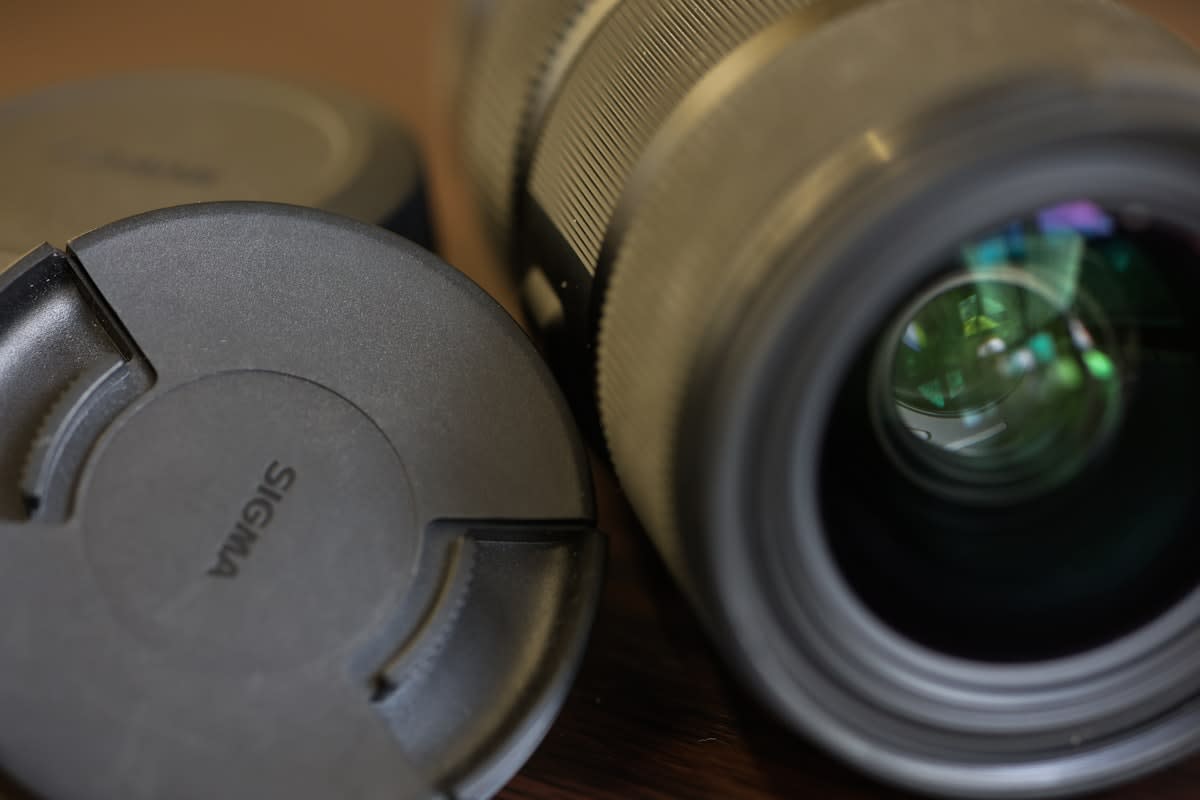
The most critical frontline of this pivot is not in the cloud, but in the silicon. We are seeing a rapid integration of C2PA standards directly into camera hardware. When a journalist in Nairobi or a photojournalist in Tokyo captures an image, the camera signs the file with a private key. This creates a cryptographically secure link between the physical event and the digital file. If a single pixel is altered in Photoshop, the signature breaks, alerting the end user that the image has been modified.
"We are moving toward a world where the absence of provenance is the strongest signal of a fake. Trust will no longer be a feeling; it will be a verifiable data point."— Industry Analyst on Digital Media Standards
Global players are already leaning in. In Japan, Sony is exploring ways to integrate these credentials into their imaging pipelines. In Germany, Leica has begun implementing similar frameworks to protect the integrity of professional photography. This global alignment suggests that the industry has reached a consensus: the only way to fight synthetic media is to make the genuine media undeniable. Can we actually trust a digital file again? For the first time in a decade, the answer might be yes.
The Nutrition Label for Truth
Think of Content Credentials as a nutrition label for media. Just as you can check the ingredients in your food, you will soon be able to click a 'Cr' icon on a photo to see exactly when it was taken, what camera was used, and whether AI was used to expand the background or remove a subject.
This transition is not without its frictions. Privacy advocates rightly ask who controls these keys and whether a mandatory provenance trail could endanger whistleblowers or sources in authoritarian regimes. The industry is currently grappling with the tension between transparency and anonymity. The solution likely lies in tiered credentials, where the source can be verified by a trusted third party without revealing the identity of the individual photographer to the general public.
The Newsroom Adaptation
Newsrooms are the first to feel the urgency. For a global agency like Reuters or the AP, a single unverified image can trigger a diplomatic crisis or a market crash. These organizations are now treating provenance as a core part of their editorial workflow. They are moving away from the old model of trusting the source based on a long-term relationship and toward a model of trusting the file based on its cryptographic history. This is a seismic shift in journalistic practice.
Adoption Curve of Provenance Standards in Professional Media
Executive Insight
+18.4%
YTD Growth
The economic implications are equally profound. As the cost of generating high-quality synthetic media drops to near zero, the value of verified, human-captured media skyrockets. We are seeing the birth of a premium market for 'provenance-grade' content. Brands and publishers who can prove their assets are authentic will command higher prices and deeper loyalty. Authenticity is no longer a given; it is now a luxury product.
Beyond the technology, this pivot requires a cultural shift in how we consume information. For years, we have been trained to be cynical, to question everything. But extreme cynicism leads to 'liar's dividend,' where true events are dismissed as fakes because the public no longer believes anything is real. Provenance offers a way out of this nihilism. It provides a bridge back to a shared reality, provided the standards are open, transparent, and not controlled by a single corporate entity.
The Road to a Verifiable Future
The Provenance Pivot is not a silver bullet, but it is the only viable architecture for the AI era. We are moving from a world of blind trust to a world of verified trust. This transition will be messy, marked by technical glitches and political battles over who gets to define what is 'authentic.' Yet, the alternative is a total collapse of the digital information ecosystem.
As we look toward 2025, the success of this pivot will depend on adoption. If only a few high-end cameras support C2PA, it remains a niche tool. But if social media platforms like Meta, X, and TikTok integrate these credentials into their interfaces—showing a clear badge of authenticity—the incentive for creators to use provenance will become irresistible. The battle for digital truth is no longer about spotting the lie; it is about building a world where the truth is simply easier to prove.