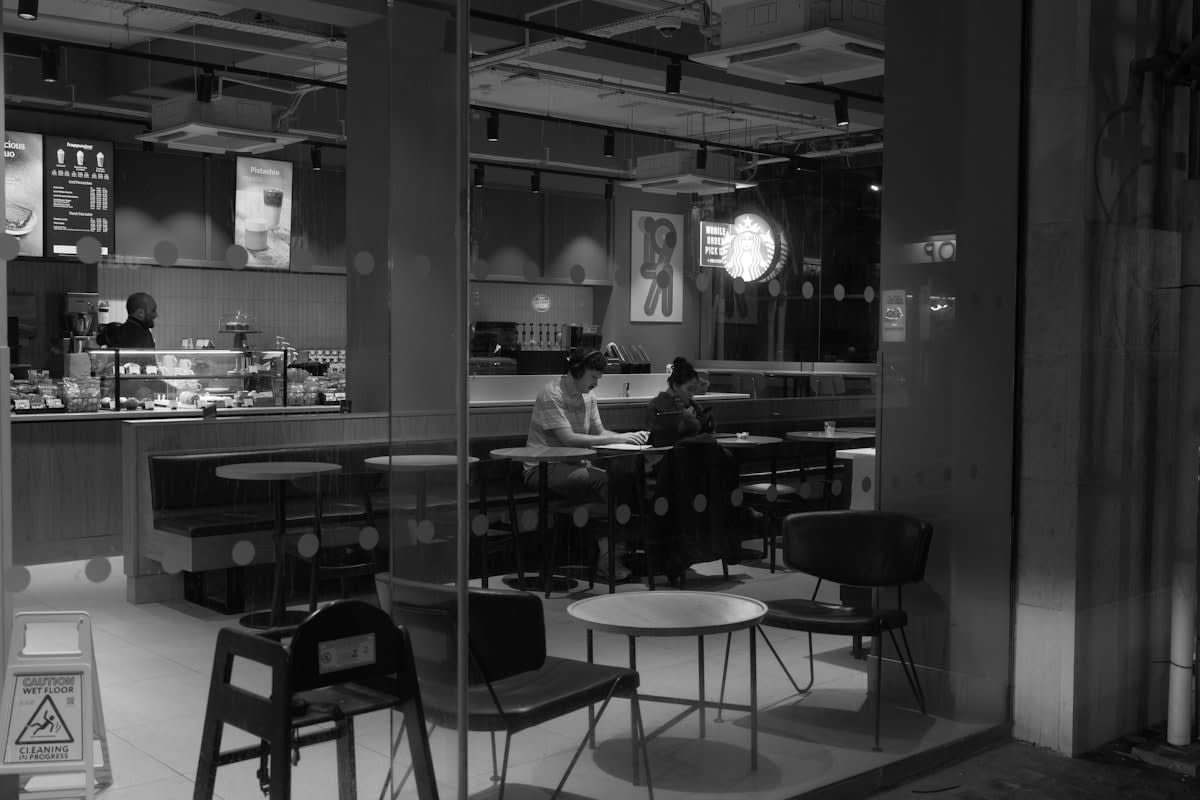
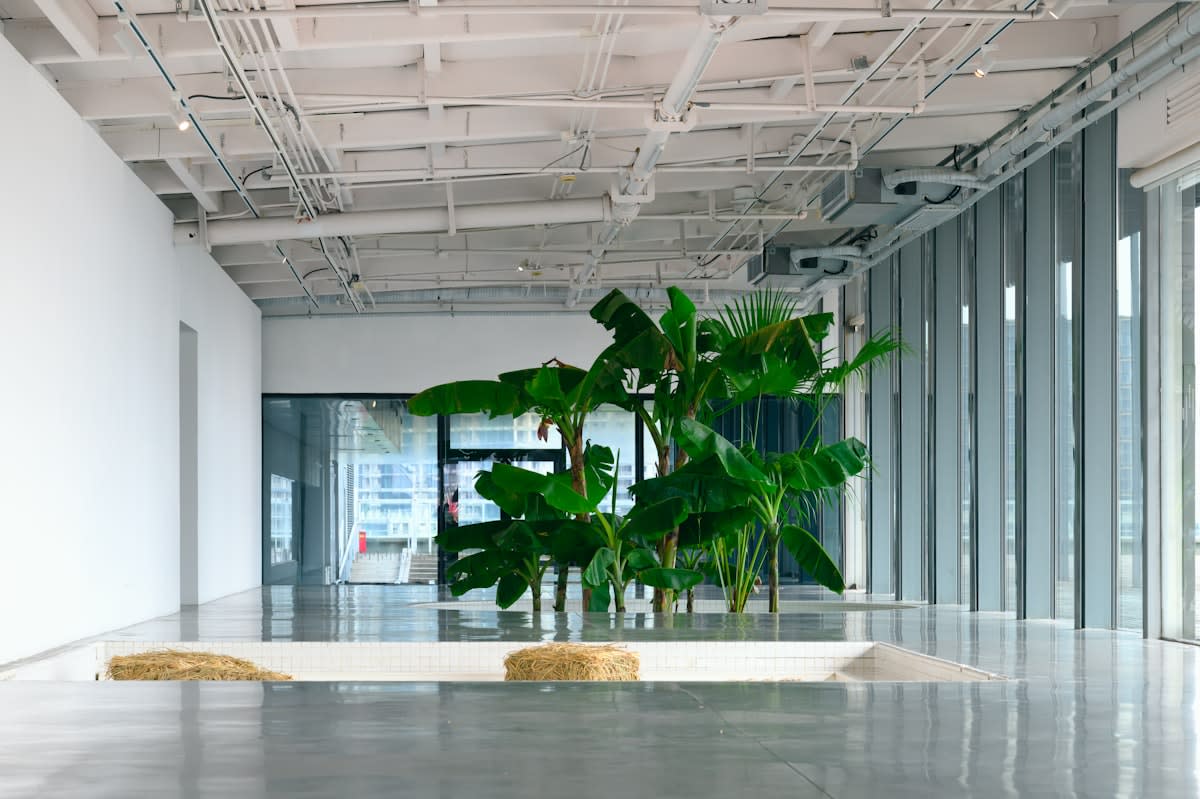
Walk into any 'top-rated' coffee shop in Seoul, Mexico City, or Berlin, and you will find the same visual vocabulary. White walls, light-toned plywood, an abundance of Monstera plants, and a minimalist sans-serif font on the menu. This isn't a organic convergence of global taste; it is the physical manifestation of a digital feedback loop. We have entered the era of the Taste Algorithm, where the definition of 'good' is no longer a matter of cultural heritage or individual intuition, but a result of systemic optimization for the widest possible appeal.
The mechanism is deceptively simple. Platforms like Instagram, Pinterest, and TikTok don't just reflect what we like; they dictate what is visible. When a specific aesthetic—take the 'Millennial Minimalism' or 'Corporate Memphis' style—starts to gain traction, the algorithm amplifies it to maximize engagement. Designers, architects, and artists, seeking visibility and commercial viability, pivot their work to align with these amplified patterns. The result is a recursive loop where the algorithm rewards the familiar, and the familiar becomes the only thing produced.
The Optimization Trap
In the professional design world, this shift has fundamentally changed how decisions are made. We have moved from 'curation'—the act of selecting based on a specific vision or emotional intent—to 'optimization,' the act of selecting based on A/B test results. If a slightly more rounded corner on a button increases click-through rates by 0.2%, that corner becomes the industry standard. This incrementalism creates a race to the middle, where the goal is to remove any element that might cause 'friction' for a user. But friction is exactly where art happens.
When we optimize for the lowest common denominator, we kill the 'ugly-beautiful.' True aesthetic breakthroughs often come from something that initially feels wrong, jarring, or out of place. The algorithm, however, is designed to punish the jarring. It views a sudden departure from the established pattern as a risk to retention. Consequently, the 'weird' is filtered out before it can ever reach a critical mass of viewers, ensuring that our visual landscape remains safe, predictable, and profoundly boring.
"The danger is not that machines will begin to create art, but that humans will begin to create art that looks like it was made by a machine to satisfy another machine."— Industry Consensus on Algorithmic Design
Having spent fifteen years in the trenches of global media and design, I have seen this friction play out in boardrooms across three continents. The debate is always the same: the Creative Director argues for a bold, culturally specific direction that might alienate a small percentage of the audience but will deeply resonate with the rest. The Growth Hacker counters with data showing that a 'neutral' approach minimizes churn. In almost every case, the data wins. The internal struggle is no longer about what is 'better' in an artistic sense, but what is 'safer' in a metric sense.
| Dimension | Human-Led Curation | Algorithmic Optimization |
|---|---|---|
| Discovery Process | Serendipity, Risk, Intuition | Pattern Matching, Probability, Safety |
| Primary Goal | Emotional Resonance & Meaning | Retention & Conversion Rates |
| Evolutionary Path | Disruptive Shifts & Paradigms | Incremental Iteration & Refinement |
| Cultural Impact | Preservation of Local Nuance | Creation of a Global Monoculture |
The Erosion of Cultural Specificity
This standardization is particularly violent when applied to non-Western aesthetics. Local design traditions—which are often rooted in specific climates, materials, and histories—are being flattened into a 'global style' that is legible to a tourist or a digital nomad. When a boutique hotel in Nairobi adopts the same 'Scandinavian-industrial' look as one in Copenhagen, it isn't an exchange of ideas; it is a surrender to the algorithm. The algorithm doesn't understand 'place'; it only understands 'category.'
We see this in music as well, with the rise of 'Spotify-core'—songs engineered with a specific intro length and tempo to prevent listeners from skipping. The song is no longer a narrative arc; it is a series of hooks designed to satisfy a retention metric. When the structure of the art is dictated by the mechanics of the delivery system, the art ceases to be an expression and becomes a product. We are trading the depth of the experience for the efficiency of the discovery.
Is this an inevitable evolution? Some argue that this is simply the new 'International Style,' akin to the Modernism of the mid-20th century. However, Modernism was a conscious philosophical choice about functionality and honesty in materials. The Taste Algorithm is not a philosophy; it is a mathematical average. It doesn't seek truth or utility; it seeks the path of least resistance. The result is a world that is visually polished but spiritually vacant.
Fighting the Average: Strategies for Resistance
Fighting back requires a conscious embrace of 'productive friction.' This means intentionally making choices that the algorithm would hate. For a designer, this might mean choosing a typeface that is slightly difficult to read but carries an emotional weight. For a business owner, it means creating a space that reflects the specific grit and character of its neighborhood rather than a Pinterest board. The goal is to move from 'user-centric design' to 'human-centric design,' acknowledging that humans actually enjoy being challenged.
The most valuable asset in the coming decade will be the 'unoptimizable.' As AI and algorithms become better at generating the 'perfect' average, the market value of the idiosyncratic, the flawed, and the genuinely weird will skyrocket. We are seeing the beginning of this shift in the resurgence of analog media—vinyl, film photography, and hand-printed zines. These mediums are popular not because they are 'better' technically, but because they offer a tactile friction that cannot be simulated by a recommendation engine.
- Prioritize 'High-Friction' Discovery: Seek out sources that don't have a recommendation algorithm (physical bookstores, niche forums, local galleries).
- Embrace the Idiosyncratic: Intentionally incorporate elements into your work that defy current trends, even if they risk lower initial engagement.
- Context Over Category: Design for a specific place, person, or history rather than a global demographic.
- Value the Process Over the Metric: Measure success by emotional resonance and long-term impact rather than short-term click-through rates.
The path forward is not to reject technology, but to stop letting the delivery system dictate the content. We must treat the algorithm as a tool for distribution, not a blueprint for creation. By reclaiming our right to be 'inefficient' and 'wrong,' we can break the loop of standardization and return to a world where 'good' is a diverse, contested, and living definition.
Fact-Check & Accuracy Note
This analysis is based on systemic observations of global design trends and the operational logic of engagement-based recommendation engines. While specific 'Taste Algorithms' are proprietary, the outcomes—aesthetic homogenization and the 'AirSpace' phenomenon—are documented across urban design and digital media studies.
Editorial Note
Editorial Note: This piece adopts a contrarian stance to challenge the industry's reliance on A/B testing. The author argues that the current trend toward 'frictionless' design is a systemic risk to cultural diversity.