The Fallacy of the Master Plan
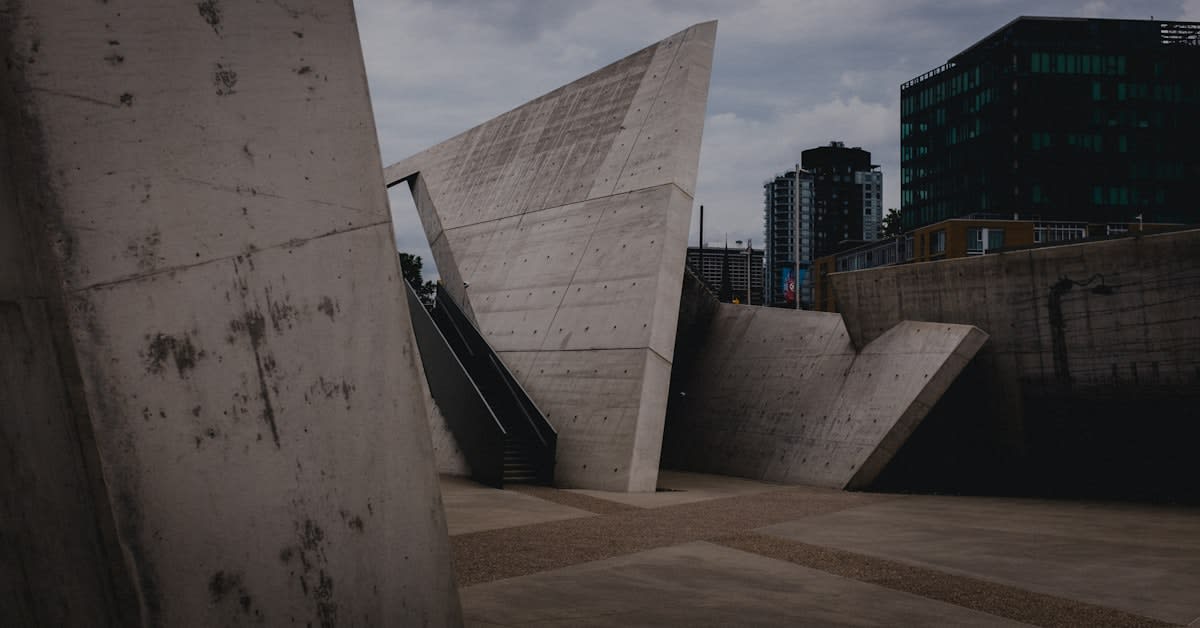
Stop thinking in master plans. For decades, urban planning has been obsessed with the 'Grand Gesture'—the massive stadium, the sprawling highway, the sterile glass district. These interventions are slow, prohibitively expensive, and often arrive ten years too late to solve the problems they were designed to fix. They treat the city as a static map rather than a living organism. When you drop a massive, alien structure into a neglected neighborhood, you aren't reviving it; you are often displacing the very soul of the place in the name of progress.
Urban Acupuncture offers a different path. It is the practice of identifying specific 'pressure points' in the urban fabric—small, neglected spaces that, if triggered correctly, can catalyze a positive ripple effect across an entire district. Think of it as surgical precision over sledgehammer force. Instead of trying to fix a whole neighborhood at once, we find the one vacant lot, the one broken alleyway, or the one dead plaza that, if activated, unlocks the potential of everything surrounding it. This isn't about beautification; it is about systemic acupuncture.
Prerequisites: The Practitioner's Toolkit
Before you touch the ground, you need more than a blueprint. You need a mindset that embraces impermanence and agility. You are not building a monument; you are testing a hypothesis. The goal is to create a 'minimum viable intervention' that proves a space can be used differently. If you spend three years in the permitting phase, you have already lost the momentum required for acupuncture to work.
- Hyper-local Ethnography: Spend 40 hours observing how people actually move through the space. Where do they stop? Where do they avoid?
- Low-Fidelity Materials: Pallets, paint, potted plants, and temporary lighting. High-cost materials signal 'permanence' and 'exclusion' to the community.
- Tactical Partnerships: A local shop owner, a neighborhood youth group, or a rebellious street artist. You cannot do this from a corporate office.
- A 'Failure Budget': The understanding that 30% of your micro-interventions will be ignored or vandalized. This is a data point, not a defeat.
- Political Cover: A lightweight agreement with city officials that allows for 'experimental zoning' for a limited window.
The Urban Acupuncture Protocol
Executing an acupuncture project requires a disciplined sequence. You cannot simply place a bench in a dead space and expect a renaissance. You must analyze the flow of the city's 'energy'—the pedestrian traffic, the sunlight, the social friction—and insert your intervention where it will create the most leverage.
- Map the Pressure Point: Identify a space that is physically small but strategically located between two active zones. This 'dead' space is often the bottleneck preventing the two zones from merging.
- Define the Trigger: Determine what the space lacks. Is it shade? Is it a reason to linger? Is it a sense of safety? Your intervention must address this specific void.
- Deploy the Micro-Intervention: Implement a low-cost, high-visibility change. This could be a pop-up library in a concrete alley or a brightly painted crosswalk that signals a pedestrian-first zone. The key is speed and visibility.
- Observe the Ripple: Monitor how the surrounding environment reacts. Do neighboring shop owners start cleaning their storefronts? Do people start congregating? This is the 'acupuncture effect' in action.
- Iterate or Formalize: Based on the usage data, either pivot the intervention or move toward a more permanent, high-quality installation. Only now do you bring in the heavy capital.
"Urban acupuncture is not about the object itself, but about the reaction it triggers in the surrounding environment. The success of a project is measured not by the quality of the bench, but by the number of new conversations that happen around it."— Jaime Lerner, Former Mayor of Curitiba and Urban Planner
Consider the case of Medellín, Colombia. The city didn't start by rebuilding entire slums; they inserted 'library parks' and cable cars into the most violent, inaccessible hillsides. These were surgical strikes of dignity and infrastructure. By placing a world-class architectural piece in a neglected zone, they signaled that the state valued these citizens. This triggered a systemic shift in civic pride and safety that no amount of traditional policing could have achieved (Source: UN-Habitat, 2016).
The Ground-Level Reality: Friction and Debate
In the field, the biggest battle isn't against the environment; it's against the bureaucracy. As a practitioner, you will find yourself in a constant tug-of-war with the 'Department of Public Works' mindset. They want everything to be standardized, durable, and approved by six committees. They view a temporary pop-up park as a liability or an eyesore. I have spent countless hours arguing that a 'perfect' park that takes five years to build is less valuable than a 'good enough' park that opens tomorrow. The debate is essentially: Do we prioritize the risk of a mistake or the risk of stagnation?
There is also a deep internal debate among practitioners regarding 'gentrification by design.' When you successfully activate a dead space, the land value around it typically spikes. If you aren't careful, your acupuncture needle becomes a tool for displacement. The real skill lies in creating interventions that serve the existing community rather than those who will move in once the area becomes 'trendy.' This requires a level of social intelligence that no architecture degree provides.

Measuring Success: Beyond Aesthetics
How do you know if your intervention worked? Most amateurs look at the photos. Professionals look at the behavior. We track 'dwell time'—the average amount of time a person stays in the space compared to the baseline. We look for 'spontaneous appropriation,' where locals begin adding their own elements to the intervention, such as leaving a plant or hanging a sign. This indicates the community has claimed the space.
| Metric | Traditional Planning | Urban Acupuncture |
|---|---|---|
| Timeline | 3-10 Years | 2-12 Weeks |
| Cost | Millions (CapEx) | Thousands (OpEx) |
| Risk Profile | High (Systemic Failure) | Low (Iterative Failure) |
| Primary Goal | Optimization/Control | Catalysis/Activation |
| Success Indicator | Completion of Build | Change in User Behavior |
Common Pitfalls to Avoid
The most common mistake is the 'Beautification Trap.' This is when a practitioner focuses on making a space look 'nice'—adding a few flowers and a fresh coat of paint—without addressing the underlying functional void. If a space is dead because it feels unsafe at night, a new flowerbed won't fix it; strategic lighting and a reason for people to be there will. Aesthetics are a byproduct of success, not the cause of it.
Another critical failure is 'Over-Engineering.' When you bring in high-end design firms too early, you create a space that feels too precious. People are afraid to touch it, move things, or truly use it. The magic of urban acupuncture lies in its modesty. It should feel like an invitation, not a museum exhibit. If the community feels they cannot influence the space, they will treat it as an alien object and eventually ignore it.
Fact-Check & Accuracy Note
Key claims regarding the outcomes of 'social urbanism' in Medellín and the theoretical framework of Urban Acupuncture are sourced from the writings of Jaime Lerner and UN-Habitat's reports on sustainable urban development (2016). There is an ongoing debate in the field regarding the long-term impact of micro-interventions on property values and the potential for accelerated gentrification.