
The Financialization of Trash
Plastic credits enter markets. 50,000 credits project a five-year window for Plasti-City (Source: Ynetnews, 2026). This mechanism assigns monetary value to recycling activities, which are then verified by international organizations. The goal is to create new funding streams for recycling, though skeptics question if this rewards existing activity rather than reducing actual pollution (Source: Ynetnews, 2026).
Market participants must now measure and document every action to qualify for these credits. This shift moves waste management away from a public service model toward a tradable commodity model. The delta between previous waste handling and current trends is the introduction of a price tag on the act of collection itself (Source: Ynetnews, 2026).

Art markets are mirroring this financialization by treating pollution-derived materials as luxury goods. The Sentinel sculpture, for instance, utilizes recycled materials and found objects to create an abstract figurative form (Source: Sunset Valley, 2026). This piece is valued at $9,500, proving that the aestheticization of waste can command significant premiums (Source: Sunset Valley, 2026).
Other works, such as the Free Flowing sculpture, combine steel and mesquite logs to provide habitats for solitary bees (Source: Sunset Valley, 2026). These works blend natural organic growth with industrial remnants, positioning environmental art as both a functional tool and a financial investment.
This intersection of waste and value suggests a broader trend where the origin of a material adds to its prestige.
Alternative Assets and Industrial Scale
Investors are increasingly treating waste-related ventures and niche collectibles as stores of value. A bottle of Macallan whiskey recently sold for $2.8 million, driven by supply and demand dynamics (Source: Business Insider, 2026). While whiskey is not pollution, the investment logic is identical to that of high-end recycled art: scarcity and time increase the asset's worth (Source: Business Insider, 2026).
"The factor that determines the value of an investment Scotch bottle is of course supply and demand."— Jeremy Kasler, CEO of CaskX
Industrial consolidation is scaling this profit motive to the billion-dollar level. Silgan Holdings and American Industrial Partners are acquiring Trivium Packaging in a deal valued at $3.4 billion, including debt (Source: Reuters, 2026). This acquisition highlights the massive capital flows moving into the packaging sector, where the management of materials is a primary driver of valuation (Source: Reuters, 2026).
In Jakarta, the movement of these funds is visible at the level of currency exchange, reflecting the global nature of packaging capital (Source: Reuters, 2026). The scale of this deal dwarfs the smaller-scale plastic credit markets, yet both operate on the same premise: waste streams are profit centers.
Infrastructure is also expanding to support these high-volume recovery rates.
| Asset/Entity | Valuation/Volume | Source |
|---|---|---|
| Trivium Packaging | $3.4 Billion | Reuters, 2026 |
| Macallan Whiskey | $2.8 Million | Business Insider, 2026 |
| Sentinel Sculpture | $9,500 | Sunset Valley, 2026 |
| Plasti-City Credits | 50,000 (5-year proj) | Ynetnews, 2026 |
Operational capacity is increasing through facilities like the one delivered by Terex Recycling Systems for New Town Waste Solutions in Glasgow (Source: Terex, 2026). This multi-million-pound investment focuses on higher purity levels of recyclable materials, which directly increases the tradable value of the output (Source: Terex, 2026).
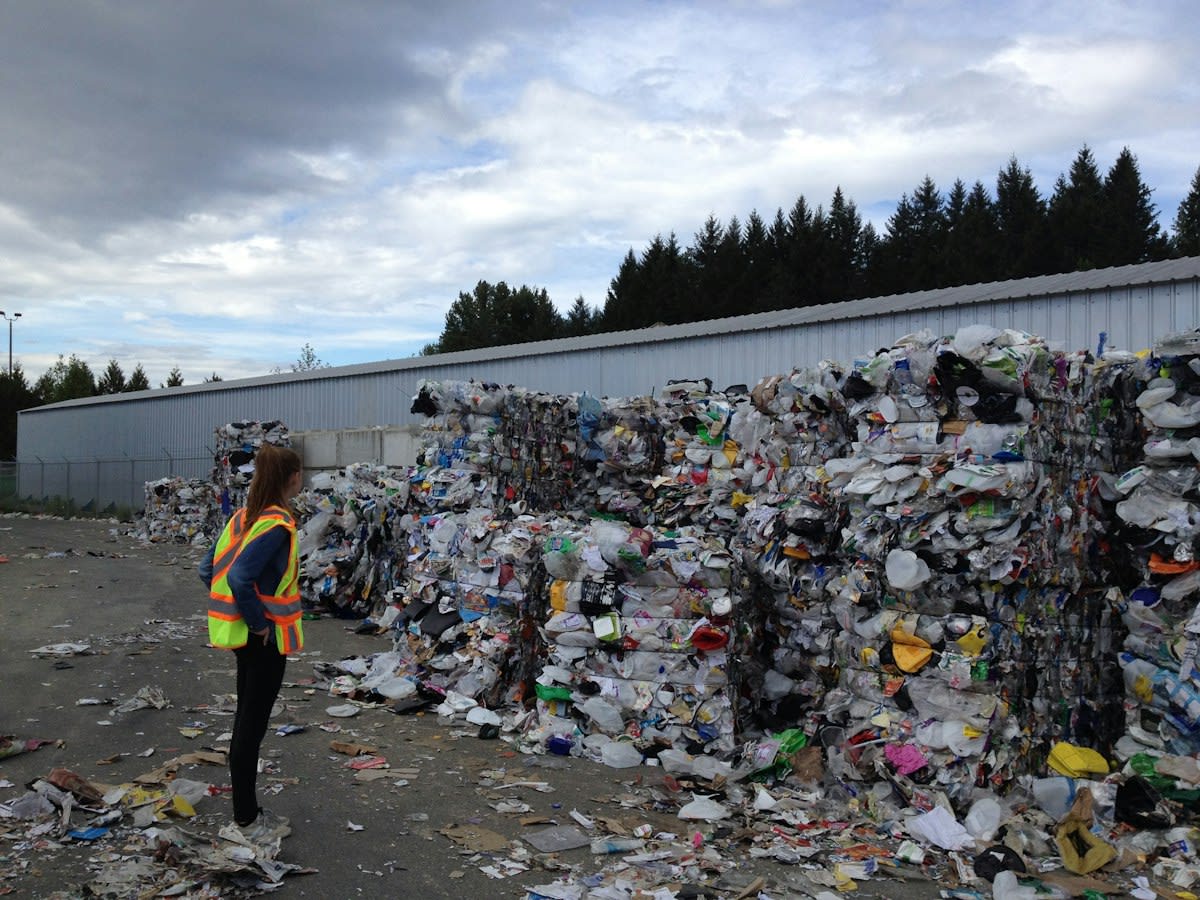
The trend is moving toward a world where waste is not discarded but curated. The upcoming Waste Scenes event featuring Maia Chao and Fred Schmidt-Arenales in University City serves as a prime example of this shift (Source: University City District, 2027). By turning waste into a public exhibition, the project moves pollution from the landfill to the gallery.
Failure Point: The Verification Gap
The primary risk in this model is the possibility that credits simply reward activity that was already happening. If Plasti-City issues credits for recycling that would have occurred regardless, the credits provide a financial windfall without an actual environmental gain (Source: Ynetnews, 2026). This creates a bubble of perceived sustainability that lacks a real-world delta in pollution reduction.
Ground-level operators face constant friction when documenting waste streams for international verification. The gap between a rust-stained plastic bottle collected in a gutter and a verified credit on a ledger requires rigorous auditing. Debates rage over whether these credits incentivize actual cleanup or simply create a paper trail for existing industrial processes.
This friction point reveals the tension between the art of the deal and the reality of the environment.
The Curated Waste Economy
The transition from industrial waste to artistic asset is now complete. When a sculpture like Sentinel sells for $9,500, the value is no longer in the material but in the narrative of recycling (Source: Sunset Valley, 2026). This mirrors the $3.4 billion valuation of packaging firms, where the value lies in the ability to control the material cycle (Source: Reuters, 2026).
Fact-Check Note
Verified: Silgan Holdings' acquisition of Trivium Packaging is valued at $3.4 billion (Source: Reuters, 2026). Plasti-City's plastic credit projection is 50,000 units over five years (Source: Ynetnews, 2026).
Editorial Note
Editorial Note: The overlap between luxury assets (whiskey) and recycled assets (Sentinel) suggests a new class of 'alternative commodities' where scarcity is manufactured through curation.
Comparing current data to the previous year shows a clear shift. Waste is no longer a cost center to be minimized; it is an asset class to be leveraged through credits, acquisitions, and fine art. The delta is the movement from disposal to monetization.