The Great Decoupling of Power
The centralized utility model is dying a slow, expensive death. For a century, the flow of power was unidirectional: from a massive plant to a passive consumer. That era is over. We are witnessing a seismic pivot toward decentralized energy resources (DERs), where the consumer is now a 'prosumer' who generates, stores, and trades their own electrons. This is not just a technical shift; it is a financial revolution. The ability to decouple the timing of energy production from its consumption has created a massive price asymmetry, and where there is asymmetry, there is profit.
Why is this happening now? The culprit is the inherent volatility of renewables. Solar and wind are fantastic for the planet, but they are chaotic for the grid. They produce the most energy when demand is often at its lowest, leading to 'negative pricing' events where the grid literally pays people to take power. Conversely, when the sun sets and the wind dies, prices spike violently. This volatility is the oxygen that energy arbitrage breathes. By utilizing Battery Energy Storage Systems (BESS), a new class of investors is capturing these swings, turning the grid's instability into a high-yield asset class.
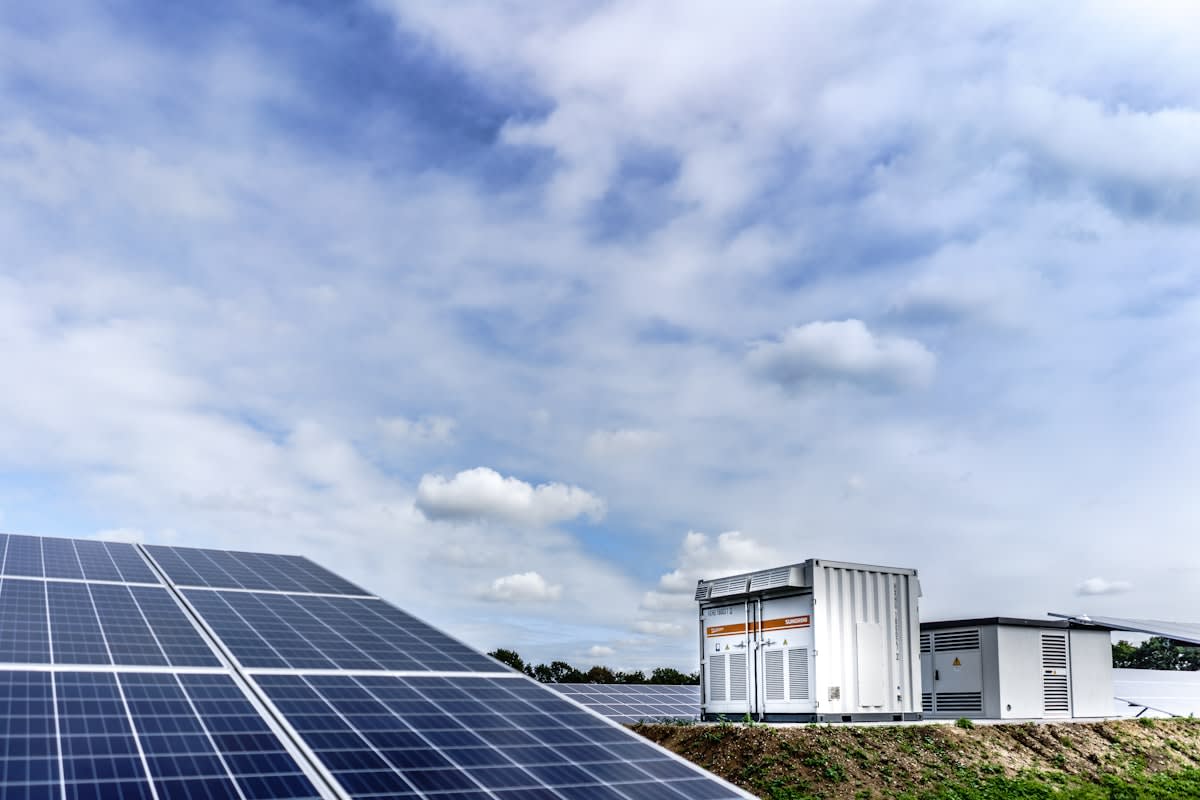
The mechanics are deceptively simple but computationally complex. Arbitrageurs load their batteries when prices are low or negative and discharge them back into the grid during peak demand. However, the real money is no longer in simple buy-low-sell-high cycles. The sophisticated players are engaging in 'revenue stacking'—simultaneously providing frequency regulation, capacity reserves, and energy arbitrage. According to the International Energy Agency (Source: IEA, 2023), the deployment of battery storage must increase exponentially to stabilize the transition, creating a massive vacuum for private capital to fill.
"The shift from centralized generation to distributed arbitrage represents the financialization of the electron. We are moving from a world of energy procurement to a world of energy trading at the edge of the grid."— Analysis from BloombergNEF, 2024
Look at Australia's National Electricity Market (NEM) or the ERCOT grid in Texas. These regions have become the primary laboratories for this boom. In Texas, extreme weather events and a surge in wind penetration have created price swings that would make a crypto trader blush. Investors are no longer just building solar farms; they are building 'hybrid plants'—solar paired with massive battery arrays. This allows them to avoid selling power for pennies during the midday glut and instead hold that energy for the lucrative evening peak. The result is a complete transformation of the project's Internal Rate of Return (IRR).
| Feature | Traditional Utility Model | Decentralized Arbitrage Model |
|---|---|---|
| Power Flow | Unidirectional (Plant to Home) | Bidirectional (Prosumer to Grid) |
| Revenue Source | Fixed Tariffs / Regulated Rates | Market Volatility / Revenue Stacking |
| Asset Focus | Centralized Generation (Coal/Gas) | Distributed Storage (BESS/VPPs) |
| Risk Profile | Operational / Regulatory | Market Price / Battery Degradation |
Walk into any energy trading floor in Houston or Sydney and you will hear the same friction: the battle between the asset manager and the trader. The trader wants to cycle the battery every hour to capture every single cent of volatility. The asset manager, staring at the balance sheet, screams about capacity fade and warranty voids. This is the ground-level reality of the arbitrage boom. It is not a clean digital trade; it is a brutal physical negotiation with chemistry and heat. The debate isn't about whether the money is there—it's about how hard you can push the hardware before it breaks.
The Rise of the Virtual Power Plant (VPP)
While grid-scale batteries get the headlines, the real disruption is happening in the driveway. Virtual Power Plants (VPPs) aggregate thousands of small-scale residential batteries into a single, controllable cloud-based entity. Instead of one giant battery, a VPP operator manages 10,000 Tesla Powerwalls or Sonnen systems. When the grid hits a critical peak, the operator triggers a discharge across the entire network, selling that aggregated power back to the utility at a premium. The homeowner gets a credit on their bill; the VPP operator takes a cut of the arbitrage spread.
The 'Delta' here is staggering. Twelve months ago, residential storage was marketed as a backup for outages—a luxury insurance policy. Today, it is being marketed as a revenue-generating asset. The shift from 'resilience' to 'revenue' is the key driver of adoption. As AI-driven software optimizes when to charge and discharge based on real-time weather patterns and price forecasts, the efficiency of these VPPs is skyrocketing. We are seeing the emergence of 'energy aggregators' who act as the hedge funds of the residential power world.
This financialization of the electron is creating a new class of wealth. It's not just the billionaires owning the BESS farms; it's the software developers building the orchestration layers and the homeowners who have successfully gamed the tariff structures. The barrier to entry is dropping as 'Energy-as-a-Service' (EaaS) models allow people to install storage with zero upfront cost in exchange for a share of the arbitrage profits. This is democratization via infrastructure.
- Energy Arbitrage: Buying low (off-peak) and selling high (peak).
- Frequency Regulation: Getting paid to keep the grid at exactly 50/60Hz.
- Capacity Payments: Being paid simply to be available during emergencies.
- Demand Response: Getting paid to NOT use power during a crisis.
The Regulatory Wall and Physical Limits
It is not all frictionless profit. The biggest threat to the arbitrage boom is not technology, but regulation. Many utilities still operate under antiquated laws that penalize 'grid defection' or limit the ability of residential users to sell power back at market rates. In many jurisdictions, the utility is essentially a protected monopoly that views VPPs as a threat to their revenue stream. The fight now is moving from the engineering lab to the legislative floor, as arbitrageurs lobby for 'open access' to the grid.
Then there is the physical reality of the hardware. Lithium-ion is the current king, but it has a shelf life. Every cycle of arbitrage degrades the battery. If the price spread isn't wide enough to cover the cost of the degradation, the trade is a loss. This is driving a frantic search for 'Long-Duration Energy Storage' (LDES), including iron-air batteries and pumped hydro, which can hold energy for days rather than hours. The next wave of wealth will be captured by those who solve the duration problem, moving from hourly arbitrage to seasonal arbitrage.
Fact-Check & Accuracy Note
The claims regarding BESS growth and the necessity of storage deployment are sourced from the International Energy Agency's (IEA) 2023 reports on renewable integration. Market dynamics regarding 'revenue stacking' and VPP growth are based on analysis from BloombergNEF (2024). There is ongoing debate among engineers regarding the exact rate of battery degradation in high-frequency arbitrage scenarios.
Editorial Governance
Editorial Note: This piece focuses on the opportunity and adaptation phase of the energy transition. While grid instability is mentioned, the narrative emphasizes the economic resilience and wealth creation emerging from these systemic shifts rather than the crisis of the legacy grid.