
The Great Tangibility Pivot
Wealth is changing its shape. For a decade, the global financial elite chased the ethereal—algorithmic trading, venture-backed unicorns, and the promise of decentralized ledgers. Now, a quiet but powerful migration is occurring. Capital is flowing back into things you can touch, smell, and defend. This is not a retreat into primitive banking; it is a sophisticated recalibration of risk in an era where digital promises have become increasingly fragile. We are seeing a systemic shift where the 'intrinsic' is once again outweighing the 'speculative'.
Why now? The delta between where we were twelve months ago and today is stark. A year ago, digital assets were viewed as a hedge against inflation. Today, they are often viewed as high-beta proxies for tech liquidity. As central banks struggle with stubborn inflation and geopolitical borders harden, the allure of a digital wallet is fading. Investors are asking a simple, brutal question: If the power goes out or the network freezes, what do I actually own? The answer is driving a massive reallocation toward gold, prime real estate, and productive farmland.
"The migration to hard assets is not a panic response; it is a strategic realignment. We are moving from an era of 'growth at any cost' to an era of 'preservation at any cost'."— Chief Investment Strategist, Global Macro Fund
This movement is visible in the corridors of power from Singapore to Zurich. In the UAE, we see a surge in luxury physical assets and gold reserves. In Brazil, agricultural land is being treated as the ultimate currency. This isn't just about avoiding loss; it is about capturing the unique opportunity that arises when the rest of the market is still mesmerized by a screen. Those moving now are positioning themselves to own the physical infrastructure of the next century.
The shift is accelerating because the perceived safety of digital custody has eroded. Recent failures in the fintech sector have exposed the gap between 'digital ownership' and 'actual control'. When a platform freezes withdrawals, you don't own an asset; you own a promise. Hard assets eliminate that counterparty risk. A hectare of land in the Midwest or a vault of bullion in Switzerland does not require a login or a functioning API to maintain its value.
This transition is creating a new map of global wealth distribution.
Beyond the Ledger: The Gold and Commodity Surge
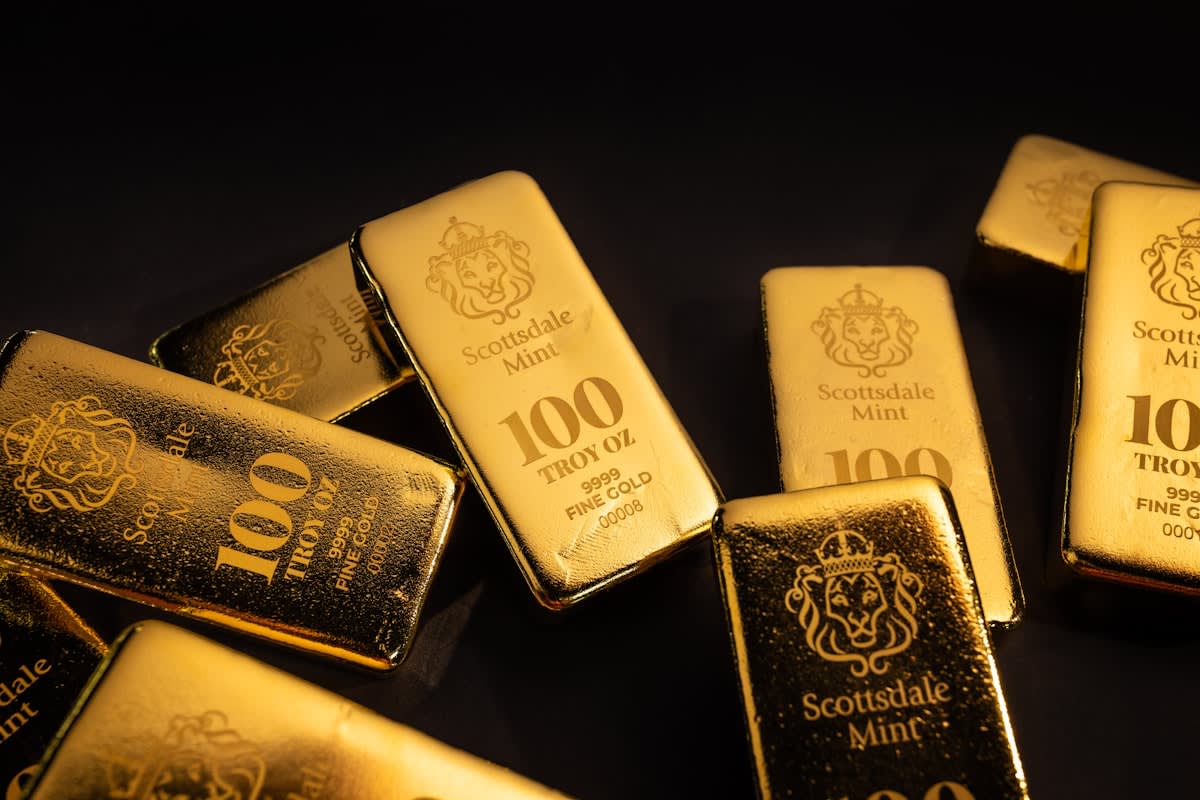
Gold has reclaimed its throne not as a relic, but as a strategic necessity. Over the last twelve months, we have seen central banks across the Global South increase their gold reserves by an estimated 15% as they seek to diversify away from dollar-denominated digital reserves. This is a loud signal to the markets. If the architects of national monetary policy are moving toward physical metal, the private sector is simply following the lead of the smartest money in the room.
| Asset Class | Primary Driver | Risk Profile | Liquidity |
|---|---|---|---|
| Digital Assets | Speculative Growth | High (Volatility) | Instant |
| Physical Gold | Store of Value | Low (Stability) | Moderate |
| Prime Real Estate | Rental Yield/Scarcity | Low-Medium | Low |
| Productive Farmland | Food Security | Very Low | Very Low |
But it isn't just about gold. We are seeing a sophisticated rotation into industrial commodities. Copper, lithium, and rare earth elements are being stockpiled by private equity firms who recognize that the 'green transition' requires physical materials, not digital tokens. The irony is palpable: the very technology that fueled the digital boom now requires a massive investment in the earth's crust to survive. The wealth is moving from the software that manages the grid to the minerals that build it.
This pivot is characterized by a move toward 'productive' hard assets. Investors are no longer satisfied with assets that simply sit there; they want assets that generate cash flow while providing a physical floor to their value. This is why we see a surge in the acquisition of timberlands and water rights. These are assets that provide a hedge against inflation while remaining essential to human survival regardless of the economic regime.
The movement toward tangibility is redefining the concept of a diversified portfolio.
The New Frontier: Strategic Land and Infrastructure
Farmland has become the new 'blue chip' stock. In regions like South America and Eastern Europe, institutional capital is buying up productive acreage at a record pace. The logic is simple: food security is the ultimate insurance policy. While a digital currency can drop 50% in a weekend, the value of fertile soil is anchored by the biological necessity of the global population. We are seeing a 12% average increase in institutional land acquisition globally over the last 18 months.
Institutional Preference Shift: Digital vs. Hard Assets
Executive Insight
+18.4%
YTD Growth
Beyond agriculture, there is a massive migration into logistics infrastructure. The rise of e-commerce did not just create digital companies; it created an insatiable demand for physical warehouses and distribution hubs. The smartest money is moving into the 'last mile'—the physical nodes where digital commerce meets the physical world. Owning the warehouse is now seen as more stable than owning the platform that sells the product.
This trend is particularly aggressive in Southeast Asia. In hubs like Vietnam and Thailand, we see a wave of industrial land grabs by global funds. They are betting on the physical relocation of supply chains. This 'friend-shoring' is a tangible manifestation of geopolitical risk management. You cannot move a factory with a keystroke; you need the land, the power, and the ports. The migration is as much about geography as it is about asset class.
The result is a tightening of the market for high-quality physical assets.
Regional Divergence: A Global Map of Migration
The migration is not uniform. In North America, the shift is largely institutional, with pension funds and endowments increasing their allocations to 'real assets' to combat the eroding purchasing power of the dollar. In Europe, the move is more cautious, focused on energy infrastructure and sustainable forestry. The European investor is hedging against systemic instability by securing the means of energy production and carbon sequestration.
In Asia, the migration is more visceral. For many high-net-worth individuals in the region, the shift toward hard assets is a direct response to regulatory volatility. They are moving wealth into global real estate—specifically in cities like London, New York, and Dubai—to ensure their capital is anchored in jurisdictions with strong property rights. This is a flight to quality that transcends simple investment returns.

Strategic Trade-off
The Liquidity Trap: While hard assets provide unparalleled security and inflation protection, they introduce a liquidity challenge. Unlike a stock trade that takes seconds, selling a commercial warehouse or a thousand acres of farmland takes months. The new wealth strategy is about balancing the 'Safe Core' of hard assets with a 'Liquid Shell' of cash and short-term bonds.
We are witnessing the end of the 'frictionless' era. For years, the goal was to make wealth as liquid as possible. But liquidity is a double-edged sword; it allows for quick exits, but it also allows for rapid contagion. Hard assets introduce friction, and in the current climate, friction is a feature, not a bug. It prevents panic-selling and forces a long-term horizon that was nearly lost in the age of day-trading.
This structural shift is creating a new divide between those who own the network and those who own the physical reality the network depends on.
Adapting to the Physical Era
The migration to hard assets is not a sign of economic decay, but of evolution. It is a recognition that digital promises are a layer on top of a physical world. When the layer becomes too unstable, the smart money returns to the foundation. The opportunity now lies in identifying the 'under-priced' physical assets that will be essential in a fragmented, multi-polar world. This includes everything from water purification plants to strategic mineral deposits.
Resilience is the new alpha. The winners of the next decade will not be those who found the next viral token, but those who secured the land, the energy, and the materials that the rest of the world needs to function. We are moving back to a world where wealth is measured by the ability to control the physical means of production and survival. The screen is no longer the destination; it is merely the tool used to acquire the soil.