
Cuba trades digital currency. 72.4% was the rise in the Dollar against the CUP between late 2025 and September 2026 (Source: Columbia Law, 2026). This surge highlights a desperate rush for liquidity on virtual platforms where users chase what some call Pixel Gold. These digital exchanges provide a facade of financial freedom while the underlying economy remains fragile. Skepticism is warranted when the only growth seen is the devaluation of a national currency against virtual holdings.
Servers now handle massive spikes in volume as users flee domestic instability. Daily amounts of dollars offered for purchase on virtual parallel foreign exchange platforms rose from approximately US$47,700 during the first eleven days of September to US$71,700 during the second half of that month (Source: Columbia Law, 2026). This nearly 50% increase in activity suggests a panic-driven demand rather than a healthy market expansion. Traders are not investing in productivity but are instead hedging against a total collapse of purchasing power.
Businessmen are driving this demand because recent regulatory measures opened the economy further to the private sector (Source: Columbia Law, 2026). These operators require foreign currency to survive in an environment where the state no longer provides the necessary buffers. Every new project or attempt to replenish inventories depends heavily on imports of merchandise, supplies, and equipment. Without Pixel Gold, the private sector is effectively paralyzed, unable to acquire the tools needed for basic operation.
Factories have virtually ground to a halt, leaving a void that virtual currency cannot fill. When domestic industry fails, the reliance on foreign exchange becomes an existential necessity rather than a strategic choice. This creates a feedback loop where the increased demand for dollars and euros further drives up their cost. The Euro, for instance, increased from 480 to 852.5 CUP, a staggering 77.6% rise (Source: Columbia Law, 2026).
| Currency Pair | Start Value | End Value (Sept 2026) | Percentage Increase |
|---|---|---|---|
| USD/CUP | 435 | 750 | 72.4% |
| EUR/CUP | 480 | 852.5 | 77.6% |
| USD/JMD (2021) | 152.2475 | N/A | N/A |
Jamaica provides a stark contrast in how traditional counter rates are managed. In May 2021, the Bank of Jamaica listed the U.S. Dollar at a buying rate of 144.6400 and a selling rate of 154.3078 (Source: Bank of Jamaica, 2021). While these figures represent a different era and region, they illustrate the stability of regulated central bank rates compared to the wild swings of virtual parallel markets. The disparity proves that Pixel Gold is not a stable asset but a symptom of regulatory failure.
Federal regulators are already warning about the dangers of this kind of unregulated trading. The risk of regulatory arbitrage increases when entities seek to evade Commission jurisdiction by framing contracts as locally regulated gambling wagers (Source: Federal Register, 2026). This legal gymnastics allows traders to bypass strict financial oversight by claiming their activity is merely a bet on price movements. Such a framework turns the financial survival of thousands into a game of chance.
"The risk of increased regulatory arbitrage is likely minimal... because the alternative to Federal regulation is compliance with a patchwork of State and Tribal regulatory frameworks."— Federal Register, 2026
Gambling laws often collide with financial regulations in these gray markets. When a transaction is regulated as gaming or gambling under State or Tribal law, it ceases to be a standard financial instrument (Source: Federal Register, 2026). This distinction is vital because it removes the protections usually afforded to investors. In the pursuit of Pixel Gold, users are often trading in a legal void where no one is accountable for the loss of funds.
State frameworks are often too fragmented to provide real security. This patchwork of rules creates gaps that sophisticated actors exploit to move capital across borders without detection. The result is a financial environment where the small trader bears all the risk while the platform operators collect fees on every volatile swing. This is not a new economy; it is an old shell game played on new screens.
Gombe in Kinshasa serves as a real-world mirror to these digital struggles. Practitioners there argue that virtual currency is a mirage that disappears the moment a physical asset is needed. They witness the friction of trying to convert digital gains into actual equipment when the local banking system is disconnected from the virtual platforms. The debate in Gombe is not about the price of the coin, but about the utility of the asset in a broken supply chain.

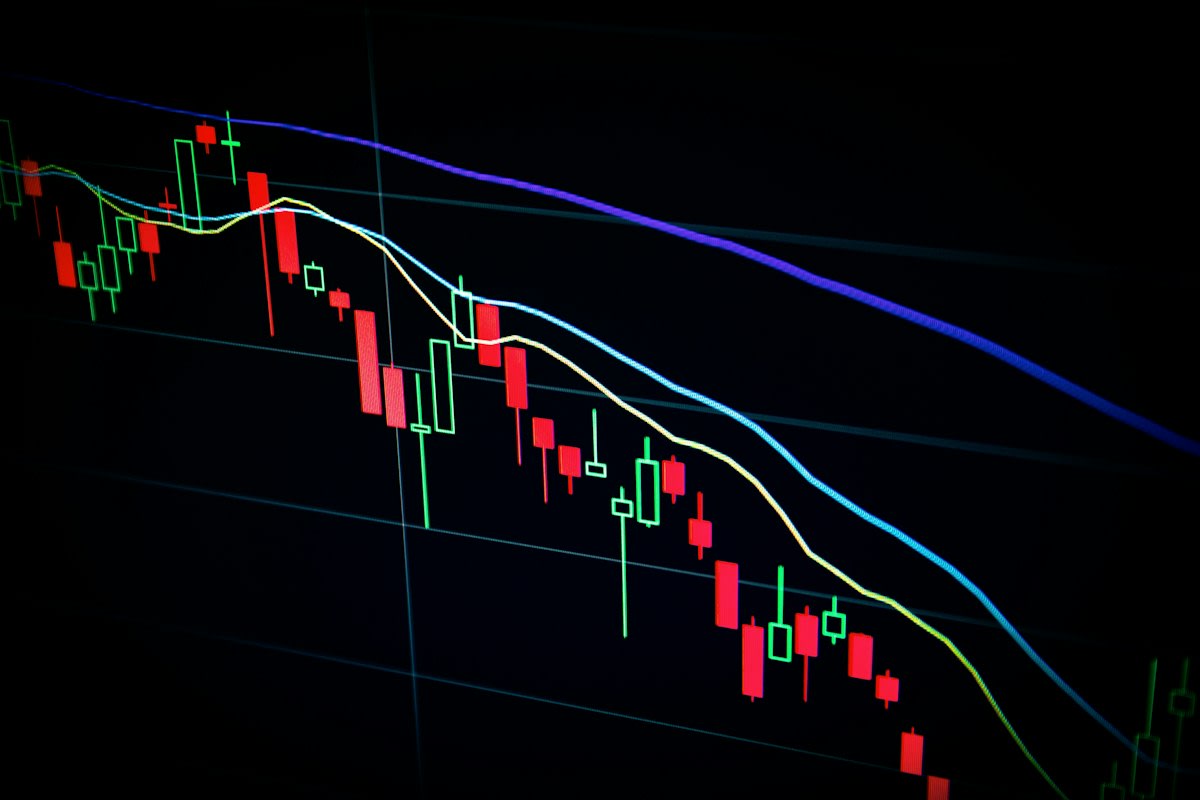
Screens offer a chrome-cold precision that belies the chaos of the actual market. A trader might see a green line trending upward and feel a sense of wealth, but that wealth is contingent on the platform's ability to liquidate. In regions where domestic industry has ceased, the only way to exit a position is to find another desperate buyer. This turns the market into a game of musical chairs where the music is played by an algorithm.
Entities seeking to evade jurisdiction often use these platforms as conduits for capital flight. By masking financial transfers as gaming wagers, they avoid the scrutiny of national commissions (Source: Federal Register, 2026). This practice drains the very economies that the private sector is trying to rebuild. The money does not stay to fund factories; it moves to safer harbors in the form of digital assets.
Industry stagnation makes this flight inevitable. When the state fails to provide a stable currency, the people will create their own, regardless of the risk. However, creating a currency based on speculation rather than production is a recipe for disaster. The 77.6% increase in the Euro's value (Source: Columbia Law, 2026) is not a sign of strength, but a sign of a dying local alternative.
Gold remains the only true hedge, yet Pixel Gold is a poor substitute. The virtual market lacks the intrinsic value of physical assets and the backing of a stable government. It is a fragile web of trust held together by the hope that the next buyer will pay more than the last. This is the core of the skeptical case: virtual currency in failing states is not an innovation, but a symptom of decay.
Money should facilitate trade, not become the trade itself. When the primary economic activity of a private sector is the exchange of currency on virtual platforms, productivity dies. The Cuban experience shows that without a foundation of domestic industry, foreign exchange is merely a tool for managing decline. The rush for Pixel Gold is a race to the bottom.
Failure Point: The Arbitrage Trap
Regulatory arbitrage is the primary failure point of this system. By exploiting the gap between Federal and State/Tribal laws, platforms avoid the transparency required for genuine financial markets (Source: Federal Register, 2026). When a market is treated as gambling, it lacks the consumer protections, audit requirements, and stability mechanisms that prevent total collapse. One single platform failure can wipe out the life savings of thousands of private operators who thought they were investing in a new financial frontier.
Fact-Check & Accuracy Note
All statistics regarding the Cuban market are sourced from the Columbia Law Cuba Capacity Building Project (2026). FX rates for Jamaica are sourced from the Bank of Jamaica (2021). Regulatory data is sourced from the Federal Register (2026).