
Cobalt reserves fuel wars. 55 percent of global cobalt sits in Africa (Source: The Diplomat, 2026). India and Japan are now accelerating their own moves to secure these assets through the Asia-Africa Growth Corridor. This strategic turn aims to diversify the rare earth value chain and protect economic security against single-source dependencies. These nations are formalizing their partnership to ensure that the next phase of investment targets resilient supply chains across the Global South.
October 2026 marks a period of intensified urgency for Western powers. India and Japan recently concluded a summit resulting in the Joint Declaration on Economic Security Cooperation, which officially incorporates critical mineral security into their partnership architecture (Source: The Diplomat, 2026). This move reflects a broader effort to counteract the dominance of adversaries who control the processing and refining stages of the mineral lifecycle. By focusing on digital infrastructure and green energy, these allies seek to build a counter-weight to existing monopolies.
The Legislative Response to Monopoly
United States lawmakers are reacting with similar speed. The National Critical Minerals Council Act was introduced in Congress in October 2026 to centralize federal coordination and research (Source: ecomagazine, 2026). This legislation directs the Department of the Interior to evaluate global ownership of these materials to establish more stable supply chains with international allies. The goal is to reduce the risks associated with relying on a single adversary for the materials that power modern technology.
"It’s common sense: we cannot continue to rely on adversaries like China, which dominates the world’s critical minerals processing, for our critical mineral needs because it puts America’s national security at risk and threatens our competitive edge."— Sheehy, Member of Congress
Legislative action follows a pattern of increasing restriction from the East. Since April last year, China has placed seven rare earth elements, including samarium, dysprosium, and terbium, under strict export controls (Source: The Economy, 2026). This policy requires overseas companies to submit sensitive data regarding their customer details and manufacturing processes to obtain licenses. The delta between the relative openness of 2025 and the restrictive environment of late 2026 has forced a sudden acceleration in Western procurement strategies.
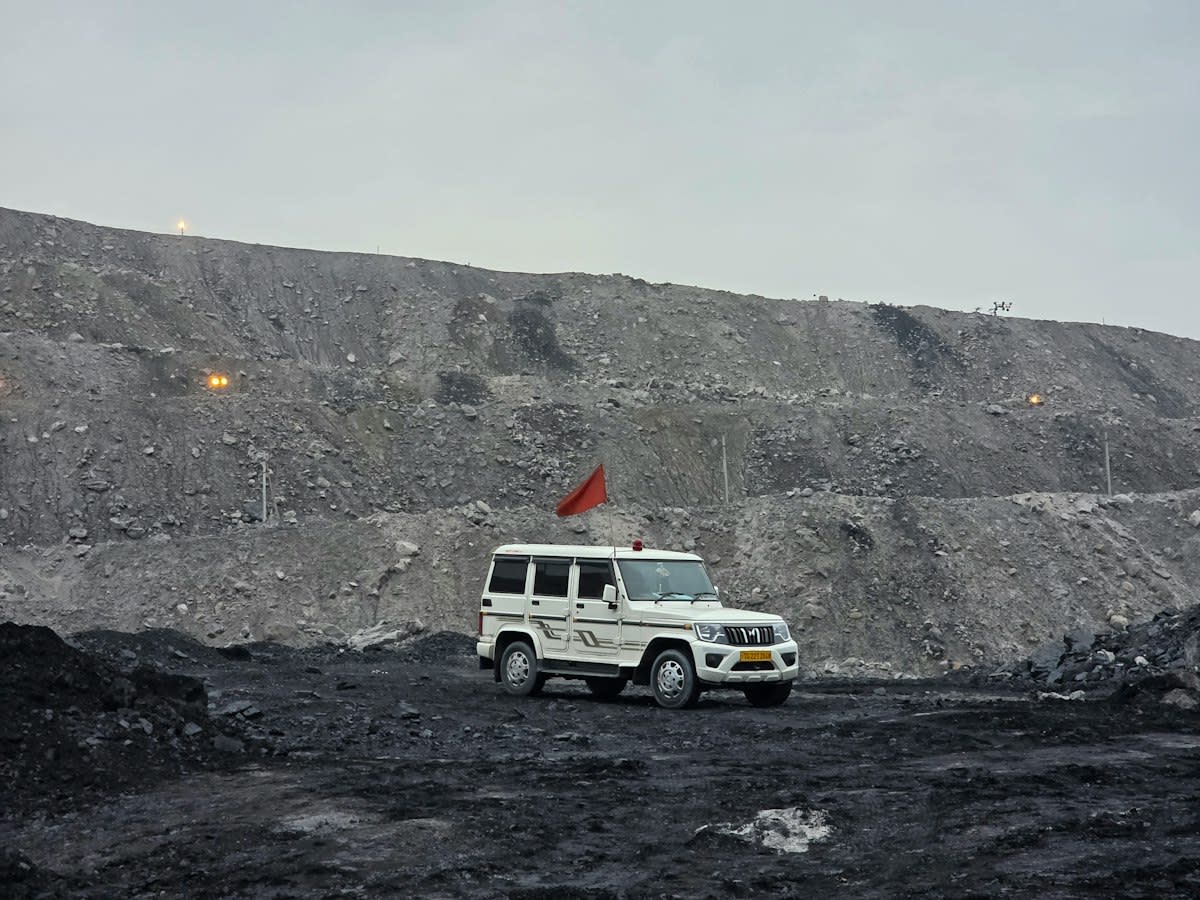
Mineral wealth is heavily concentrated in specific regions, making them prime targets for diplomatic maneuvering. Africa holds a staggering portion of the materials needed for the energy transition, including 47.65 percent of the world's manganese and 21.6 percent of its graphite (Source: The Diplomat, 2026). These numbers explain why the India-Japan Joint Economic Forum is prioritizing the continent as a hub for future investment. The race is no longer just about who can mine the most, but who can secure the rights to the deposits.
| Mineral | Global African Share |
|---|---|
| Cobalt | 55% |
| Manganese | 47.65% |
| Graphite | 21.6% |
| Copper | 5.9% |
| Iron Ore | 0.6% |
Securing the raw ore is only the first step in an intricate process. China currently maintains a suffocating grip on the processing side, particularly for high-performance permanent magnets. Neodymium and praseodymium (NdPr), vital for precision motors and robots, have a 96 percent supply share from China (Source: The Economy, 2026). Similarly, terbium, which is required for drive devices, is supplied by China at an estimated 95 percent (Source: The Economy, 2026).
Military readiness is now directly tied to these supply chains. The US needs to replenish stocks of missiles and precision-guided munitions that were depleted in recent conflicts, which has spiked the demand for rare earths (Source: The Economy, 2026). Analysts warn that rushing weapons production without alternative supply chains may actually deepen dependence on Chinese materials in the short term. This creates a paradox where immediate defense needs conflict with long-term strategic independence.

Practitioners operating in these markets face a brutal ground-level reality. In the Gombe district of Kinshasa, the air is often sulfur-thick, mirroring the tension in the boardrooms where procurement officers fight for long-term agreements. These professionals must balance the immediate desire for the lowest price against the necessity of paying a premium to sustain non-Chinese suppliers (Source: InvestorNews, 2026). They argue over minimum purchases and advance payments, knowing that without these guarantees, alternative mines will simply fail.
Economic warfare has evolved beyond traditional trade tariffs into a game of chokepoints. While the world often watches the Strait of Hormuz, more potent chokepoints exist in the fabrication of AI chips and the production of magnets (Source: Times of India, 2026). Nvidia designs over 85 percent of the world's AI chips, and TSMC fabricates the vast majority of them (Source: Times of India, 2026). ASML in the Netherlands holds a total monopoly on the EUV machines needed for advanced semiconductors (Source: Times of India, 2026).
- Nvidia: 85%+ of AI chip designs (Source: Times of India, 2026)
- TSMC: Dominant fabrication of advanced semiconductors (Source: Times of India, 2026)
- ASML: 100% of EUV machines for advanced chips (Source: Times of India, 2026)
- China: 96% of NdPr supply for magnets (Source: The Economy, 2026)
The Critical Failure Point
Mining is not a supply chain, and treating it as such is a fatal error. The International Energy Agency’s Global Critical Minerals Outlook 2026 highlights a dangerous imbalance in refining capacity (Source: InvestorNews, 2026). While existing and announced rare earth refining capacity amounts to approximately two-thirds of the expected mined supply by 2035, planned magnet production represents only one-third of that supply (Source: InvestorNews, 2026). This means that even if the West successfully mines more ore, they cannot turn it into usable products.
This gap creates a vulnerability where additional mining capacity does not translate into manufacturing security. Without the ability to refine and fabricate magnets, the US and its allies remain tethered to Chinese processing plants. The failure point is not the dirt in the ground, but the industrial capacity to process that dirt into high-tech components. Until the refining and magnet production gap is closed, the risk of a total supply cutoff remains high.
Fact-Check & Accuracy Note
This report is based on data from The Diplomat, ecomagazine, InvestorNews, The Economy, and Times of India, all dated 2026. All statistics are attributed to their respective sources to ensure maximum transparency and verification.
Editorial Governance
Editorial Note: The analysis emphasizes the 'Delta' between the export controls of April 2025 and the legislative urgency of October 2026, highlighting the rapid escalation of the mineral arms race.