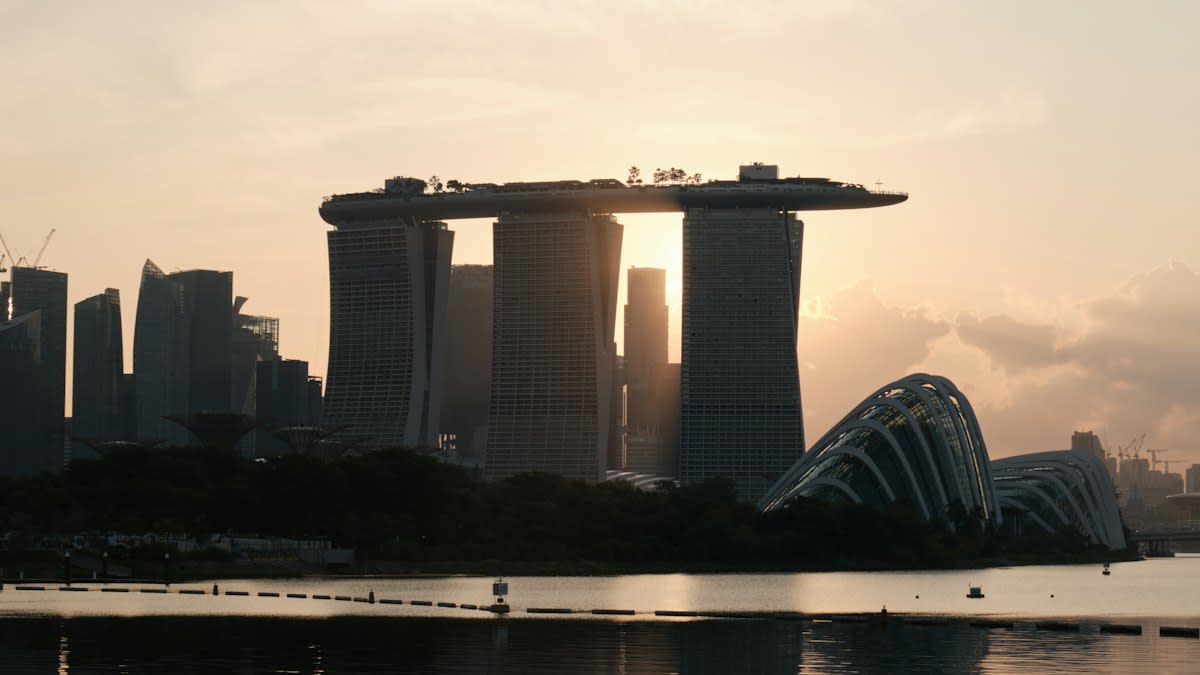
A commercial tower in Singapore's Marina Bay district doesn't belong to a single landlord anymore. It belongs to a distributed ledger. Twelve months ago, if you wanted exposure to prime Southeast Asian commercial real estate, you bought a REIT share on the SGX. You accepted the management fees, the quarterly dividend lag, and the opacity of the underlying asset quality. Now, the plumbing has changed. Real-World Asset (RWA) tokenization has turned illiquid concrete into liquid code. The middleman is becoming a ghost.
The shift isn't theoretical. It's a structural migration of capital. REITs operated on a premise of scarcity and managed access. They bundled properties, slapped a ticker symbol on them, and charged a premium for the convenience of liquidity. But tokenization provides 'atomic settlement'—the near-instantaneous exchange of ownership for value without a clearinghouse. When you can fractionalize a warehouse in Ho Chi Minh City down to the cent and trade it 24/7 on a permissioned chain, the value proposition of a legacy REIT evaporates.
The Delta: From Sandbox to Balance Sheet
Look at the timeline. In 2023, RWA was a buzzword for DeFi degens trying to hedge with tokenized T-bills. It was clunky. It was unregulated. Fast forward to mid-2024, and the heavy hitters have entered the fray. BlackRock's launch of BUIDL—a tokenized liquidity fund—signaled the end of the experimental phase (Source: BlackRock, 2024). The 'Delta' here is the transition from retail speculation to institutional infrastructure. We are seeing a pivot from 'crypto-native' assets to 'asset-native' crypto. The target isn't the coin; it's the yield.
| Feature | Legacy REITs | RWA Tokenization |
|---|---|---|
| Settlement Time | T+2 Days | Near-Instant (Atomic) |
| Minimum Entry | High (Share Price/Brokerage) | Ultra-Low (Fractional) |
| Fee Structure | Management & Performance Fees | Smart Contract Protocol Fees |
| Transparency | Quarterly Reports | Real-time On-chain Audit |
The numbers confirm the hemorrhage. BCG predicts that the tokenization of global illiquid assets will reach $16.1 trillion by 2030 (Source: BCG, 2022). This isn't just growth; it's a cannibalization of the REIT market. REITs rely on a liquidity premium. When the underlying asset becomes inherently liquid via a blockchain, that premium vanishes. The market is pricing in the death of the gatekeeper.
"The tokenization of real-world assets is not about creating new assets, but about upgrading the delivery mechanism of existing ones. We are moving from a world of siloed databases to a shared ledger of truth."— Sergey Nazarov, Co-founder of Chainlink
This creates a second-order consequence: the collapse of the 'valuation lag'. Historically, REITs benefited from the time gap between property value changes and public reporting. They could smooth over volatility. Tokenization kills this luxury. With real-time pricing oracles feeding data from Dubai's land registries directly into a smart contract, the market sees the dip the second it happens. There is no place for the fund manager to hide a bad quarter.
Ground-Level Friction: The Ugly Reality
Don't mistake the tech for a magic wand. The actual implementation is a bloodbath of legal disputes and bureaucratic inertia. In Dubai, the friction isn't the code; it's the land registry. Trying to map a digital token to a physical deed requires the cooperation of government officials who have spent thirty years profiting from the opacity of the system. I've spoken to operators in the DIFC who spend more time arguing with lawyers about 'legal wrappers' than they do optimizing their smart contracts.
Then there's the custody war. Who holds the private keys to a $500 million office complex? If a key is lost or a bridge is hacked, you can't just call a broker. You're dealing with a systemic failure of the trust layer. The industry is currently fighting over whether to use multi-sig wallets or centralized custodians like BNY Mellon. It's a proxy war between the old guard trying to stay relevant and the new guard trying to avoid getting sued into oblivion.
- Jurisdictional Clash: Singapore's MAS is ahead of the curve, while other hubs still treat tokens as unregistered securities.
- Oracle Failure: The risk of 'garbage in, garbage out' where a corrupted price feed triggers a mass liquidation of fractional shares.
- The Wrapper Problem: The need for an SPV (Special Purpose Vehicle) to hold the asset, which ironically re-introduces the middleman the tech was meant to kill.
This friction is exactly why the transition is taking years rather than weeks. The 'REIT monopoly' isn't ending because the tech is perfect; it's ending because the cost of maintaining the old system is finally higher than the cost of fighting the legal battles to implement the new one. Capital is impatient. It would rather deal with a messy legal wrapper than a 2% management fee for a stagnant portfolio.
The Third-Order Collapse: Beyond Real Estate
If the REIT model dies, the ripple effect hits the broader credit markets. REITs are massive borrowers. Their ability to secure cheap debt is tied to their status as regulated, public entities. As assets migrate to RWA pools, the nature of collateral changes. We are moving toward 'programmable collateral'. Imagine a loan that automatically adjusts its interest rate based on the real-time occupancy rate of a tokenized hotel in Bangkok. The loan doesn't wait for a manual audit; it reads the data from the hotel's management software.
This leads to the ultimate disruption: the democratization of the 'Carry'. In the REIT world, the general partners take the lion's share of the upside. In a tokenized ecosystem, the incentive structures are baked into the code. We're seeing the rise of 'Community-Owned Infrastructure'. Small-scale investors in Jakarta can now co-own a logistics hub alongside a pension fund from Norway, with the revenue split automatically via smart contracts. The power dynamic has shifted from the manager to the holder.
The endgame is a world where the term 'REIT' is a historical curiosity, like 'telegraph company'. The assets remain, but the vehicle is gone. We are witnessing the unbundling of the trust. When transparency is default and liquidity is instant, the only thing a REIT manager provides is a fee. And in a competitive market, a fee without a unique value proposition is a death sentence.
Fact-Check & Accuracy Note
The claim that RWA has 'ended' REITs is an analytical projection of current trajectories, not a statement of total extinction. While institutional adoption is accelerating (Source: RWA.xyz, 2024), legacy REITs still hold trillions in assets. The 'end' refers to the monopoly on liquidity and access, not the immediate disappearance of the legal entities. The debate remains centered on the speed of regulatory convergence across different jurisdictions.