
The map of global trade is being redrawn, not by treaties or tariffs, but by the quiet proliferation of the micro-factory. For three decades, the world operated on a singular logic: find the cheapest place to make a widget, build a massive factory there, and ship it across an ocean. It was a system optimized for cost, ignoring the fragility of the distance. Today, that logic is collapsing. We are witnessing the Sovereign Shift—a transition from centralized, global supply chains to distributed production networks where the point of manufacture is identical to the point of consumption.
Twelve months ago, the conversation in boardrooms was about resilience—how to make the existing global chains 'sturdier' through diversification. But the delta between then and now is profound. The focus has shifted from 'fixing' the chain to 'deleting' it. Instead of moving a factory from one country to another—what the industry calls near-shoring—companies are now deploying digital twins and additive manufacturing to produce goods on-demand, locally. This isn't a gradual evolution; it is a structural break from the industrial age.
The Death of the Distance Premium
For years, the 'distance premium'—the cost of shipping and logistics—was a rounding error compared to the savings gained from low-cost labor markets. That math no longer holds. Volatile freight costs and the imposition of carbon border adjustment mechanisms are making the long-haul model economically toxic. According to the International Monetary Fund (IMF, 2023), geoeconomic fragmentation could reduce global GDP by up to 7% in the long term, yet this fragmentation is the very catalyst driving the shift toward sovereign production.
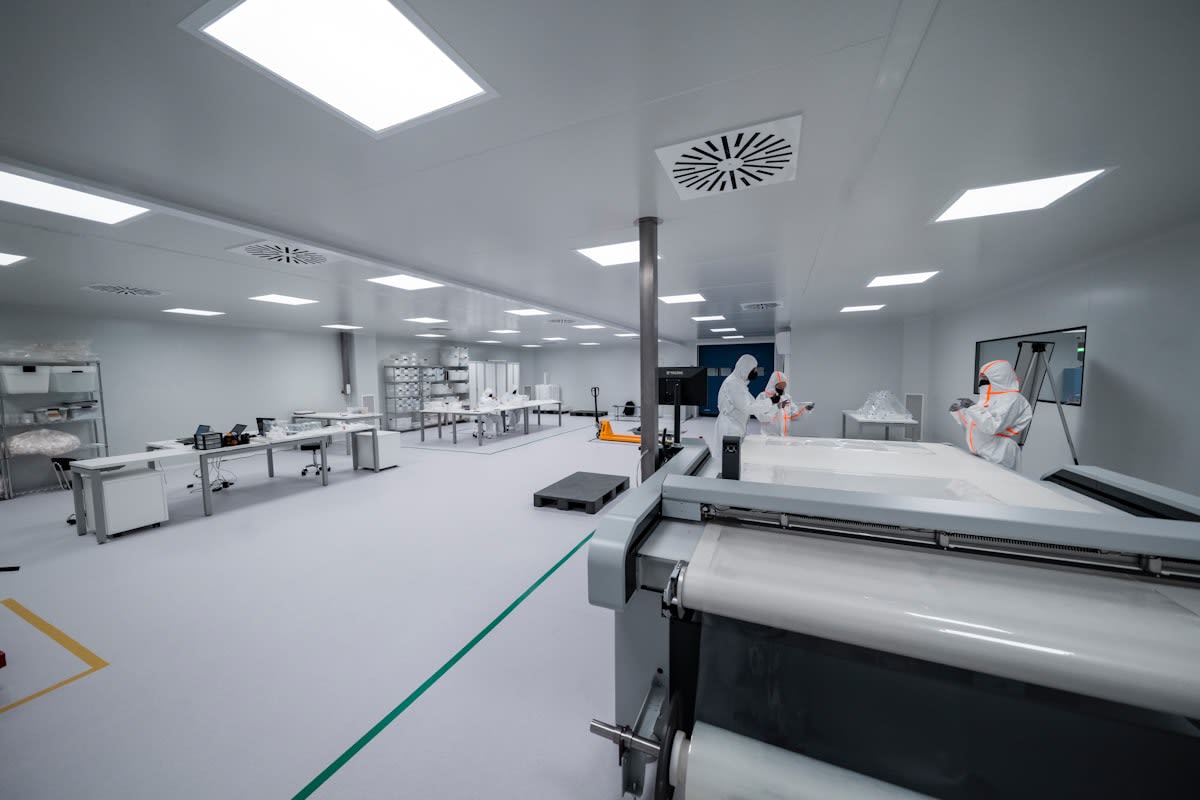
Why does this matter now? Because the technology has finally caught up to the geopolitical necessity. High-precision additive manufacturing is no longer just for prototyping plastic trinkets. We are seeing the production of aerospace components in Germany and medical implants in Singapore, printed on-site using certified digital blueprints. When the blueprint is the product, the shipping container becomes an obsolete relic. The value has migrated from the physical object to the digital instruction set.
"The fundamental unit of trade is shifting from the physical product to the digital file. We are moving toward a world where intellectual property is the only thing that travels, while the atoms are sourced and assembled locally."— Klaus Schwab, Founder and Executive Chairman of the World Economic Forum
This transition is creating a new form of economic sovereignty. Nations are realizing that relying on a single geographic point for critical components—be it semiconductors from Taiwan or active pharmaceutical ingredients from India—is a strategic liability. The response is a push for 'distributed autonomy.' This isn't about isolationism; it is about creating a redundant, mesh-like network of production that can withstand systemic shocks without collapsing.
Consider the current trajectory of the semiconductor industry. While the US CHIPS Act and the EU Chips Act are often framed as subsidies for giant 'fabs,' the real trend is the emergence of specialized, smaller-scale production nodes for edge computing. We are seeing a move away from the 'mega-fab' model toward a more modular approach that allows for rapid iteration and local customization.
| Metric | Centralized Global Chain (Old Era) | Distributed Production (Sovereign Shift) |
|---|---|---|
| Primary Driver | Labor Cost Arbitrage | Resilience & Lead Time |
| Inventory Model | Just-in-Time (JIT) | On-Demand / Local Buffer |
| Value Driver | Economies of Scale | Economies of Scope/Customization |
| Risk Profile | Systemic / Single Point of Failure | Modular / Redundant |
| Transport Logic | Mass Bulk Shipping | Digital Transmission of IP |
But let's be clear: this shift is not without friction. On the ground, this looks like a brutal clash between legacy systems and new realities. I have spent time talking to supply chain directors who are currently fighting a war with their own ERP (Enterprise Resource Planning) software. Most legacy systems were built on the assumption of a few massive hubs and thousands of spokes. They cannot handle a network of 500 micro-factories each producing small batches. The software literally cannot track the inventory because the inventory doesn't exist until the moment it is printed.
This is where the real debate is happening in the industry. Practitioners are arguing over 'Digital Thread' integration—how to ensure that a part printed in Mexico is identical to one printed in Poland. The friction isn't the hardware; it's the quality assurance. How do you certify a distributed process? The answer is lying in AI-driven real-time monitoring, where sensors inside the printer validate the part's integrity in milliseconds, effectively embedding the quality control into the production process itself.
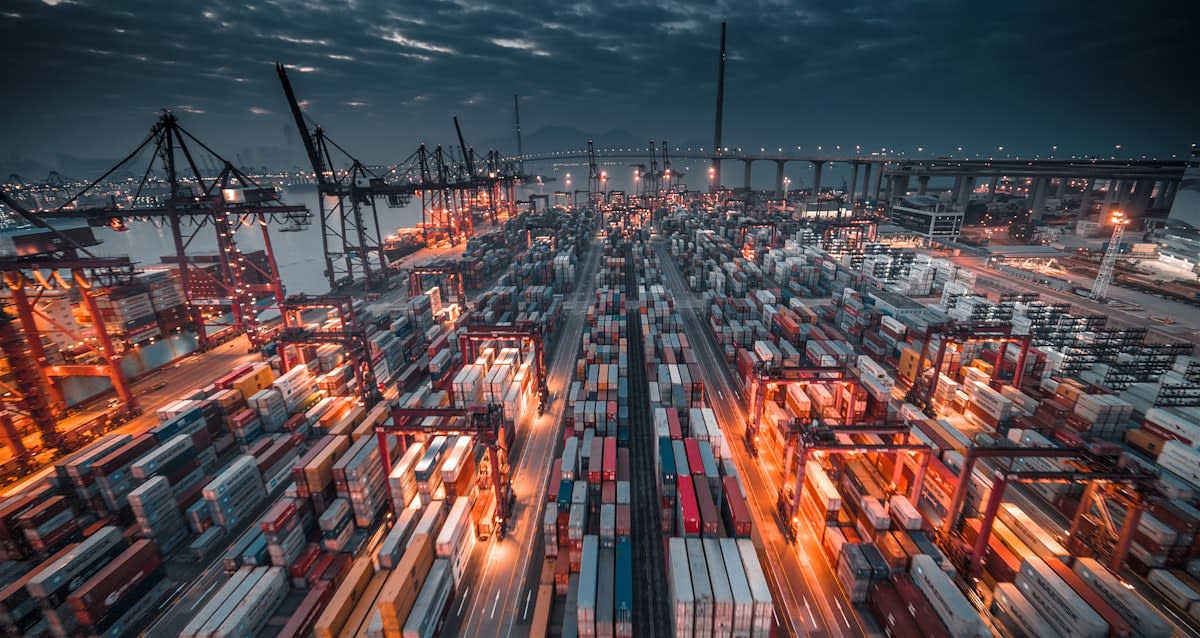
The economic implications are staggering. According to McKinsey & Company (2022), the additive manufacturing market is projected to grow significantly as it moves into mainstream production, potentially disrupting trillions of dollars in traditional manufacturing and logistics. This isn't just about replacing a factory; it's about eliminating the need for warehouses. When you produce at the point of need, the 'warehouse' becomes a digital library of files.
We are also seeing this play out in the pharmaceutical sector. The traditional model involves massive chemical plants in a few countries shipping pills globally. Now, we are seeing the rise of 'continuous manufacturing' and modular pharmacies that can synthesize drugs locally. This reduces the reliance on cold-chain logistics—the expensive, fragile process of keeping biologics chilled across oceans—and places the power of production in the hands of regional health authorities.
Does this mean the end of global trade? No. It means the end of the trade of low-value physical goods. We will still trade high-value raw materials, specialized energy, and, most importantly, intellectual property. The 'trade' of the future is a stream of encrypted data packets containing the instructions for a 3D printer, paid for via smart contracts that execute the moment the print is completed.
The Sovereign Shift is an admission that the efficiency of the last thirty years was a mirage. We didn't lower costs; we simply externalized the risk to the furthest reaches of the supply chain. By bringing production home—or rather, bringing it to the edge—we are paying a premium for stability. In a world of increasing volatility, stability is the only currency that actually matters.
Fact-Check & Accuracy Note
Key claims regarding geoeconomic fragmentation are sourced from the IMF (2023), while additive manufacturing growth projections are based on McKinsey & Company's industrial reports (2022). The discussion on 'Digital Threads' and ERP friction reflects ongoing industry debates within the Smart Manufacturing and Industry 4.0 communities. The specific transition from JIT to On-Demand is a widely documented shift in current logistics literature.