
The narrative of the AI revolution has shifted. Twelve months ago, the industry's primary anxiety was the 'compute crunch'—a frantic, global scramble to secure NVIDIA H100s and build clusters of tens of thousands of GPUs. Today, the conversation has moved from the silicon to the socket. We have entered the era of the Power Wall. The limiting factor for the next generation of Large Language Models (LLMs) is no longer how many chips we can manufacture, but whether the electrical grids of the world can actually feed them without collapsing.
This is not a theoretical ceiling. It is a physical one. Data centers are essentially massive heat engines that convert electricity into intelligence, and they are consuming power at a rate that defies traditional utility planning. According to the International Energy Agency (IEA), data center electricity consumption could double by 2026, potentially reaching over 1,000 terawatt-hours (Source: IEA, 2024). To put that in perspective, that is roughly equivalent to the entire electricity consumption of Japan. The delta between last year's projections and this year's reality is staggering; we are seeing a vertical climb in demand that grid operators simply cannot match with existing infrastructure.
The Geography of Constraint
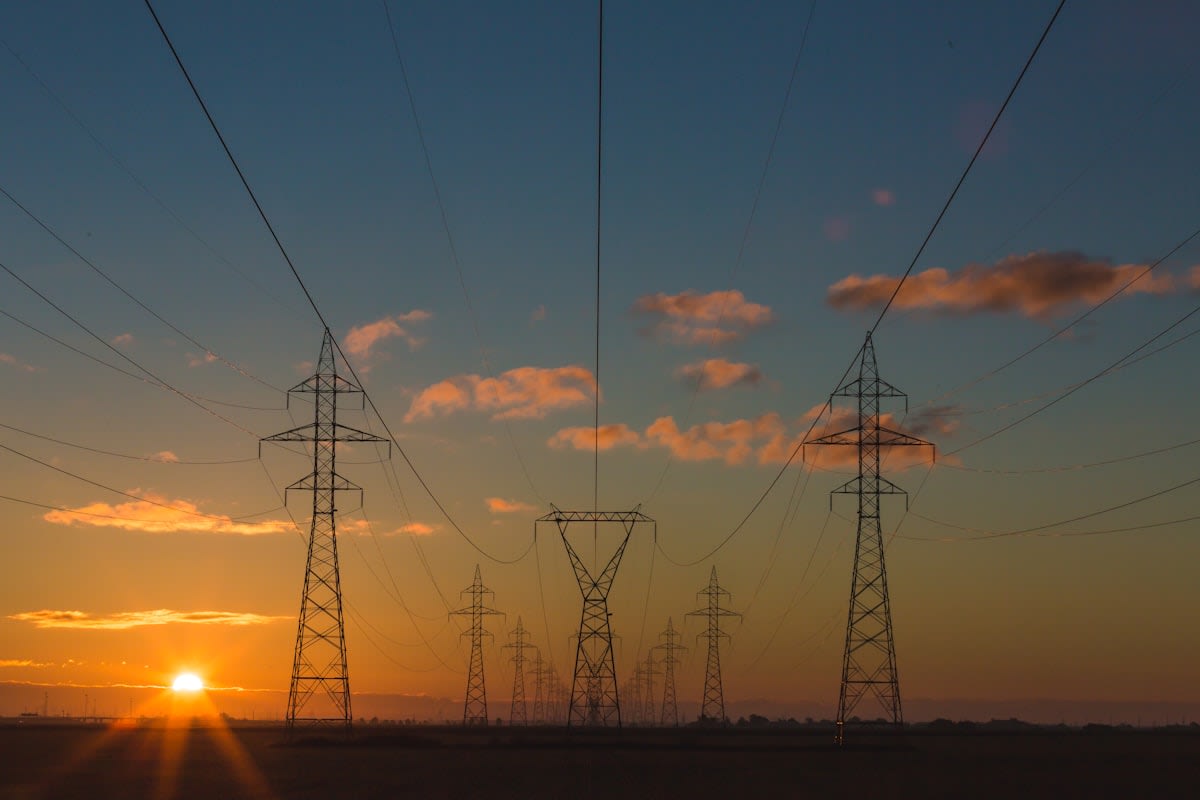
The crisis manifests differently across the globe, revealing a fragmented energy landscape. In Northern Virginia, the world's largest data center hub, the strain is palpable. Dominion Energy has faced unprecedented challenges in connecting new facilities to the grid, leading to a scenario where 'power-ready' sites are now more valuable than the land they sit on. Meanwhile, in Ireland, the national grid operator, EirGrid, has warned that data centers already consume a massive slice of the national electricity pie, leading to strict new limits on how and where new facilities can be built (Source: EirGrid, 2023). The bottleneck is not just total power, but the transmission capacity—the 'pipes' that carry electricity from the plant to the server rack.
Asia presents a different set of friction points. Singapore, a critical node for Southeast Asian data traffic, previously implemented a moratorium on new data centers due to energy and land constraints. While the moratorium has eased under strict 'green' criteria, the core problem remains: how do you power a compute-intensive economy on a small island with limited renewable options? The result is a migration of workloads to places like Johor in Malaysia, shifting the power burden across borders but not solving the systemic deficit.
"The industry is moving from a software-defined era to a hardware-defined era, where the ultimate competitive advantage is not the model architecture, but the proximity to a stable, high-capacity power source."— Industry Analysis, Goldman Sachs Research
This shift creates a strange new hierarchy of power. In the past, tech companies sought locations based on taxes or talent. Now, they are hunting for 'stranded energy'—regions where power is generated but cannot be easily transported to cities. We are seeing a gold rush toward hydroelectric dams in Quebec and geothermal vents in Iceland. The logic is simple: if the grid can't bring the power to the data center, the data center must move to the power.
The Practitioner's Friction: Inside the War Room
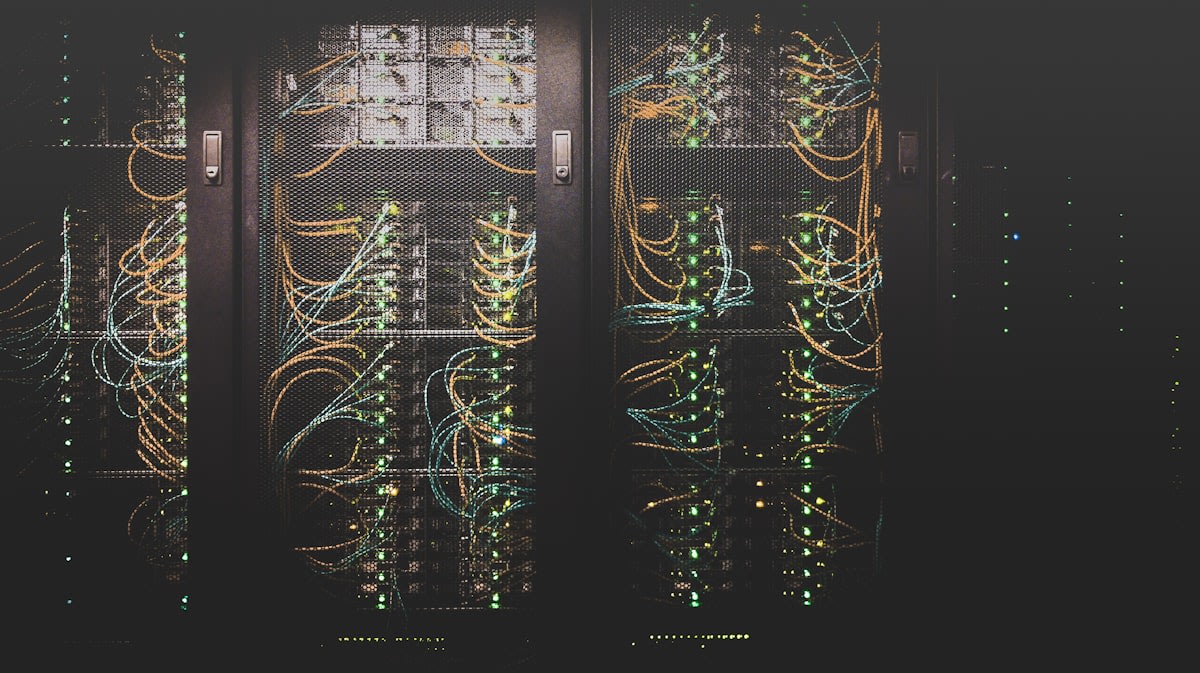
On the ground, the debate among infrastructure engineers has turned visceral. For years, the focus was on PUE (Power Usage Effectiveness)—the efficiency of cooling. But today's engineers are arguing about something far more fundamental: the 'interconnect.' I have spoken with site reliability engineers who describe the frustration of having a state-of-the-art cluster of Blackwell chips ready to boot, only to be told by the local utility that the substation cannot handle the peak load without risking a brownout for the surrounding neighborhood. The friction is no longer about software optimization; it's about the physical reality of copper wiring and transformer lead times, which can now stretch into years.
There is a growing internal schism between the 'brute force' camp and the 'efficiency' camp. The brute force practitioners believe that scaling laws will hold if we can just find more power, regardless of the cost. The efficiency camp argues that we are hitting a point of diminishing returns where the energy cost of training a model marginally better than its predecessor is no longer economically or environmentally viable. This isn't just a technical debate; it's a fight over the future of AI's ROI.
The Nuclear Pivot: Beyond the Grid
Because the public grid is too slow to adapt, Big Tech is effectively becoming an energy company. The most significant trend of the last six months is the aggressive pivot toward nuclear energy. We are seeing a resurgence of interest in Small Modular Reactors (SMRs) and a willingness to revive dormant nuclear plants. Microsoft's deal to restart a reactor at Three Mile Island via Constellation Energy is the clearest signal yet that the industry has given up on the traditional grid for its most ambitious projects (Source: Constellation Energy, 2024).
- SMR Adoption: Shifting from giant plants to modular, scalable reactors located directly on-site.
- Geothermal Breakthroughs: Using fracking-style drilling to access deeper, hotter rock for 24/7 baseload power.
- Custom Silicon: Moving from general-purpose GPUs to LPUs (Language Processing Units) and TPUs to lower the watts-per-token cost.
- Energy Sovereignty: Tech giants investing directly in fusion startups to decouple intelligence from the public utility.
Is this a sustainable path? The transition to nuclear is a gamble on timelines. SMRs are promised, but they are not yet deployed at scale. In the interim, the industry is forced to rely on natural gas, which creates a paradox: the AI designed to solve climate change is currently driving a spike in fossil fuel consumption to keep the servers humming. This tension is the defining contradiction of the intelligence boom.
| Metric | 2023 Focus (The Compute Era) | 2024/25 Focus (The Power Era) |
|---|---|---|
| Primary Bottleneck | GPU Availability (H100s) | Grid Capacity (MW/GW) |
| Key Asset | Compute Clusters | Power-Ready Real Estate |
| Strategic Goal | Training Speed | Energy Stability/Sovereignty |
| Investment Focus | Model Architecture | Energy Infrastructure (SMRs, Geothermal) |
The path forward requires more than just more power; it requires a fundamental rethink of how we compute. We are seeing a shift toward 'sparse' models and techniques like Mixture of Experts (MoE), which only activate a fraction of the model's parameters for any given query. By reducing the number of flops per token, researchers are attempting to lower the energy ceiling. If we can't raise the power limit, we must lower the power requirement.
Fact-Check & Accuracy Note
Key claims regarding data center energy growth are sourced from the International Energy Agency's 2024 reports. Grid constraint data for Ireland is based on EirGrid's official capacity warnings. The shift toward nuclear energy is evidenced by the public partnership between Microsoft and Constellation Energy. Areas of uncertainty include the actual deployment timeline of SMRs, which remain in the regulatory and prototyping phase.