Energy markets are currently trapped in a violent tug-of-war between tightening fundamentals and volatile geopolitics. This week, oil prices surged to a one-month high as attacks intensified around the Strait of Hormuz, reminding the world that the traditional energy bridge is built on shifting sands. According to Oil & Gas 360, this instability is not a fluke but a feature of a global system preparing for a future that demands more reliable energy, not less. The catalyst? A relentless surge in AI-driven power demand that is rewriting the rules of electricity consumption across the continent.
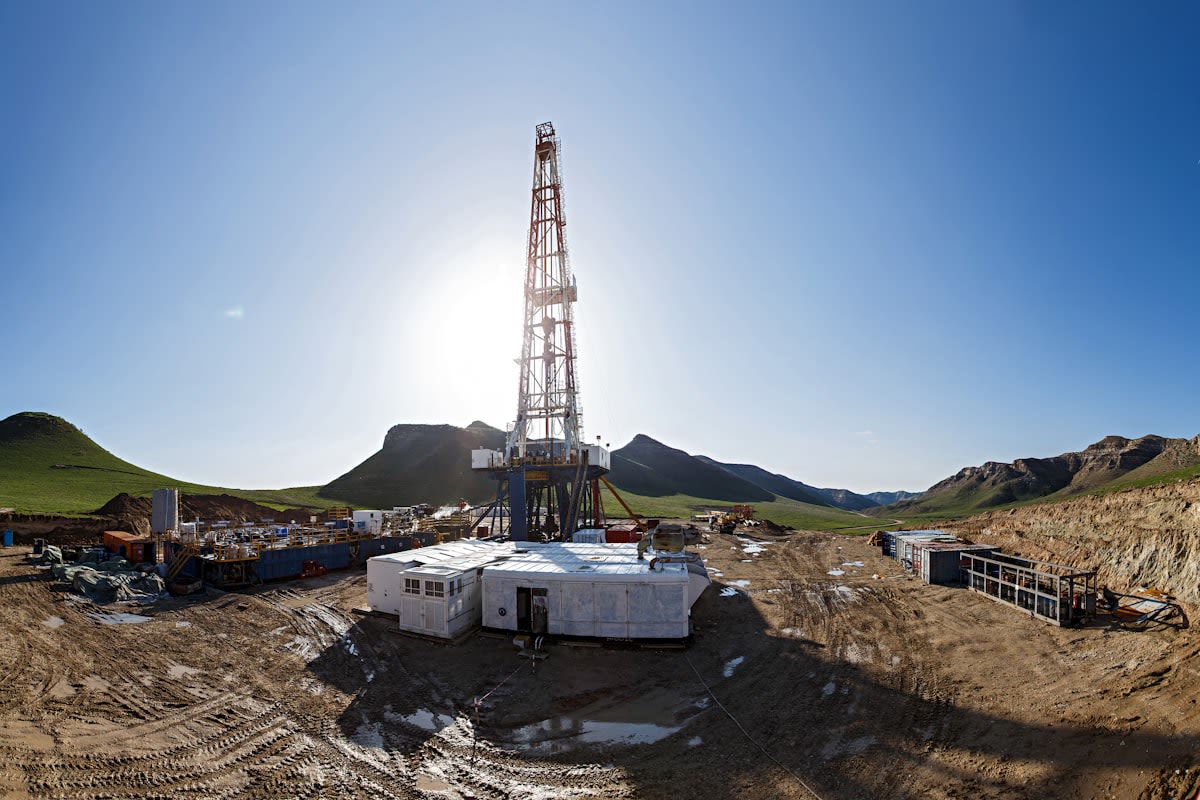
Why does this matter for the geothermal pivot? Because the current reliance on natural gas as a bridge fuel is becoming a liability. While natural gas continues to support energy security and economic growth, the volatility seen in the Strait of Hormuz proves that any bridge dependent on overseas transit is vulnerable. Europe is now looking downward. The gamble is no longer just about shallow heat pumps for residential estates—like the updated 1678 New England home in Massachusetts mentioned by the New York Post—but about tapping into super-hot rock geothermal energy at an industrial scale to provide a permanent, domestic baseload.
The Critical Mineral Bottleneck
The ambition to pivot toward deep geothermal energy hits a hard wall: materials. The International Energy Agency (IEA) recently warned that declining investment and concentrated supply chains for critical minerals could undermine the energy transitions of nations like France. This is a precarious moment. After a period of decline, critical mineral prices rebounded in 2025 and early 2026 due to tightening supply conditions. If Europe cannot secure the lithium, cobalt, and nickel required for the infrastructure of this transition, the deep heat pivot remains a theoretical exercise.
France is not waiting for the market to correct itself. The government has launched a €500 million critical minerals strategy as part of the France 2030 investment plan. This is a strategic offensive designed to insulate the country from global price shocks. By supporting the recycling of materials through giants like Veolia and SUEZ, France is attempting to create an urban mine. This recovery of minerals from used batteries is not just an environmental goal; it is a security imperative to ensure that the hardware needed for high-temperature geothermal plants can actually be built.
Market Alert
The rebound in critical mineral prices in 2025 and early 2026 signals a new era of resource scarcity that could either accelerate domestic recycling or stall the energy transition entirely.
Can a recycled supply chain sustain the massive industrial requirements of super-hot rock energy? The question looms large. The shift from 2025's price declines to 2026's rebounds shows a market that is rapidly tightening. For Europe, the delta between last year and today is a wake-up call: the window to secure the materials for a geothermal revolution is closing.
The Philippine Blueprint: Geothermal as a Sovereign Asset
To understand where Europe is heading, one must look at the Energy Development Corporation (EDC) in the Philippines. As reported by Rappler, EDC is one of the largest geothermal companies on Earth, born from a need for energy security during an oil crisis over 50 years ago. The recent news that an Indonesian billionaire offered US$5 billion for EDC underscores the immense valuation of established geothermal assets. This isn't just a power company; it is a proven experiment in national energy independence.
The EDC model proves that geothermal can scale from a niche solution to a cornerstone of national security. For European policymakers, the $5 billion valuation of EDC is a signal. It transforms geothermal from a 'green alternative' into a high-value strategic asset. If a company can be priced as a critical piece of national infrastructure, then the investment in super-hot rock technology becomes a matter of sovereign survival rather than just a carbon-reduction target.
"If the Energy Development Corporation was built and once held in the name of the Philippines' energy security, should it simply be priced and traded like any other asset?"— Rappler Analysis on EDC
This tension between corporate valuation and national security is exactly what Europe is navigating. The transition to deep heat is an attempt to create the European equivalent of the EDC—a domestic, unhackable, and unblockable energy source that does not depend on the stability of the Strait of Hormuz or the whims of global commodity traders.

Weather Shocks and the Reliability Gap
The urgency of this pivot is being accelerated by extreme weather. CNBC reports that Europe is currently battling intense heatwaves, while meteorologists warn of a powerful El Niño. These weather shocks are rattling commodity markets, particularly agriculture. With food inflation potentially reaching double digits by 2027 according to Man Group, the economic stability of the region is already under pressure.
When extreme heat grips a continent, the demand for cooling spikes, placing an immense load on the electrical grid. This is where the reliability gap becomes critical. Solar and wind are intermittent; natural gas is volatile. Super-hot rock geothermal, however, offers a constant, weather-independent flow of energy. It is the only renewable source that can match the baseload requirements of a city during a heatwave without relying on foreign gas pipelines.
Consider the contrast: in Massachusetts, geothermal is used to modernize a 17th-century estate, providing a quiet, efficient heating solution. In the broader European context, the goal is to scale this logic by a factor of a million. The pivot is about moving from 'comfort' to 'capacity.' The ability to generate gigawatts of power from the earth's core would decouple European energy prices from the volatility of El Niño-driven commodity shocks.
The Economic Calculus of the Pivot
The financial logic of the deep heat pivot is becoming clear. We are seeing a convergence of three factors: the AI-driven power surge, the volatility of the Strait of Hormuz, and the proven valuation of geothermal assets like the EDC. When you combine these, the high upfront cost of deep drilling becomes a rational investment in risk mitigation. The cost of inaction—characterized by double-digit food inflation and energy blackmail—is far higher than the cost of drilling.
| Driver | Current Risk (2026) | Geothermal Solution |
|---|---|---|
| Geopolitics | Strait of Hormuz disruptions | Domestic baseload independence |
| Technology | AI-driven power demand surge | Constant, high-capacity output |
| Environment | El Niño / Extreme Heatwaves | Weather-independent generation |
| Resources | Critical mineral supply risks | Urban mining & circular economy |
However, the path is not without peril. The IEA's warning about supply chains is the most immediate threat. France's €500 million bet on critical minerals is a start, but the scale of the geothermal pivot requires a continent-wide effort. The transition from a gas-dependent economy to a heat-dependent one requires a complete overhaul of the industrial base, from the drills used to pierce the crust to the turbines that convert that heat into electricity.
Ultimately, the deep heat pivot is a gamble on the earth's internal chemistry. If Europe can solve the mineral puzzle and scale the drilling technology, it transforms from a vulnerable importer of energy into a fortress of stability. The evidence from the Philippines shows it is possible. The volatility in the Strait of Hormuz shows it is necessary. The heatwaves in Europe show it is urgent.