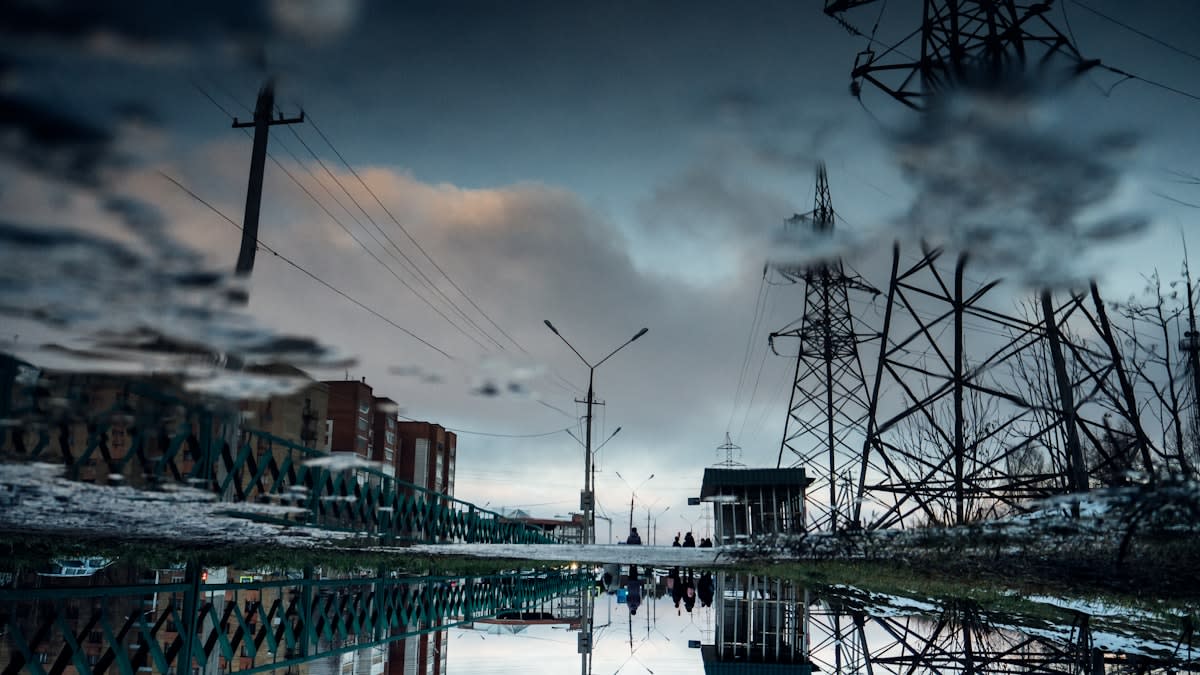
For decades, geopolitical power was measured by the control of choke points—the Strait of Hormuz, the Suez Canal, the pipelines of Siberia. But we are witnessing a systemic shift. The era of shipping fuel is yielding to the era of transmitting flow. The new strategic frontier is not the oil field, but the High Voltage Direct Current (HVDC) super-grid. These massive electrical arteries allow energy to be moved across thousands of miles with minimal loss, effectively decoupling the location of energy production from the location of consumption. This is not merely a technical upgrade; it is a total restructuring of how nations project power and ensure survival.
The current obsession with wind and solar panels is a distraction from the real bottleneck: the grid. You can build a thousand gigawatts of capacity in a remote desert, but if you cannot move those electrons to the industrial heartland, the capacity is a stranded asset. This reality is driving a global race to build super-grids that can balance intermittent loads across entire continents. The winner will not be the country with the most panels, but the one that controls the switches and the conduits. We are moving from a world of energy commodities to a world of energy connectivity.
The Texas Microcosm: Reliability or Rent-Seeking?
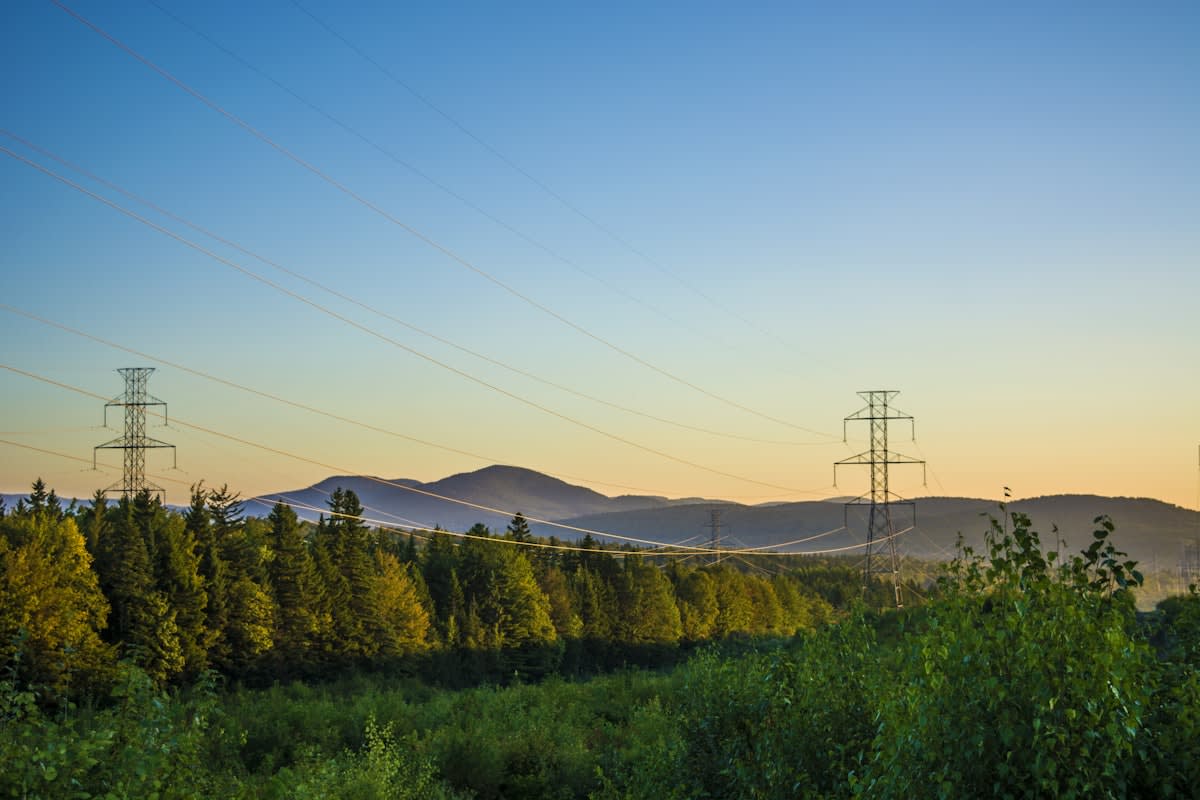
Look at the Electric Reliability Council of Texas (ERCOT). The state is currently pushing a 765-kV Strategic Transmission Expansion Plan (STEP) that carries a staggering $33 billion price tag. On paper, it is a reliability play, adding 2,468 miles of 765-kV lines and 649 miles of 345-kV lines to ensure the grid doesn't buckle under the weight of intermittent renewables. However, critics view this as a high-voltage heist. They argue that this expansion primarily serves to funnel guaranteed returns to transmission monopolies while condemning thousands of acres of private land to right-of-way easements.
This tension reveals a fundamental truth about the super-grid race: the friction between centralized control and distributed resilience. When you build 3,400 miles of new right-of-way, you aren't just moving power; you are consolidating the ability to dictate who gets energy and at what cost. The Texas example suggests that the transition to green energy is being used as a Trojan horse for massive capital transfers to infrastructure monopolies. If the conduits of the future are owned by a handful of entities, the 'democratization' of energy via solar panels becomes a myth.
"Texas ratepayers are on the hook for a $33 billion high-voltage transmission expansion that critics call a classic power grab—funneling guaranteed returns to transmission monopolies."— Energy News Beat
Does the physical architecture of the grid determine the political architecture of the state? In Texas, the push for 765-kV lines—the highest voltage common in North America—signals an attempt to create a rigid, centralized backbone. This is a contrarian move in an era where the world is talking about micro-grids and decentralized energy. The bet here is that scale wins, but the cost is borne by the consumer, not the utility.
This struggle for control over the 'pulse' of the continent is not limited to North America. It is a global phenomenon where the physical layer of the energy transition is colliding with the financial layer of infrastructure investment.
Europe's Trillion-Euro Gamble
Europe is currently fighting a war on two fronts: a literal one in Eastern Europe and an economic one against its own energy costs. The region has been battered by successive energy shocks, leaving it with some of the highest power costs globally. According to the International Energy Agency, European power prices are roughly 50% higher than those in China and double those in the United States. This price gap is an existential threat to European industry, which spent decades relying on a sequence of coal, oil, and eventually nuclear and natural gas.
To counter this, Europe is making a trillion-euro bet to revive its battered industry. The strategy is a pivot toward renewables, but the success of this pivot depends entirely on the ability to integrate diverse energy sources across borders. A super-grid that can pull wind power from the North Sea and solar power from the Mediterranean is the only way to stabilize prices and decouple from the volatility of Russian gas. This is not just an environmental goal; it is a desperate bid for industrial survival.
| Region | Energy Cost Relative to US | Primary Strategic Driver | Key Infrastructure Focus |
|---|---|---|---|
| Europe | 200% (Double) | Industrial Survival / Decoupling | Trillion-euro Industry Revival |
| China | ~50% (Lower) | Global Export / Dominance | Ultra-HVDC Long-Distance Lines |
| USA (Texas) | 100% (Baseline) | Reliability / Monopoly Expansion | $33B STEP Expansion |
The European experience proves that energy transition is a zero-sum game of efficiency. When your power costs are double those of your competitors, your industrial base erodes. The trillion-euro investment is an attempt to rewrite the rules of the game by building a continental energy market that is resilient enough to withstand the next shock. But this requires a level of political coordination that the region has historically struggled to maintain.
The risk here is that the transition creates new dependencies. Replacing a pipeline from a single hostile actor with a grid connected to multiple volatile neighbors doesn't necessarily increase security; it simply changes the nature of the vulnerability.
The Strategy of Separation: Lasers and Buffers
While governments build grids, the private sector is building 'lasers.' Take the potential mega-merger between SpaceX and Tesla. The reporting suggests that Elon Musk purposefully structured Tesla's China business to be easily separable from its U.S. business. This 'laser' is a strategic buffer designed to ensure that if geopolitical strife between the two superpowers reaches a breaking point, the U.S. half of the company can survive. It is a blueprint for survival in a fragmented world.
This logic of separation is now applying to energy. The U.S. strategy toward Iran, for instance, is a delicate balance of avoiding a global energy crisis and gasoline prices spiking above $4 a gallon before key political milestones. The goal is to avoid a broad confrontation that would shatter the fragile stability of energy markets. Washington is effectively trying to create a geopolitical buffer, ensuring that the energy conduits of the Middle East remain open even as diplomacy fails.
The paradox is that while the world wants integrated super-grids for efficiency, it wants 'lasers' for security. We want the electrons to flow freely across borders, but we want the ability to sever the connection instantly if the political wind shifts. This tension is creating a new class of infrastructure: the 'smart' super-grid, capable of surgical disconnection.
Strategic Insight
The move toward HVDC super-grids is not about saving the planet; it is about redefining the geography of power. The ability to move energy across continents transforms energy from a localized resource into a global strategic tool.
When you combine the Tesla 'laser' strategy with the European trillion-euro bet, a pattern emerges. The future belongs to those who can integrate for profit but decouple for survival. The super-grid is the integration tool; the 'laser' is the survival tool.
The Fragility of the Physical Layer
As we lean harder into these massive, centralized conduits, we increase the systemic risk. The physical infrastructure of a super-grid is a high-value target. This is why supply chain insurance has become a 'must-have' cover. According to GlobalData, 41.1% of organizations identify supply chain insurance as the highest demand product due to geopolitical tensions in the Middle East and Eastern Europe. Cyber insurance follows at 20.6%.
The vulnerability is not just in the software, but in the shipping lanes and the physical hardware. Trade bottlenecks in the Suez Canal and the Strait of Hormuz are not just problems for oil tankers; they are problems for the specialized components needed to build and maintain HVDC converters and high-voltage cables. If the supply chain for the grid breaks, the grid itself becomes a liability.
We are seeing a paradox where insurance capacity is constrained because the risks are becoming unquantifiable. When a single geopolitical event can reroute global shipping and threaten the energy security of an entire continent, traditional risk models fail. The super-grid creates a 'too big to fail' scenario for energy transmission.
Ultimately, the race for the Continental Pulse is a race for resilience. Whether it is the $33 billion expansion in Texas or the trillion-euro industrial revival in Europe, the objective is the same: to ensure that the flow of power is not a vulnerability, but a weapon. The chessboard is set, and the pieces are 765-kV lines.