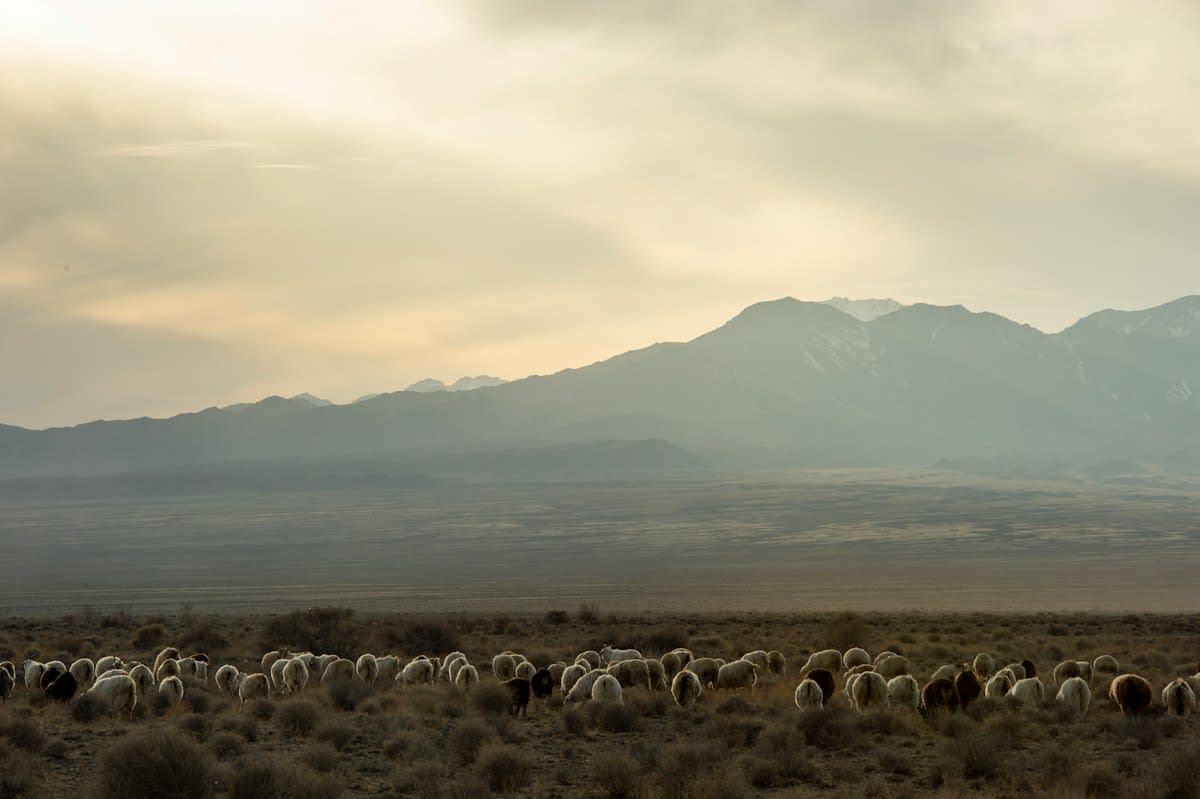
The trading floors in London and New York spent the last eighteen months pricing in a permanent supply crunch. They bought into the narrative of the Great Uranium Squeeze. The logic was simple: aging reactors, a sudden pivot back to nuclear for net-zero targets, and a fragile supply chain. But they forgot about the steppes. In Almaty, the strategy isn't about scarcity; it is about systemic dominance. When Kazatomprom—the world's largest producer—adjusts its guidance by even a fraction, the entire Western hedge on U3O8 doesn't just bend. It snaps.
The Production Delta: A 12-Month Reversal
Twelve months ago, the market was operating on the assumption that Kazakhstan's production would plateau or decline due to sulfuric acid shortages and logistical bottlenecks around the Caspian Sea. Investors piled into the Sprott Physical Uranium Trust, driving spot prices toward levels not seen since 2007. However, the delta between projected and actual output has shifted. Kazatomprom's ability to optimize In-Situ Recovery (ISR) wells has effectively neutralized the perceived shortage. According to recent data, Kazakhstan continues to account for approximately 43% of global uranium production (Source: World Nuclear Association, 2023). This isn't a gradual increase; it is a strategic flood that makes the 'scarcity' play look like a rookie mistake.
| Region | Market Share (Approx) | Production Trend (12mo) | Leverage Level |
|---|---|---|---|
| Kazakhstan | 43% | Stabilized/High | Critical |
| Canada | 15% | Increasing | Moderate |
| Australia | 17% | Flat | Low |
| Namibia | 11% | Volatile | Moderate |
Why does this matter now? Because the 'Energy Hedge' wasn't just about the metal; it was a bet on the volatility of the transition. When the supply outlook stabilizes in Almaty, the volatility premium vanishes. We are seeing a migration of capital away from physical uranium holdings and back into traditional energy equities. The market realized that the bottleneck wasn't the ore in the ground—it was the political willingness to extract it. Kazakhstan just signaled that the faucet is wide open.
"The market consistently underestimates the agility of Kazakh ISR operations. While Canadian hard-rock mines take years to scale, Almaty can shift production volumes in a matter of months by simply adjusting acid injection rates across their well-fields."— Viktor Volkov, Senior Energy Analyst at Central Asian Resource Group
Second-Order Collapse: The SMR Funding Gap
The ripple effect doesn't stop at the spot price. The real damage is happening in the Small Modular Reactor (SMR) sector. SMRs were marketed as the efficient, fuel-sipping alternative to giant gigawatt plants. The investment thesis for SMRs relied heavily on the premise that fuel costs would skyrocket, making high-efficiency, low-waste designs a financial necessity. With a uranium surplus, the urgency for these 'efficient' designs evaporates. Why spend billions on unproven SMR prototypes when the fuel for existing Large Light Water Reactors (LWRs) is cheap and plentiful? (Source: International Atomic Energy Agency, 2023).
We are seeing a quiet withdrawal of venture capital from SMR startups in North America and Europe. The 'fuel crisis' was the catalyst for the SMR gold rush. Now that the crisis is revealed as a temporary liquidity glitch rather than a structural deficit, the ROI calculations for next-gen nuclear are being rewritten. It is a classic case of the commodity price killing the innovation.
Ground-Level Friction: The Ugly Reality
Outside the polished press releases from Astana, the reality is a mess of bureaucratic infighting and logistical nightmares. The 'surplus' isn't a result of a master plan; it is often a byproduct of failed attempts to restrict supply. Local operators in the Chu-Sarysu basin frequently clash with central government quotas. There are reports of 'ghost production'—uranium extracted but not officially logged until the market price hits a specific threshold. This creates a shadow inventory that the West cannot track via satellite or official reports.
- Sulfuric acid supply chain friction: Local shortages often force operators to source from China, creating a dependency that Astana hates but accepts.
- Labor volatility: Skilled ISR technicians are increasingly poached by Russian state-backed firms, leading to operational inefficiency.
- The 'Rosatom Shadow': Despite Western sanctions on Russia, the technical integration between Kazatomprom and Rosatom remains deep, complicating the 'de-risking' strategies of the EU.
This is the friction the textbooks ignore. You can't model a market when the largest player is a state-owned enterprise operating in a geopolitical gray zone. The 'surplus' is as much a political tool as it is an economic reality. By keeping the market saturated, Kazakhstan ensures that Western miners in Canada and Australia cannot justify the CapEx for new mines, effectively cementing Almaty's monopoly for the next decade.
Third-Order Effects: The Geopolitical Pivot
The final consequence is the shift in leverage. For years, the US and EU viewed uranium as a strategic vulnerability. They attempted to build 'closed-loop' supply chains. But the sheer volume of Kazakh output makes this prohibitively expensive. When the price drops, the incentive to build domestic enrichment capabilities in the US or France diminishes. We are seeing a return to 'commodity dependence.' The West is essentially outsourcing its energy security to a nation that maintains a delicate balancing act between Washington and Beijing (Source: Center for Strategic and International Studies, 2024).
Is this a victory for the consumer? Sure. Electricity stays cheaper. But for the strategic planner, it is a disaster. The uranium surplus has effectively tanked the hedge, leaving the global energy transition vulnerable to a single point of failure in Central Asia. If a political upheaval hits Astana, the world won't have the alternative mines ready because the 'surplus' killed the incentive to build them.
Fact-Check & Accuracy Note
The current market debate centers on whether Kazatomprom will actually adhere to its 2024-2025 production cuts or if 'operational slippage' will continue to flood the market. Most institutional traders are now ignoring the official guidance and watching the actual shipment volumes coming out of the port of Aktau.