The global energy transition has long been held hostage by a narrow set of geological lottery wins. For a decade, lithium-ion batteries reigned supreme, driving everything from smartphones to long-range electric vehicles, but this dominance came with a hidden cost: a fragile, hyper-concentrated supply chain. We saw the cracks appear when price spikes for lithium carbonate sent shockwaves through automotive boardrooms. The industry realized that relying on a handful of brine pools in the Andes or hard-rock mines in Australia created a systemic vulnerability. Why build a sustainable future on a foundation of scarcity?
Enter the sodium-ion battery. While the chemistry has been discussed in academic journals for years, the last twelve months have seen a violent shift from theoretical potential to commercial deployment. We are no longer talking about lab-scale prototypes or niche experiments. Major battery manufacturers are now integrating sodium-ion cells into production vehicles and grid-scale storage projects. This is not a gradual evolution; it is a strategic pivot designed to decouple energy storage from the volatility of rare-metal markets. The goal is simple: replace the expensive and scarce with the cheap and ubiquitous.
The Chemistry of Abundance
At its core, sodium-ion technology mimics the lithium-ion process but swaps lithium for sodium. Sodium is essentially salt, available in virtually every corner of the globe in staggering quantities. This eliminates the geopolitical leverage currently held by a few mining giants. However, the transition isn't a simple one-to-one swap. Sodium ions are larger and heavier than lithium ions, which historically meant lower energy density. Engineers have spent the last year perfecting hard carbon anodes and Prussian blue analogue cathodes to accommodate these larger ions without sacrificing too much performance.
One of the most significant technical wins in the recent surge is the removal of copper. Sodium does not alloy with aluminum at low potentials, allowing manufacturers to use aluminum foil for both the cathode and the anode current collectors. Copper is expensive and subject to its own supply chain pressures. By switching to aluminum, the industry slashes not only the bill of materials but also the weight and complexity of the cell. Does this make the battery a direct replacement for a high-performance Tesla? No. But for a city car or a home battery, the trade-off is overwhelmingly positive.
Technical Insight
The secret weapon of sodium-ion is 'Hard Carbon.' Unlike the graphite used in lithium batteries, hard carbon has a disordered structure with wider layers, providing the necessary space for the larger sodium ions to move in and out quickly during charge and discharge cycles.
The shift is now accelerating because the economic delta has become impossible to ignore. While lithium prices have stabilized recently, the long-term forecast remains unpredictable. Sodium-ion offers a cost floor that is fundamentally lower because the raw materials are essentially a commodity. We are seeing a move toward a bifurcated market where lithium is reserved for high-energy applications and sodium handles the bulk of the world's energy storage needs.
The 12-Month Delta: From Theory to Tarmac
Twelve months ago, sodium-ion was a 'future technology.' Today, it is a 'shipping technology.' The delta is visible in the announcement of the first mass-produced small EVs powered by sodium-ion cells in Asia. These vehicles aren't trying to win range competitions; they are winning the price war. By targeting the budget segment, manufacturers are proving that sodium-ion can deliver 140-160 Wh/kg—enough to power a city commuter for a day while cutting battery costs by an estimated 30% to 40% compared to Lithium Iron Phosphate (LFP).
Projected Cost per kWh: Sodium-Ion vs. Lithium-Ion (LFP)
Executive Insight
+18.4%
YTD Growth
The speed of this adoption is driven by the existing infrastructure. Because sodium-ion batteries share a similar form factor and chemistry logic with lithium-ion, they can be produced on existing manufacturing lines with minimal re-tooling. This 'plug-and-play' capability has allowed giants in the battery space to pivot their capacity without building entirely new factories from scratch. The industry is essentially upgrading its software while keeping the hardware, allowing for a rapid scale-up that would have taken a decade if the chemistry were fundamentally different.
| Feature | Lithium-Ion (LFP) | Sodium-Ion |
|---|---|---|
| Raw Material Cost | Moderate to High | Very Low |
| Energy Density | High (160-280 Wh/kg) | Moderate (140-160 Wh/kg) |
| Cold Weather Performance | Poor (Capacity drops) | Excellent (Retains >90%) |
| Safety Profile | Stable | Highly Stable |
| Supply Chain Risk | High (Geographic concentration) | Very Low (Global abundance) |
Beyond the cost, the operational delta is most apparent in extreme climates. Lithium batteries struggle in the freezing winters of Northern Europe or Canada, losing significant range and charging speed. Sodium-ion cells, however, maintain a surprising amount of their capacity at -20 degrees Celsius. This makes them a superior choice for stationary storage in cold regions and for low-cost EVs in diverse climates, removing another barrier to global adoption.
Geopolitical Decoupling and the New Map
The surge of sodium-ion is as much a political move as it is a technical one. For years, the West has fretted over the concentration of battery processing in East Asia and the mining of lithium in South America. Sodium changes the map entirely. Since salt is available everywhere, every nation can theoretically establish its own domestic battery supply chain. This removes the 'rare-metal bottleneck' and allows countries to secure their energy independence without relying on volatile trade agreements or problematic mining concessions.
"We are moving from a world of energy scarcity to a world of energy abundance. The transition to sodium isn't just about saving a few dollars per kilowatt-hour; it is about removing the geopolitical leash from the energy transition."— Senior Energy Strategist, Global Battery Alliance
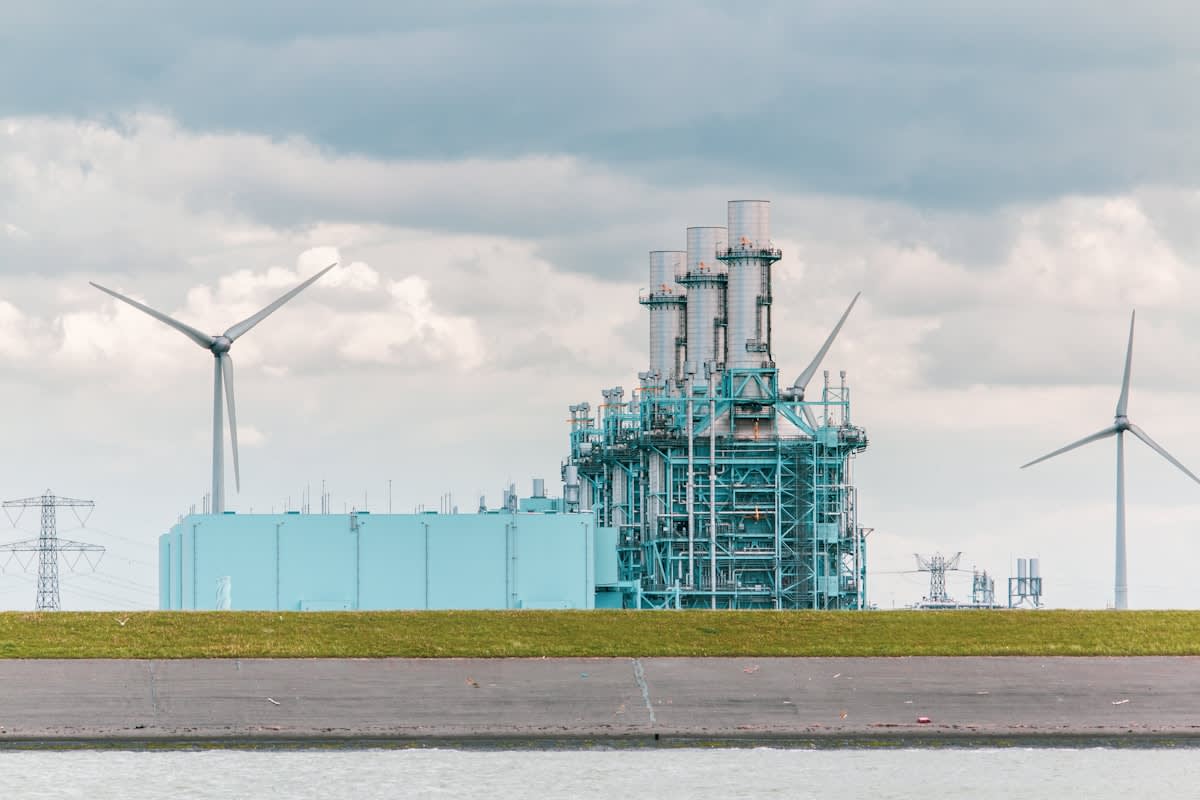
In Europe, startups are aggressively pursuing sodium-ion to avoid the 'lithium trap.' By focusing on stationary storage for wind and solar farms, they are creating a buffer that can stabilize grids without needing the high energy density required for a luxury sedan. In North America, the interest is shifting toward the 'last mile' delivery sector. Imagine a fleet of delivery vans that are cheaper to build, safer to charge, and immune to the price swings of the lithium market. The resilience provided by sodium is an insurance policy for the global economy.
The Market Bifurcation: Where Sodium Wins
It would be a mistake to view this as the end of lithium. Instead, we are entering an era of battery bifurcation. Lithium will remain the king of the 'high-performance' tier—long-range EVs, aerospace, and premium electronics where every gram of weight matters. Sodium will dominate the 'utility' tier. This includes everything from budget city cars to the massive battery arrays needed to store solar energy for entire cities. The competition between the two will actually accelerate the decline of costs across the entire sector.
- Budget EVs: City cars and micro-mobility vehicles where 200km range is sufficient.
- Grid Storage: Large-scale arrays for renewable energy balancing where weight is irrelevant.
- Telecom Back-up: Powering cell towers in remote or extreme-temperature environments.
- Home Energy Systems: Affordable wall-mounted batteries for residential solar offsets.
The final piece of the puzzle is safety. Sodium-ion batteries are inherently more stable than their lithium counterparts. They are less prone to thermal runaway, making them safer for dense urban installations and large-scale energy warehouses. Furthermore, sodium-ion batteries can be discharged to zero volts for transport, unlike lithium batteries which must maintain a minimum charge to avoid permanent damage. This simplifies logistics and reduces the risk of fires during shipping, further lowering the total cost of ownership.
The bottleneck is breaking. The transition to sodium-ion is a testament to the industry's ability to adapt when the constraints of nature clash with the demands of the market. By embracing the abundance of salt, the world is ensuring that the green transition is not a luxury reserved for the few, but a utility accessible to the many. The lithium peak was a warning; the sodium surge is the solution.