
The Great Bottleneck
The wire is the bottleneck. For decades, the global energy sector obsessed over the source—the coal plant, the massive dam, the sprawling wind farm—while largely ignoring the plumbing that delivers the juice. By August 2026, that myopia has finally shattered. We are witnessing a systemic pivot where the ability to move power efficiently is now more valuable than the ability to generate it. Why build a new plant if the existing lines cannot carry the load without melting or crashing?
This shift is not a subtle adjustment; it is a fundamental re-engineering of how we perceive energy security. The industry is moving away from the brute-force approach of adding more capacity and toward a surgical approach of optimization. This means leveraging software, advanced sensors, and intelligent routing to squeeze every possible megawatt out of existing copper and aluminum. The race is no longer about who has the most power, but who can move it the fastest and most reliably.
The Paradigm Shift
The era of 'Build More' is being replaced by the era of 'Use Better.' The focus has shifted from generation capacity to transmission efficiency.
The Explosion of Grid Enhancing Technologies (GETs)
The numbers tell a story of rapid escalation. The global Grid Enhancing Technologies (GETs) market, which stood at USD 3.25 billion in 2025, has already climbed to USD 3.77 billion in 2026. This immediate growth is merely the prelude to a massive long-term surge, with projections suggesting the market will hit USD 14.30 billion by 2035. This isn't just growth; it's a gold rush for efficiency. Investors are betting that software-defined grids will outperform physical expansions in both speed and cost.
What does this look like in practice? It involves Dynamic Line Rating (DLR) and advanced power flow controllers that allow utilities to push more electricity through existing lines based on real-time weather and temperature conditions. Instead of relying on conservative, static limits that leave capacity on the table, operators are now treating the grid as a living, breathing organism. This allows for the seamless integration of volatile renewable sources without the need to dig new trenches across entire continents.
Projected Growth of Grid Enhancing Technologies (GETs) Market
Executive Insight
+18.4%
YTD Growth
The delta between 2025 and 2026 proves that the industry has reached a tipping point. We are no longer talking about pilot projects or academic theories; we are seeing a deployment phase. The urgency is driven by the realization that building a new high-voltage transmission line can take a decade due to permitting and land rights, whereas deploying GETs can happen in months.
The EV Battery as a Grid Asset
While the high-voltage lines are being optimized, a second front is opening at the edge of the grid: the driveway. The Smart EV Charger market is projected to skyrocket from USD 11.6 billion in 2024 to a staggering USD 87.9 billion by 2035. This represents a compound annual growth rate (CAGR) of 19.7%. But this isn't just about selling more hardware; it's about turning millions of electric vehicles into a giant, distributed battery for the planet.
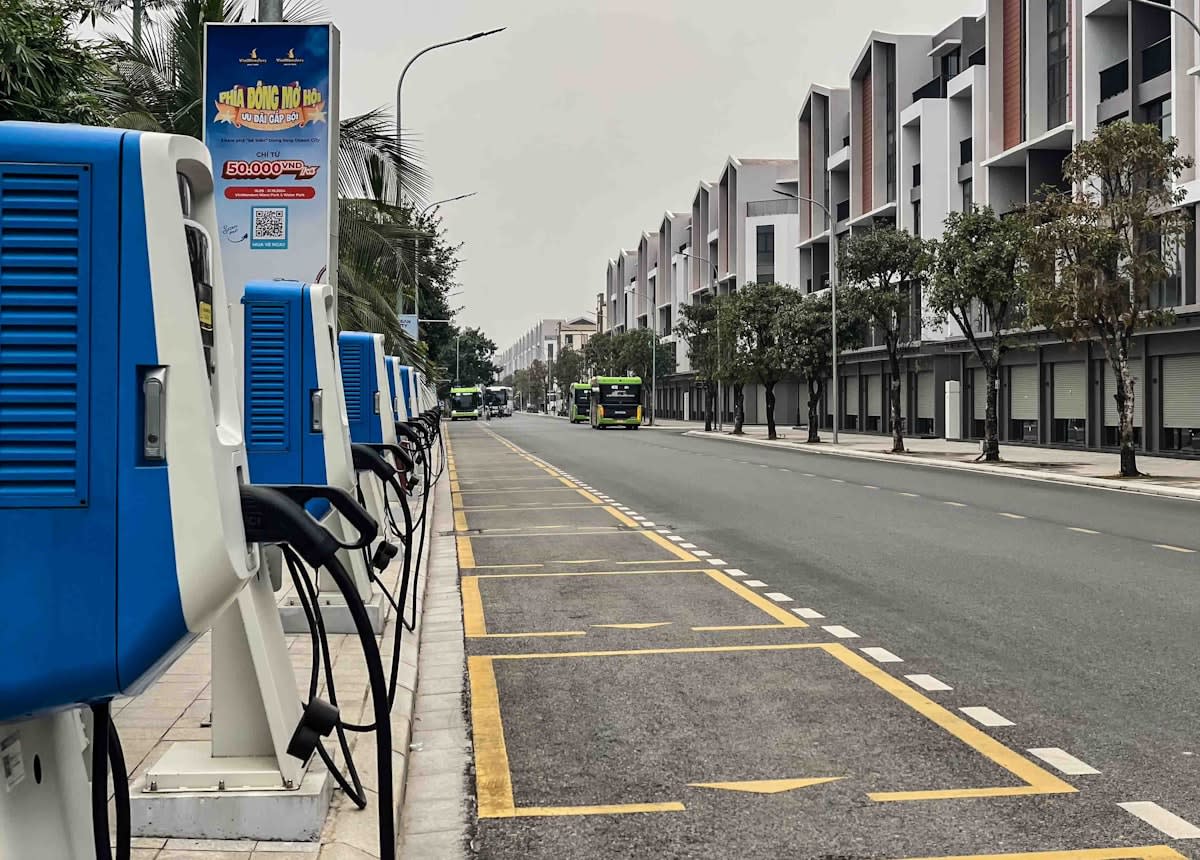
Intelligent charging infrastructure allows the grid to communicate with the car. When wind production peaks at 3 AM, the grid can trigger millions of chargers to soak up that excess energy. When demand spikes at 6 PM, smart chargers can throttle back or even feed power back into the system. This bidirectional flow effectively erases the need for several 'peaker' power plants, proving that intelligence is a viable substitute for raw capacity.
Could this be the ultimate hedge against energy volatility? By treating the EV fleet as a flexible load, utilities can smooth out the jagged peaks of demand that typically lead to blackouts. The economic incentive is clear: it is far cheaper to pay a software license for smart charging than to build and maintain a gas-fired plant that only runs ten days a year.
Global Deployment: From Southeast Asia to Europe
This trend is playing out with distinct intensity across different geographies. In Indonesia, the power sector has become an increasingly compelling proposition for global investors. The country is leveraging its vast, untapped renewable resources through a surge in Mergers and Acquisitions (M&A). Independent Power Producers (IPPs) are contracting directly with PLN, the state utility, under power purchase agreements (PPAs) to drive the government's energy transition targets.
The Indonesian model highlights a critical intersection: the need for new renewable generation must be matched by a grid capable of handling it. As IPPs flood the market with wind and solar, the pressure on PLN to optimize the existing distribution network becomes paramount. The M&A activity here isn't just about ownership; it's about integrating new, cleaner energy into a legacy system without compromising stability.
Meanwhile, organizations like WETO are focusing on the technical integration of wind energy into the power system. Their work emphasizes the creation of new strategies to incorporate increasing amounts of wind while maintaining grid equilibrium. This is the invisible work of the energy transition—the complex mathematics of frequency and voltage control that ensures the lights stay on when the wind stops blowing.
| Market Segment | 2024/25 Value | 2035 Projection | Key Driver |
|---|---|---|---|
| Grid Enhancing Tech (GETs) | USD 3.25B | USD 14.30B | Transmission Efficiency |
| Smart EV Chargers | USD 11.6B | USD 87.9B | Distributed Energy Storage |
These regional examples prove that the 'Invisible Upgrade' is a global mandate. Whether it is the regulatory frameworks in Southeast Asia or the technical integration strategies in Europe, the goal is the same: maximize the utility of every single wire.
The Resilience Pivot: Why Optimization Wins
Why is this race more critical than building new plants? Because the traditional model of energy expansion is too slow for the current climate. Physical construction is plagued by supply chain delays, environmental lawsuits, and skyrocketing material costs. Optimization, conversely, is agile. It allows for iterative improvements and rapid scaling.
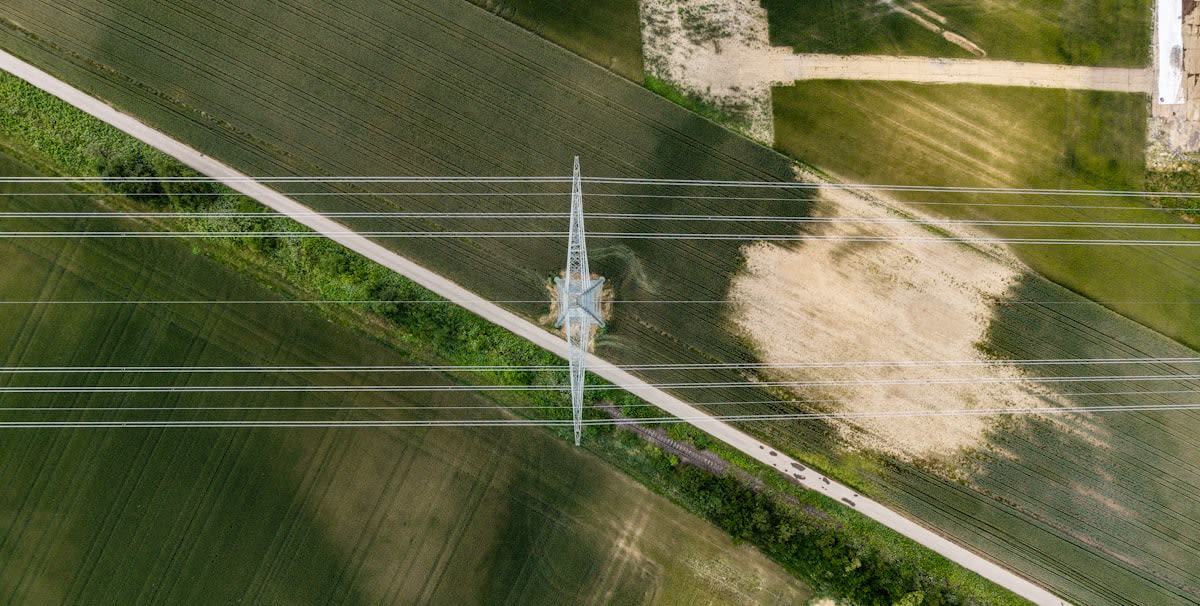
Furthermore, an optimized grid is a more resilient grid. By distributing the load and using smart chargers as buffers, the system becomes less susceptible to single-point failures. When a traditional plant goes offline, the shock to the system is massive. When a smart, optimized grid manages a distributed network of renewables and EV batteries, the system can reroute and balance itself in milliseconds.
We are moving toward a future where the grid is not just a passive conduit for electricity, but an active, intelligent layer of the global economy. The transition from USD 3.25 billion to USD 14.30 billion in GETs is the signal. The infrastructure is already there; we are simply finally learning how to use it.
In the end, the race to optimize the grid is a race for time. We cannot build our way out of the energy transition with concrete and steel alone. We must think our way out with software, sensors, and strategic integration. The invisible upgrade is the only way to bridge the gap between the power we have and the power we need.