The Great Material Pivot
For decades, the global industrial complex viewed urban waste as a liability—a logistical headache to be buried or shipped to the lowest bidder. That era ended abruptly. We are now witnessing a violent pivot toward valorization, where the city itself is treated as a high-grade ore body. This is not about mere recycling; it is about the strategic recovery of critical raw materials that fuel the digital and green transitions. Why dig a hole in the ground in a geopolitically unstable region when the copper, gold, and cobalt are already sitting in our landfills and desk drawers?
The delta between where we were eighteen months ago and today is staggering. In 2023, circular economy discussions were largely theoretical or focused on consumer habits. By mid-2024, the conversation shifted to hard industrial policy and mandatory procurement. The European Union, for instance, moved from suggesting circularity to enforcing it through a series of rapid-fire legislative strikes. This shift reflects a realization that resource security is the only true security in a fractured global market.
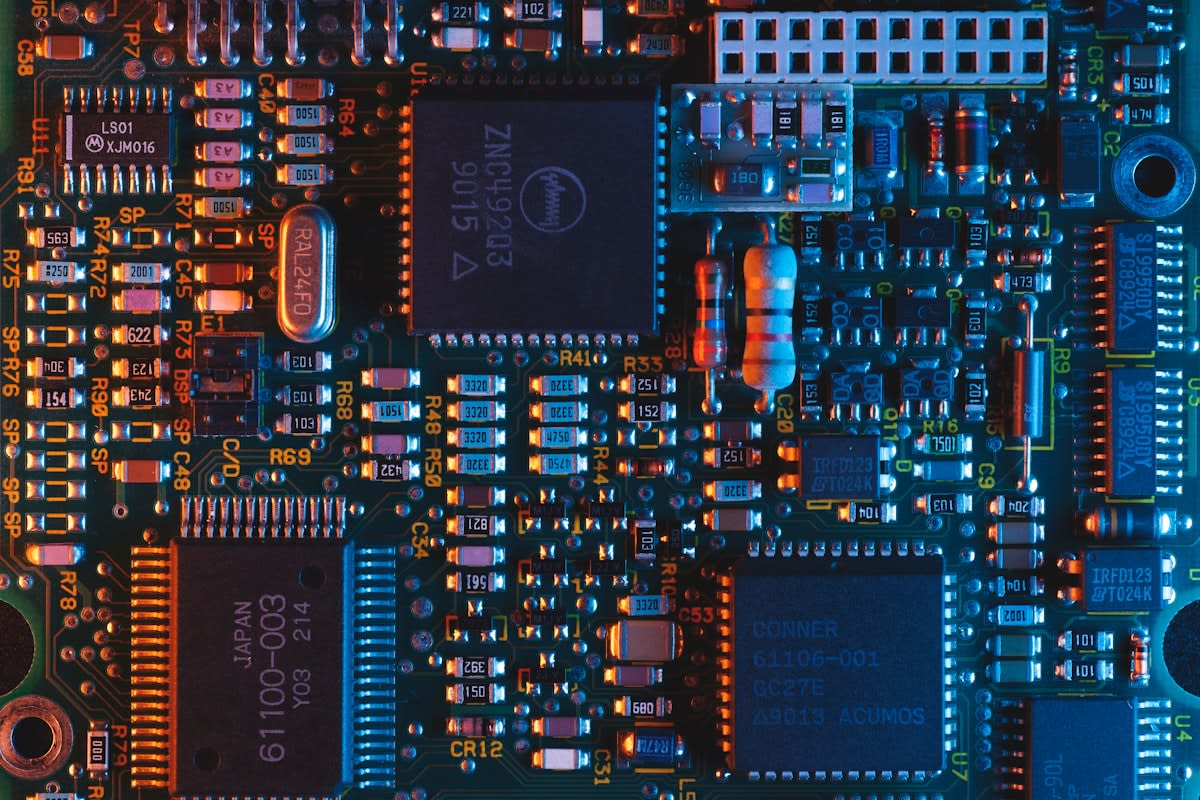
The scale of the opportunity is immense. The European Commission reports that the EU alone generates over 12 million tons of waste electrical and electronic equipment (WEEE) annually. This is not just trash; it is a concentrated inventory of high-purity metals. The focus has shifted from the volume of waste to the value of the recovery. By treating these 12 million tons as a primary resource, industrial powers can drastically reduce their import dependency on sensitive regions, effectively insulating their supply chains from external shocks.
Legislative Teeth: The 2024 Regulatory Blitz
Policy is no longer trailing the technology; it is driving it. May 2024 marked a critical turning point with the entry into force of a new Regulation on waste shipments. The goal is blunt: ensure the EU does not export its waste challenges to other nations. By closing the exit ramps for waste, the EU has forced a domestic industrialization of recovery. If the waste cannot leave, the infrastructure to valorize it must be built at home. This regulatory pressure is the primary catalyst for the current investment wave in urban mining tech.
The momentum continued through the summer of 2024. In July, the 'right to repair' directive entered into force, fundamentally challenging the planned obsolescence model that fueled the waste crisis. Shortly after, in August 2024, the Industrial and Livestock Rearing Emissions Directive (IED 2.0) began to apply. This update integrates circular economy practices and resource efficiency directly into the Best Available Techniques for industrial operations. It is a systemic overhaul that mandates efficiency not as a goal, but as a requirement for operation.
"The resources are already here. We are simply learning how to harvest them from the concrete jungle."— Dr. Maria Holuszko, Associate Professor at the University of British Columbia
The War on Greenwashing
While the 2024 directives focus on hardware and emissions, the EU also targeted the marketing side. The March 2023 proposal for a Directive on substantiating green claims aims to kill 'greenwashing,' ensuring that companies claiming circularity can actually prove their valorization metrics.
From AI Robotics to Urban Mandates
The transition from policy to practice is happening in the labs and city planning offices of Northern Europe. Through the Urban Mining Platform, funded under Horizon Europe, pilot projects in Belgium and Finland are deploying AI-powered robotic arms. These systems are designed to disassemble smartphones with surgical precision, recovering embedded copper and rare earth elements that were previously lost in crude shredding processes. This precision recovery increases the purity of the output, making recycled materials indistinguishable from virgin ores.
Sweden has taken this a step further by integrating recovery into the very fabric of its cities. In 2024, Stockholm's Royal Seaport became the first district to mandate that all new buildings incorporate wiring made from recycled copper sourced from local e-waste streams. This is a closed-loop system in its purest form: the waste from the city's old electronics literally powers the electricity of its new architecture. It transforms the city into a self-sustaining organism.

| Critical Metal | Urban Source | Industrial Application | Strategic Value |
|---|---|---|---|
| Copper | Wiring, PCB Boards | Electrical Grids, EVs | High (Essential for electrification) |
| Gold | Connectors, CPUs | High-end Electronics | Medium (Financial/Industrial hedge) |
| Cobalt | Li-ion Batteries | Energy Storage | Critical (Supply chain vulnerability) |
| Lithium | Battery Packs | EV Batteries | Critical (Energy transition driver) |
The Food Frontier: Processing 4.0
While metals grab the headlines, the valorization wave is hitting the food industry with equal force. The emergence of Food Processing 4.0—driven by the fourth industrial revolution—is redefining what we call food waste. Research by experts like Guillermo Garcia-Garcia highlights a shift toward treating food processing by-products as high-value raw materials. In the UK, case studies with food manufacturers demonstrate that the 'waste' from one process is often the 'premium ingredient' for another, provided the right extraction technology is used.
This isn't just about composting; it is about molecular recovery. The industry is now extracting bioactive compounds, proteins, and fibers from streams that were previously flushed away. By integrating AI and advanced sensing, manufacturers can now identify the precise moment a byproduct becomes a value-add material. This turns the food supply chain from a linear path of depletion into a circular network of recovery.
Can we imagine a world where the city's organic waste is the primary source of its pharmaceutical precursors or biodegradable plastics? That is the trajectory of Food Processing 4.0. The synergy between digital monitoring and chemical valorization is turning the food industry into a biotech powerhouse, reducing the land-use pressure of traditional agriculture.
The Bottom Line: Resource Sovereignty
The overarching narrative of the valorization wave is not environmentalism—it is sovereignty. The race to master urban mining is a race to decouple industrial growth from geopolitical volatility. When a nation can recover its own cobalt and copper from its own waste, it no longer needs to negotiate its future with volatile exporters. The 'urban mine' is the ultimate hedge against global instability.
We are moving toward a future where the most successful companies will not be those who find the most resources, but those who recover them most efficiently. The industrial race has moved from the wilderness to the warehouse. The infrastructure is being built, the laws are in place, and the technology is scaling. The question is no longer whether we will turn our waste into wealth, but who will own the technology that makes it possible.