The Biological Middleman Problem
Industrial livestock is, at its core, a wildly inefficient conversion process. We grow massive quantities of soy and corn, only to feed them to a biological middleman—the cow, the pig, or the chicken—to produce a fraction of that energy in the form of protein. This is not a farming strategy; it is a thermodynamic failure. For decades, the industry has attempted to optimize this failure through genetic selection and concentrated animal feeding operations, but the ceiling is hard. You cannot optimize a mammal to be 100% efficient when the laws of biology demand that the animal spend most of its energy simply staying alive, breathing, and moving.
Why keep the animal at all? The real value of livestock is not the creature itself, but the specific proteins it synthesizes—casein and whey in milk, collagen in skin, ovalbumin in eggs. The strategic pivot now occurring is the realization that we can decouple the protein from the animal. Molecular farming achieves this by inserting the genetic instructions for these animal proteins directly into the DNA of plants. Instead of a cow producing milk, a pea plant or a soy bean produces the exact same milk protein. The plant becomes the factory, and the sun provides the energy.
"The livestock industry isn't being disrupted by a better animal; it's being disrupted by the realization that the animal is an unnecessary piece of infrastructure."— Industry Strategic Analyst
This shift represents a fundamental change in how we view agricultural land. We are moving from a regime of calorie-conversion to a regime of precision synthesis. When a crop is engineered to produce a high-value animal protein, the land is no longer just growing feed; it is producing the final pharmaceutical or food-grade ingredient. This collapses the supply chain from a multi-stage process involving feed-lots and slaughterhouses into a single-stage harvest. The efficiency gains are not incremental; they are exponential.
But to understand why this is the winning play, we must look at the failure of the other high-tech alternative: the steel tank.
Beyond the Steel Tank: The Scalability Trap
Precision fermentation has long been touted as the successor to industrial farming. By using yeast or bacteria in massive stainless steel vats, companies can brew proteins with surgical precision. On paper, it works. In practice, it hits a brutal wall called Capital Expenditure (CapEx). Building a fermentation plant requires billions of dollars in infrastructure, sterile environments, and immense energy inputs to maintain temperature and agitation. The 'steel tank' model is essentially an attempt to build a city of factories to replace a city of farms.
Molecular farming solves the CapEx problem by using the most scalable infrastructure on Earth: the field. Instead of building a billion-dollar vat, you buy seeds. The 'bioreactor' is the leaf; the 'power source' is the sun; the 'cooling system' is the wind. By leveraging existing agricultural machinery and land-use patterns, molecular farming can scale at a speed that precision fermentation cannot touch. While a fermentation company spends five years building a plant, a molecular farming company can plant ten thousand hectares of protein-producing soy in a single season.
| Metric | Industrial Livestock | Precision Fermentation | Molecular Farming |
|---|---|---|---|
| Infrastructure Cost | Moderate (Land/Barns) | Extreme (Steel Vats) | Low (Existing Fields) |
| Energy Source | Feed-based Calories | Electricity/Glucose | Solar/Photosynthesis |
| Scaling Speed | Slow (Biological Growth) | Medium (Construction) | Fast (Seed Distribution) |
| Land Use Efficiency | Very Low | High | Very High |
Does this mean the steel tank is dead? No, but its role is shrinking. Fermentation will remain the gold standard for low-volume, ultra-high-purity proteins. But for the bulk proteins that feed billions—the whey, the collagen, the casein—the economics favor the plant. We are witnessing a strategic migration of protein production from the laboratory back to the land, albeit a land that has been digitally reprogrammed.
This transition does more than just lower costs; it redraws the map of global economic power.
A Global Realignment of Protein Power
For a century, the 'Meat Belt'—regions dominated by massive livestock concentrations in the Americas and Europe—has held the keys to protein security. This power was based on the ability to manage vast herds and the logistics of slaughter. Molecular farming decentralizes this power. Any nation with arable land and a seed-tech partnership can suddenly become a primary producer of animal-free dairy or collagen. Imagine Brazil shifting from exporting soy-feed for cows to exporting the final milk protein directly from the soy plant.
In Southeast Asia, we see the potential for specialty crops to be repurposed as bio-factories for high-value proteins, reducing reliance on expensive imports from the West. The geopolitical leverage shifts from those who own the livestock to those who own the genetic IP and the land to grow it. This is not just a change in farming; it is a change in trade diplomacy. The dependency on grain imports to feed livestock vanishes when the grain itself is the product.
The Invisible Shift
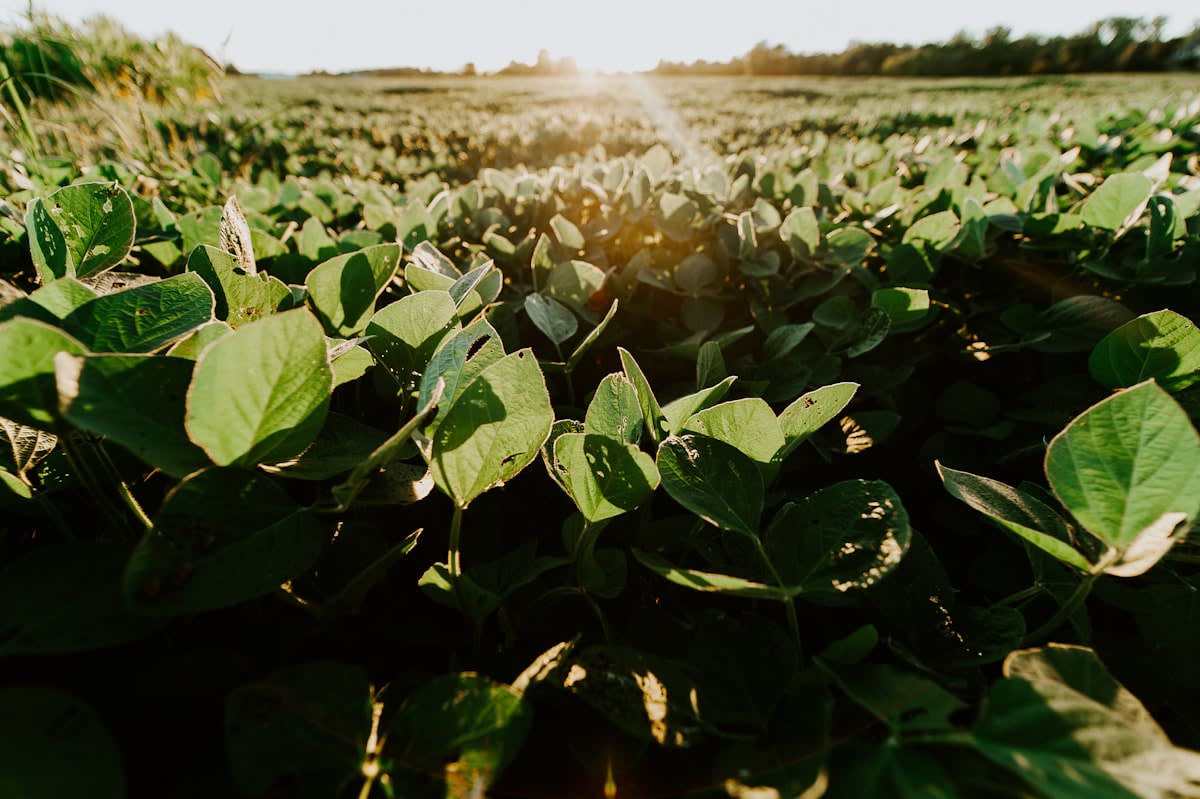
The pivot is quiet because it doesn't look like a revolution. It looks like a field of soy. But inside those cells, the biological machinery of a cow is running on solar power.
Of course, this transition faces regulatory friction. Governments in livestock-heavy regions will fight to protect the legacy industry. We will see debates over 'naturalness' and labeling. However, economics is a relentless force. When the cost of plant-produced casein drops to 20% of the cost of bovine-produced casein, the market will pivot regardless of the regulatory noise. The resilience of a system that relies on sunlight and seeds will always defeat a system that relies on the fragile health of billions of animals.
Projected Cost per kg of Protein (Normalized)
Executive Insight
+18.4%
YTD Growth
The final stage of this pivot is the integration of these proteins into existing food systems. We aren't talking about 'fake meat' that tastes like cardboard. We are talking about identical molecular structures. A cheese made from molecularly farmed casein is chemically indistinguishable from cow cheese because it is the same protein. This removes the primary barrier to adoption: the compromise on taste and texture. The consumer doesn't have to change; only the factory changes.
We are entering the era of the programmable pasture. The industrial livestock model was a brute-force approach to protein—more land, more feed, more animals. The bio-factory pivot is an elegant approach. It replaces the animal's stomach with a genetic sequence and the barn with a field. This is the quiet end of industrial livestock, not through a sudden crash, but through a slow, inevitable obsolescence driven by the sheer logic of efficiency.