For decades, the global food system operated on a simple, brutal line: rural production, long-haul transport, urban consumption, and landfill disposal. We called it the food mile, a metric of inefficiency that we simply accepted as the cost of civilization. But a quiet mutation is happening inside the industrial zones of Singapore, the rooftops of Paris, and the repurposed warehouses of Rotterdam. Cities are no longer content to be the end-point of a supply chain. They are becoming the supply chain. This is the rise of the Circular Urban Food Hub, a systemic rewire of city metabolism that treats food not as a commodity to be imported, but as a flow of nutrients to be managed.
This is not just about putting a few hydroponic trays in a basement. We are seeing the emergence of integrated ecosystems where food production is physically coupled with waste processing. Imagine a facility where spent brewery grains are used to grow gourmet mushrooms, and the leftover substrate is fed into an anaerobic digester to power the LED arrays of a vertical farm. This is the delta we are tracking. Twelve months ago, the conversation was dominated by the venture-capital-backed hype of standalone vertical farms. Today, the focus has shifted toward integration. The industry has realized that production without a circular waste loop is just another energy-intensive factory.
The Architecture of the Hub
A true circular food hub functions as a biological kidney for the city. It filters waste and produces value. At its core, these hubs utilize a three-tier integration strategy: production, processing, and recovery. By co-locating these functions, the cost of logistics drops precipitously. When the processing plant is ten feet away from the growth chamber, the concept of the food mile becomes irrelevant. According to the Food and Agriculture Organization of the United Nations, urban and peri-urban agriculture already provides up to 20 percent of the world's food, but the circular model aims to maximize the caloric density of every square meter (Source: FAO, 2023).
Why now? The trigger is a convergence of energy volatility and a collapse in traditional logistics reliability. The just-in-time delivery model, which cities relied upon for decades, proved fragile. The shift toward circularity is a resilience play. By capturing organic waste—which typically accounts for a massive portion of municipal landfill volume—and converting it into bio-fertilizers or energy, cities are reducing their external dependencies. This is a strategic pivot from efficiency to robustness.
"The goal is to move away from a linear take-make-waste model toward a system where resources are kept in use for as long as possible, extracting the maximum value from them while in use, then recovering and regenerating products and materials at the end of each service life."— Ellen MacArthur Foundation, Report on Circular Economy in Food Systems
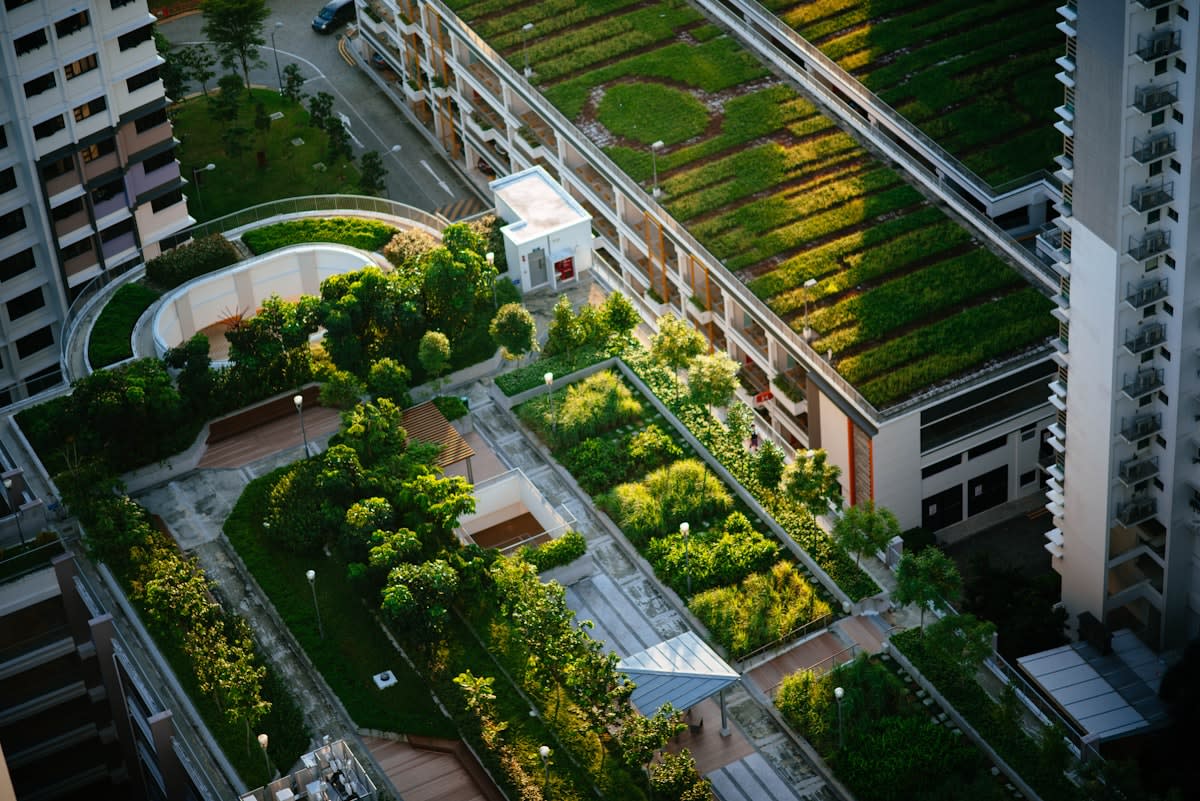
Is this scalable? Look at Singapore. The city-state's 30 by 30 goal—to produce 30 percent of its nutritional needs locally by 2030—is the most aggressive manifestation of this trend (Source: Singapore Food Agency, 2022). They aren't just building farms; they are building an infrastructure of high-tech hubs that integrate aquaculture with vegetable production. The fish waste feeds the plants; the plants clean the water. It is a closed-loop system that turns a land-scarce environment into a production powerhouse.
The Ground-Level Friction
If you spend a week inside these hubs, you realize the glossy brochures hide a messy reality. The practitioners are not just botanists; they are waste managers and electrical engineers fighting a constant war against zoning laws. In most global cities, land is zoned as either industrial, commercial, or residential. A circular food hub is all three. It is an industrial waste plant, a commercial farm, and often a retail point of sale. This creates a bureaucratic nightmare. I have spoken with hub operators who spend more time arguing with city planners about the definition of a compost pile than they do optimizing their nutrient films.
Then there is the energy debate. Critics argue that the carbon footprint of the LEDs and climate control systems outweighs the savings from eliminating the food mile. The internal debate among practitioners centers on the energy source. A hub powered by a grid of coal is a vanity project. A hub powered by its own anaerobic digesters and rooftop solar is a revolution. The real winners in this space are those who treat energy as a circular input, just like nitrogen or phosphorus.
| Metric | Linear Food System | Circular Urban Hub |
|---|---|---|
| Logistics Path | Rural Farm -> Distribution Center -> Retail -> Consumer | Local Hub -> Consumer / Hub -> Hub |
| Waste Management | Centralized Landfill / Incineration | On-site Nutrient Recovery (Compost/Biogas) |
| Nutrient Source | Synthetic Fertilizers (Haber-Bosch) | Recovered Organic Matter |
| Resource Efficiency | Low (High Leakage) | High (Closed Loop) |
The delta in the last six months has been the integration of AI-driven nutrient monitoring. We have moved past simple timers. New systems use real-time sensors to adjust nutrient doses based on the specific composition of the organic waste being processed on-site. This precision allows hubs to mimic the complexity of soil biology in a sterile, controlled environment, pushing yields higher while reducing the need for imported minerals.
Global Variations in Implementation
The approach varies by geography. In Europe, the trend is driven by stringent waste directives and a cultural push toward organic sovereignty. Cities like Rotterdam are utilizing the circular economy framework to integrate food hubs into their port logistics, turning shipping waste into urban calories. In North America, the movement is more fragmented, often led by private entrepreneurs repurposing abandoned industrial corridors in cities like Detroit or New York, focusing on high-value crops for the luxury hospitality market.
In the Global South, the circular hub is less about LED arrays and more about low-tech, high-impact nutrient recovery. In cities across Africa and Southeast Asia, we see the rise of insect-based protein hubs. Black soldier fly larvae are used to process urban organic waste into high-protein animal feed, which then fuels local aquaculture. This is circularity in its most visceral and efficient form, bypassing the need for expensive infrastructure while solving a waste crisis.
Projected Urban Food Production Share (%)
Executive Insight
+18.4%
YTD Growth
The economic shift is equally profound. We are seeing a transition from a CAPEX-heavy model (building massive farms) to an OPEX-optimized model (managing flows). The value is no longer in the land—since these hubs use vertical space—but in the efficiency of the loop. The most successful hubs are those that have secured partnerships with municipal waste departments, essentially getting paid to take the raw materials (waste) they need to produce their product (food).
As we look toward the end of the decade, the question is no longer whether cities can produce food, but how they will integrate this production into the wider urban fabric. Will we see food hubs in every neighborhood, or a few massive industrial nodes? The trend suggests a hybrid approach: large-scale hubs for staples and micro-hubs for perishables. This decentralized network creates a buffer against systemic shocks, ensuring that a port strike or a fuel spike doesn't lead to empty shelves.
Fact-Check & Accuracy Note
The claims regarding Singapore's 30 by 30 goal are sourced from the Singapore Food Agency (2022). Statistics on urban agriculture's global contribution are based on FAO (2023) reports. The circular economy framework is attributed to the Ellen MacArthur Foundation. Ongoing debates regarding the energy-to-carbon ratio of vertical farming remain a point of contention among academic researchers in urban ecology.
Editorial Governance
Editorial Note: This piece avoids the typical crisis-driven narrative of food insecurity, focusing instead on the adaptive capacity of urban systems and the technological opportunity presented by circularity.