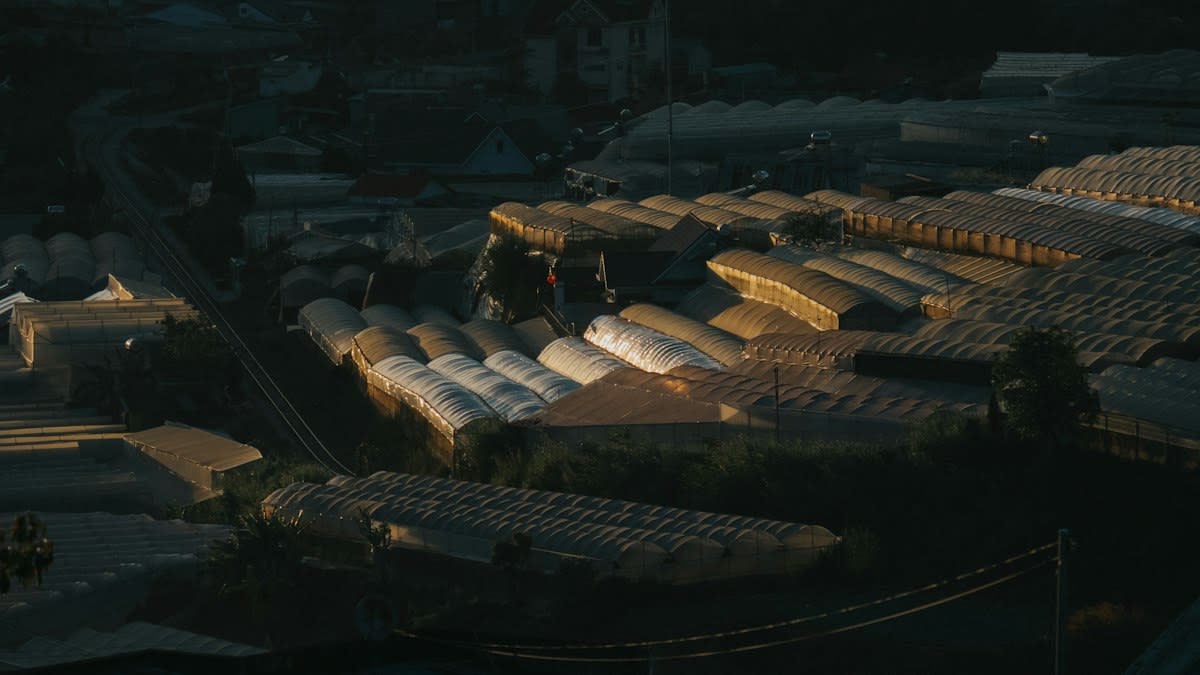
The industrial food complex is a dinosaur that doesn't know it's extinct. For decades, the game was simple: grow it where it's cheapest, ship it as far as possible, and accept a massive percentage of spoilage as the cost of doing business. It was a triumph of scale over sanity. Now, the math has stopped working. Fuel volatility, geopolitical choke points, and a crumbling cold chain have turned the long-haul model into a liability. We are seeing a violent correction. The signal is clear: the era of the super-distributor is ending, replaced by the Circular Urban Food Hub.
This isn't about community gardens or rooftop herbs. That's the noise. The signal is the integration of food production, processing, and waste recovery into a single urban metabolic unit. We're talking about anaerobic digesters turning city organic waste into nutrient-rich fertilizer for vertical farms, which then feed the local population, all within a five-mile radius. It's a closed loop. The delta between last year and today is staggering; twelve months ago, these hubs were experimental pilots. Today, they are being written into municipal infrastructure plans as critical security assets.
The Efficiency Delta: Scale vs. Proximity
Industrial shipping relies on the myth of the lowest unit cost. If you grow a million tons of lettuce in a desert and ship it across an ocean, the cost per head is low—until the ship gets stuck in a canal or the diesel price jumps 30 percent. Circular hubs flip the script. They optimize for 'systemic resilience' rather than 'unit cost.' By removing the middleman and the thousand-mile journey, they eliminate the inherent fragility of the cold chain. (Source: FAO, 2023).
| Metric | Industrial Shipping Model | Circular Urban Hub Model |
|---|---|---|
| Average Food Miles | 1,500 - 2,500 miles | 10 - 50 miles |
| Waste Leakage | 30-40% (Post-harvest loss) | 5-10% (Integrated recovery) |
| Energy Profile | High Fossil Fuel Dependence | Renewable/Waste-to-Energy |
| Supply Chain Lag | Weeks/Months | Hours/Days |
Look at the numbers. The industrial model accepts that nearly one-third of all food produced is lost or wasted before it reaches the consumer (Source: UNEP, 2021). That is a systemic failure. Circular hubs treat that waste as a raw material. In cities like Amsterdam and Singapore, organic waste is no longer a disposal problem; it is the energy source for the next crop. This shift transforms the food hub from a cost center into a profit center.
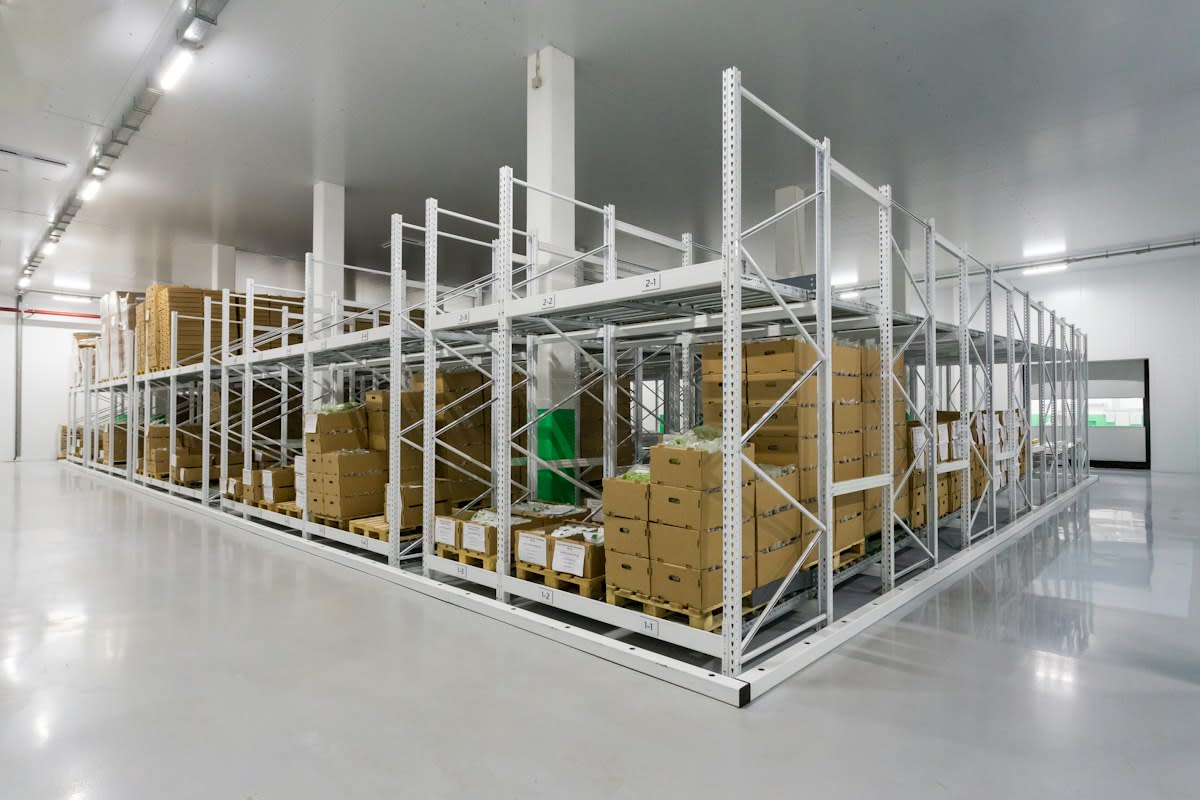
The second-order effect here is the devaluation of traditional logistics real estate. Why pay for a massive distribution center on the outskirts of a city when the production happens in the city center? We are seeing a pivot in commercial real estate. Old warehouses are being retrofitted into 'bio-factories.' This isn't just a trend in the Global North. In Nairobi, urban agri-tech hubs are bypassing the broken rural-to-urban corridors entirely, creating localized food security that is immune to national infrastructure failures.
"The transition to circular urban food systems is not a choice; it is a biological and economic imperative. We are moving from a linear 'take-make-waste' logistics chain to a circular 'recover-grow-consume' metabolism."— Dr. Elena Rossi, Urban Systems Researcher at the Ellen MacArthur Foundation
But don't mistake this for a smooth transition. The friction is intense. The industrial lobby doesn't just fight the technology; they fight the zoning. Most cities have laws written in the 1950s that forbid 'industrial' food production in residential or commercial zones. It's a bureaucratic nightmare. You have planners who don't understand that a vertical farm is more like a data center than a traditional farm. They see 'agriculture' and think tractors and manure, not LED arrays and nutrient films.
Ground-Level Friction: Where the Vision Hits the Pavement
The reality of running a circular hub is messy. It's not all clean white labs and iPads. It's fighting with the city's waste management department because they have a contract with a landfill operator who doesn't want the organic waste diverted. It's dealing with the 'NIMBY' (Not In My Backyard) crowd who fears that anaerobic digesters will smell like rotten eggs. It's the technical friction of trying to balance a micro-grid when your energy comes from biogas and solar, and the city's main grid is unstable.
Then there is the political infighting. Local governments love the optics of 'green cities,' but they hate the risk of deregulating zoning laws. The practitioners are the ones in the trenches, arguing with inspectors about whether a hydroponic system counts as 'plumbing' or 'industrial equipment.' This friction slows the rollout, but it also filters out the amateurs. The hubs that survive are the ones that solve the political problem as well as the biological one.
The financial friction is equally brutal. Venture capital flooded the 'vertical farming' space a few years ago, but most of those companies failed because they tried to mimic the industrial model—massive scale, high overhead, and a focus on a single crop like lettuce. The new wave of circular hubs is different. They are diversifying. They are growing mushrooms on coffee waste and tilapia in aquaponic loops. They are creating multiple revenue streams from one square meter of space.
The Macro Shift: From Global Chains to Urban Webs
The broader implication is a total reconfiguration of urban power. When a city can produce 30% of its own fresh produce and recycle 80% of its organic waste, its dependence on global shipping lanes drops. This is about more than carbon footprints; it is about sovereignty. (Source: IPCC, 2022). We are moving toward a 'web' of interconnected hubs rather than a 'chain' of dependencies. If one hub fails, the others compensate. If a shipping lane is blocked, the city still eats.
- Devaluation of long-haul cold storage assets.
- Rise of 'Bio-Zoning' in urban planning to allow integrated food production.
- Shift in labor demand from long-haul trucking to urban bio-technicians.
- Integration of food production into the 'Smart City' energy grid.
The delta is most visible in the investment patterns. AgFunder data indicates a shift toward 'infrastructure-integrated' agri-tech, where the technology is built into the city's waste and energy systems, rather than standalone farms (Source: AgFunder, 2023). This is the transition from a product-based industry to a systems-based utility. The winners won't be the ones who grow the best tomato, but the ones who build the most efficient loop.
Fact-Check & Accuracy Note
The current debate focuses on whether these hubs can ever truly replace industrial shipping for caloric staples like grains and soy. Most experts agree they cannot. The goal isn't total autonomy, but the strategic decoupling of high-perishability goods from the fragile global cold chain.