
Agriculture is currently undergoing a silent but violent transformation. For decades, the narrative around rice production was a binary choice between feeding the masses and protecting the atmosphere. That dichotomy died in 2024. We are witnessing the Methane Pivot—a coordinated global shift toward low-emission cultivation that leverages high-tech precision to decouple caloric output from environmental degradation. Why does this matter now? Because the intersection of climate volatility and technological maturity has finally reached a tipping point where resilience is more profitable than tradition.
The China Paradox: Record Yields, Lower Inputs
China is currently rewriting the playbook on agricultural productivity. According to the China Agricultural Green Development Report 2025, the nation has managed to sustain record grain production while simultaneously advancing its green agricultural development. This is not a fluke of nature but a result of calculated resource conservation. The most striking data point? Fertilizer use for the country's three major grain crops has declined for ten consecutive years. This represents a decade-long delta of efficiency that challenges the long-held belief that higher yields require higher chemical inputs.
The momentum is institutionalized. Chen Bangxun, director of the Department of Development Planning at the Ministry of Agriculture and Rural Affairs, has signaled that the 15th Five-Year Plan (2026-30) for Accelerating Agricultural and Rural Modernization will place the comprehensive green transformation of agriculture as a key priority. By integrating scientific use of pesticides and fertilizers with a focus on biological resource conservation, China is proving that the pivot to low-emission grains is a viable path to food security, not a threat to it.
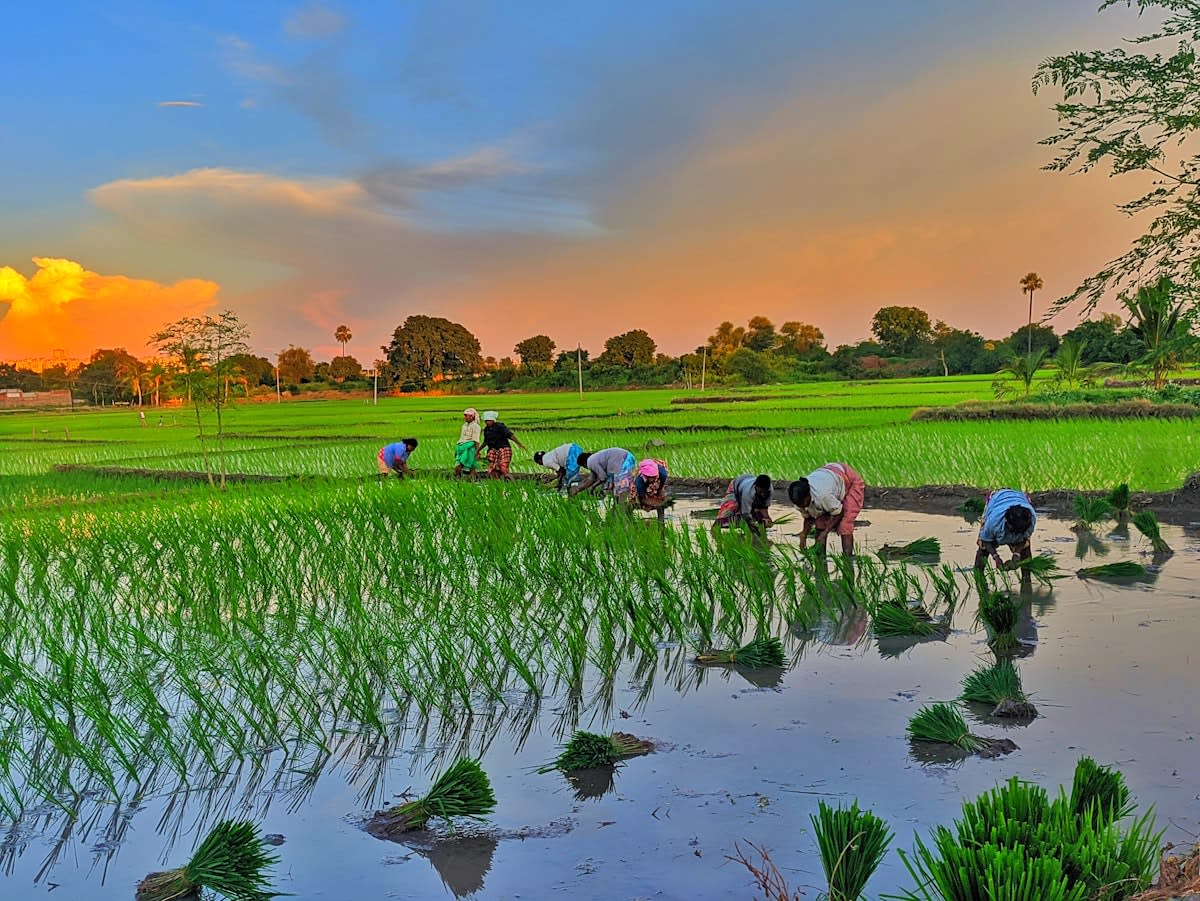
But while China optimizes, other regions are fighting for survival. In Bangladesh, the urgency is visceral. Recent data from the Ministry of Agriculture reveals a harrowing scene: floods have ravaged 43 districts, damaging crops across 114,723 hectares of land. The impact is concentrated, with nearly 90 percent of the affected area located in just 16 districts. The casualties are specific—Aus rice and Aman seedbeds have taken the brunt of the damage, with 79,500 hectares of Aus rice alone being decimated.
Does this sound like a crisis? Perhaps. But for the investigative eye, it is a catalyst. The devastation of transplanted Aman rice in districts like Cumilla—where thousands of hectares of standing crops were lost—is driving an immediate demand for low-emission, climate-resilient varieties. The pivot is no longer about meeting an international treaty in 2050; it is about ensuring the rural economy of Bangladesh does not collapse in 2026.
The Resilience Factor
The transition to low-emission rice isn't just about methane; it's about structural resilience. When crops can withstand the floods seen in Bangladesh while requiring fewer inputs, the entire food chain becomes less fragile.
The $54 Billion Digital Engine
You cannot manage what you cannot measure. The Methane Pivot is being powered by a massive influx of capital into digital agriculture. Growth Market Reports indicate that the global digital agriculture market stood at USD 17.8 billion in 2024. By 2033, this figure is projected to skyrocket to approximately USD 54.2 billion. This isn't just about drones taking photos of fields; it is about the integration of IoT, AI, machine learning, and data analytics to optimize every single drop of water and gram of nitrogen.
This 'Agriculture 4.0' framework allows farmers to move away from blanket applications of fertilizer—which often lead to methane and nitrous oxide emissions—toward precision application. By utilizing cloud computing and robotics, the industry is shifting toward a model where the environment dictates the input, rather than a calendar. This technological leap is the only way to scale low-emission rice across diverse geographies.
| Metric | 2024 Value | 2033 Projection | Growth Driver |
|---|---|---|---|
| Digital Ag Market Size | USD 17.8 Billion | USD 54.2 Billion | AI, IoT, & Data Analytics |
| China Fertilizer Trend | 10-Year Decline | Continued Reduction | 15th Five-Year Plan |
| US Regenerative Goal | Current Baseline | 10 Million Acres | Rodale Institute Campaign |
The concept of the 'Digital Twin' is perhaps the most sophisticated weapon in this arsenal. While currently being applied to livestock, the architecture is a blueprint for rice. A recent perspective in Nature discusses how animal digital twins couple sensor observations with data-driven models to manage ruminant methane, which represents 60-80% of greenhouse-gas intensity in some dairy and beef systems. Applying this same nested architecture—spanning the plant, the farm, and the supply chain—could allow rice farmers to simulate and mitigate methane emissions in real-time.
Regenerative Capital and Localized Procurement
Money is moving where the emissions are dropping. In the United States, the Rodale Institute has launched the 10 Million Acre Solution, a $139 million comprehensive campaign. The goal is ambitious: catalyze the transition of 10 million acres of U.S. farmland to organic and regenerative organic by 2030. This effort is bolstered by a $24 million Center for Regenerative Organic Innovation, signaling that the shift toward low-emission farming is now backed by significant private and non-profit capital.
Parallel shifts are occurring in the UK. The CPRE has highlighted a massive opportunity in public procurement, suggesting that redirecting government spending toward sustainable suppliers could unlock between £0.895bn and £1.09bn a year for farmers. The logic is simple: if the public sector demands food produced to higher environmental standards (HES), the market will pivot to meet that demand. Research shows that every £1 spent on locally sourced food in Scotland generated £1.66, proving that sustainability and local economic resilience are two sides of the same coin.
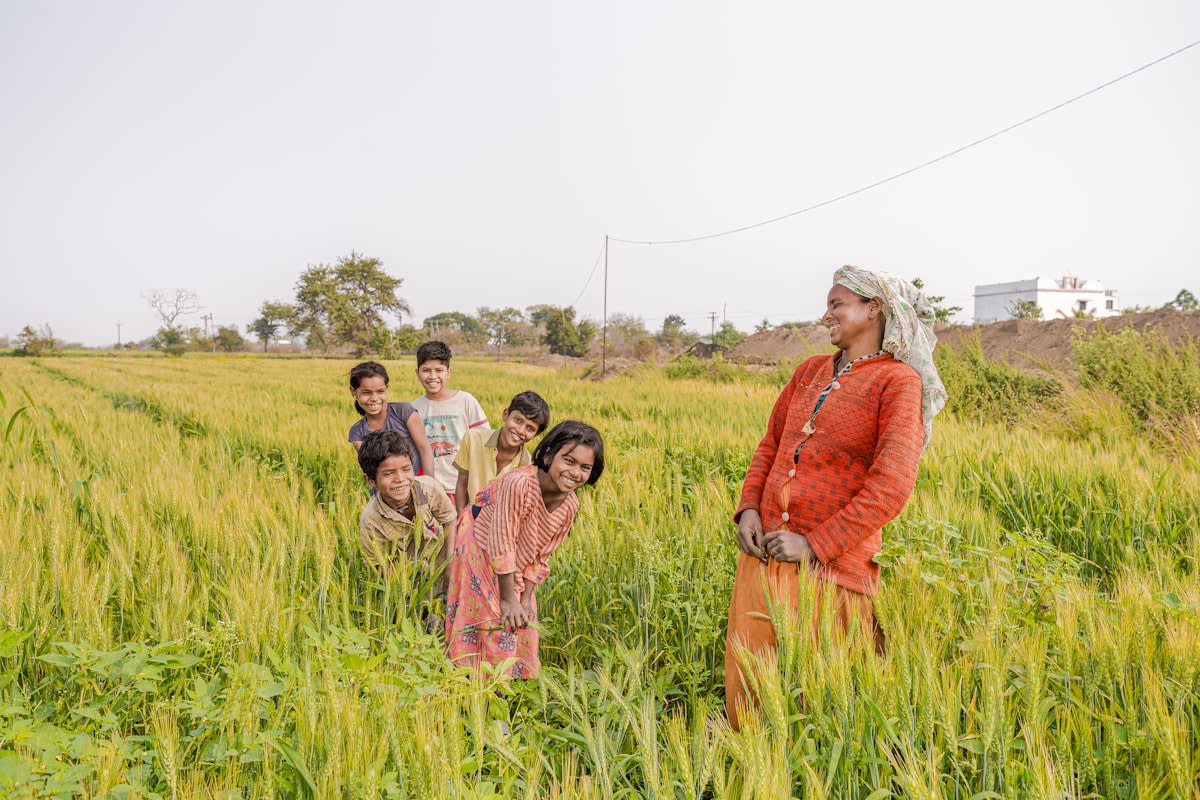
When you connect these dots—China's input efficiency, Bangladesh's need for resilience, the $54 billion digital surge, and the regenerative movements in the US and UK—a clear pattern emerges. We are no longer talking about 'saving the planet' in a vague, altruistic sense. We are talking about the industrialization of sustainability.
The Methane Pivot is the most important breakthrough of 2024 because it addresses the most volatile element of our food system. By treating methane reduction as a productivity gain rather than a regulatory burden, the global agricultural sector is finally finding a way to grow more while emitting less. The question is no longer whether this transition will happen, but which nations will lead the market in the new, low-carbon agricultural economy.