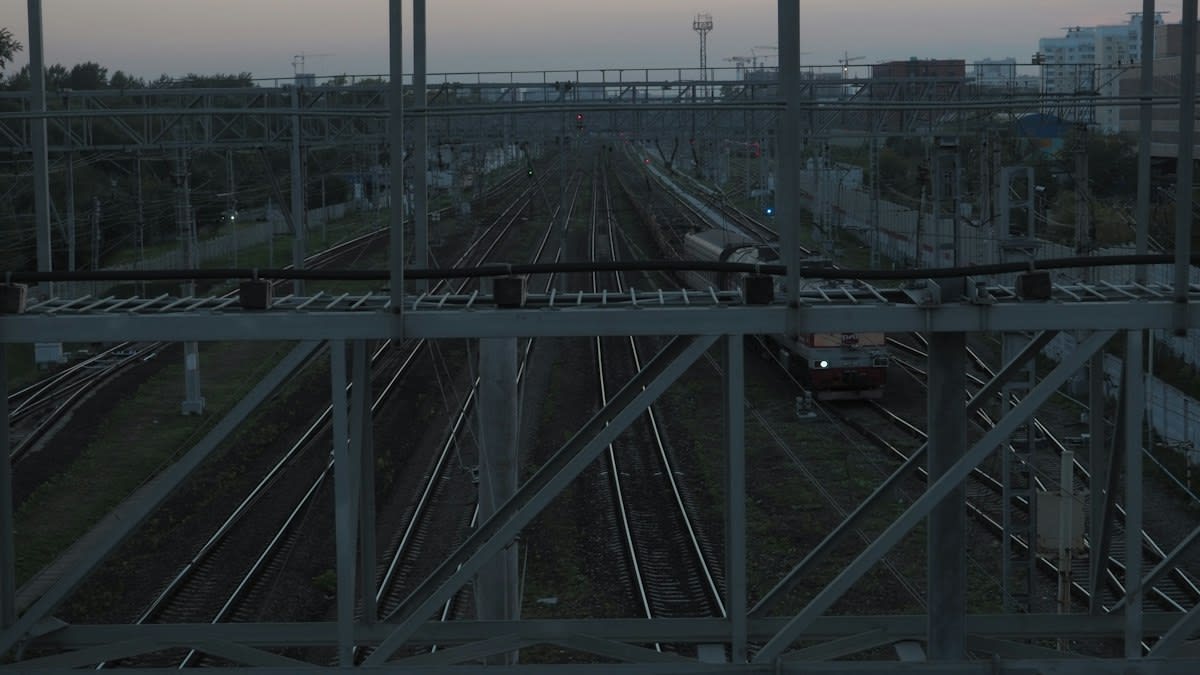
Most trade analysts make a fatal mistake. They believe the weight of global commerce rests solely on the shoulders of coastal berths. This is wrong. The real power lies in the inland suture where rail meets road and raw materials become high-value goods. Why do we ignore the interior? When a coastal port chokes, the entire web frays. The opening of the $134 million Gainesville Inland Port on October 29 proves that moving the point of entry further into the terrain changes the game (Source: Railway Age, 2026). This is not about a simple shipping dock; it is about seizing the grip on the supply chain before the goods even hit the coast.
Prerequisites for Inland Trade Dominance
You cannot simply pave a lot and call it a port. To rewrite trade, you need a specific set of levers. First, you need heavy-duty intermodal rail access that can withstand the weight of industrial volume. Second, you need a political mandate for funding, similar to the $134 million investment seen in the Gainesville project (Source: Railway Age, 2026). Third, you must have a data layer that maps critical infrastructure in real-time. Without these, your port is just a hollow shell. You are not building a warehouse; you are building a collision point for commerce.

The Practitioner's Playbook: Step-by-Step Execution
- Establish the Inland Node: Deploy a dedicated inland port to reduce coastal congestion. The Gainesville model demonstrates that a $134 million investment can shift the logistical center of gravity (Source: Railway Age, 2026).
- Suture Logistics Hubs: Create cooperative hubs using live mapping and infrastructure modeling. This prevents the network from becoming brittle during disasters, as seen in the ReGEN Ag initiative (Source: Newswise, 2026).
- Inject Targeted Capital: Align government funding with specific industrial needs. For example, the U.S. Department of Commerce's $7.4 million investment in Georgia's timber manufacturing industry ensures that raw materials reach the port efficiently (Source: Newswise, 2026).
- Close the Rural Gap: Integrate advanced transit technologies to reach the periphery. Use autonomous vehicle (AV) research to connect the 29 counties that currently have no transit services (Source: Mass Transit, 2026).
- Implement Route-Mapping Data: Solve the mapping void. With 90.4% of transit agencies lacking route-mapping data, the first mover to digitize the terrain wins the efficiency war (Source: Mass Transit, 2026).
Execution is where most fail. It is not enough to have the rail line. You must ensure the 'last mile' does not become a mechanical failure. In rural Georgia, 66% of rural counties lack a regional or multi-county transit system (Source: Mass Transit, 2026). This is a massive hole in the trade web. If your goods reach the inland port but cannot reach the final factory because the roads are a mess or the trucks are missing, your $134 million investment is a waste of concrete.
"For decades, SCL has led applied supply chain research that solves real problems for industry. Partnering with RBI on ReGEN Ag lets us put that experience to work for Georgia's forestry sector, building cooperative logistics that connect South Georgia's timber to new, higher-value products."— Chris Gaffney, Managing Director at the Supply Chain and Logistics Institute
The invisible friction in this process is the war between rail operators and drayage truckers. This is the part they do not teach in business school. Rail companies want maximum volume with minimum dwell time. Truckers want predictable slots and fair rates. When these two collide at an inland port, the result is often a stalemate of idling engines and rotting cargo. I have seen ports stall because the software for slotting didn't talk to the rail's arrival manifest. It is a petty, gritty battle for every minute of tarmac time.
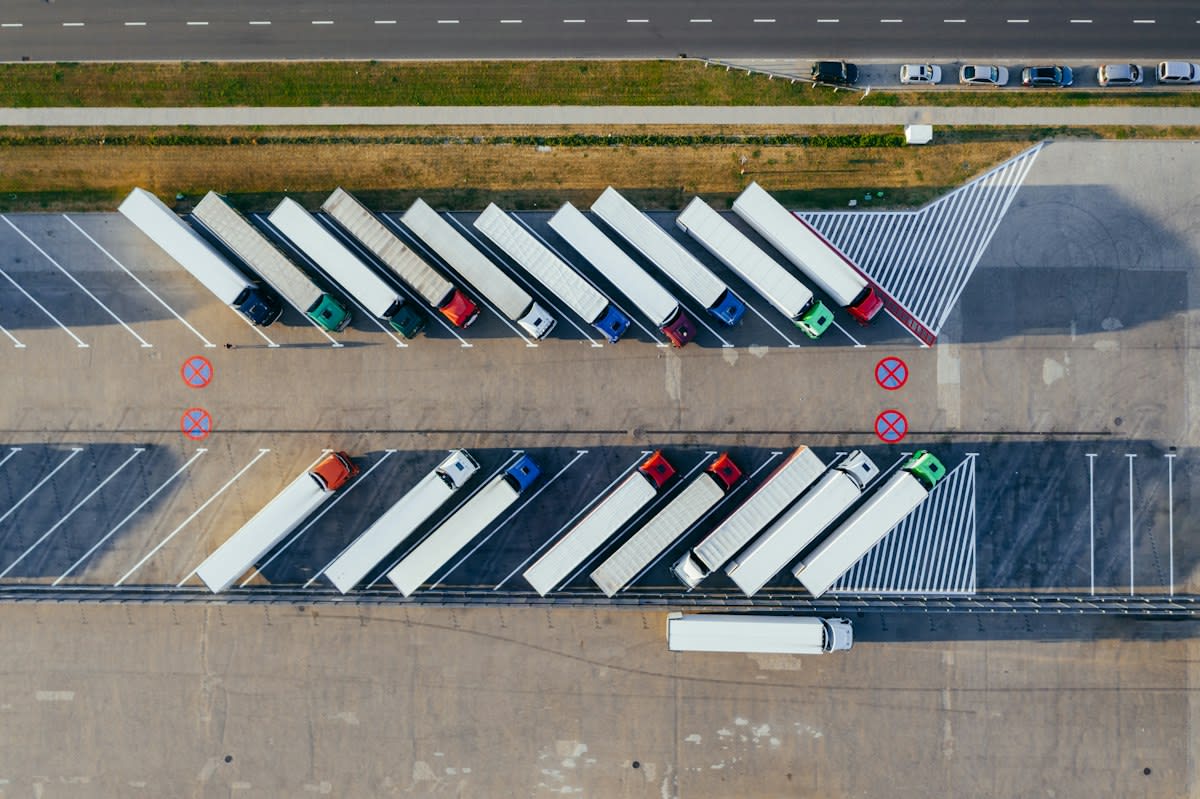
Adapting to Environmental Brittleness
Trade is not a static line; it is a living organism. Hurricane Helene showed how quickly a supply chain can snap. The response was not just to rebuild, but to create Resilient Routes through the SCL and RBI collaboration (Source: Newswise, 2026). By using live mapping of critical infrastructure, they are attempting to suture the gaps in the forestry sector. This is how you avoid a total collapse when the terrain shifts. You don't just build a road; you build a redundant web of routes that can absorb the shock of a disaster.
Fact-Check & Accuracy Note
The data used in this guide is derived from reports by the Georgia Ports Authority, the U.S. Department of Commerce, and the University of Georgia. A key point of academic debate remains the efficiency of AV integration in rural tribal communities versus traditional transit expansion. Current data from the TRAVELS project suggests AVs may solve the mapping void, but implementation remains in the research phase (Source: Mass Transit, 2026).
Common Pitfalls to Avoid
- The Data Void: Assuming your transit agencies have accurate maps. 90.4% do not (Source: Mass Transit, 2026). If you trust the default maps, your trucks will end up in a ditch.
- Over-reliance on Coastal Hubs: Treating inland ports as secondary. The Gainesville model proves the inland node is the primary driver of regional value (Source: Railway Age, 2026).
- Ignoring the Periphery: Forgetting the rural counties. You cannot have a high-functioning port if 66% of your rural counties lack regional transit (Source: Mass Transit, 2026).
- Static Planning: Building for today's weather. Without live mapping and cooperative logistics hubs, your network is brittle and prone to mechanical failure during storms (Source: Newswise, 2026).
Editorial Note
Editorial Note: This guide focuses on the US state of Georgia's inland infrastructure. While the title asks if 'One Georgian Port' can rewrite trade, the evidence points specifically to the Gainesville Inland Port and its supporting logistics ecosystem as the catalyst for this regional shift.