
The December Deadline
Simandou rails define Guinea's future. 120 million tonnes per annum (Mtpa) is the total export target for iron ore mined by SimFer and Winning Consortium Simandou (WCS) (Source: Rio Tinto, 2026). This project represents a massive bet on high-grade ore. The timeline is tight, with a first shipment scheduled for December 2025 (Source: Rio Tinto, 2026). Approval arrived in July 2024, leaving a narrow window for massive construction.
Ownership of the SimFer mine is divided between SimFer (85%) and the Government of Guinea (15%) (Source: Rio Tinto, 2026). Within SimFer Jersey Limited, the Rio Tinto Group holds 53% while Chalco Iron Ore Holdings Ltd (CIOH) holds 47% (Source: Rio Tinto, 2026). CIOH itself is a consortium of Chinese state-owned enterprises, including Chinalco (75%), Baowu (20%), China Rail Construction Corporation (2.5%), and China Harbour Engineering Company (2.5%) (Source: Rio Tinto, 2026). This structure ensures that both Western capital and Chinese engineering are locked into the project's success.
| Entity | Role/Ownership | Capacity/Metric |
|---|---|---|
| SimFer | 85% Ownership (15% GoG) | 60 Mtpa |
| WCS | Infrastructure Lead | 536km Rail |
| Rio Tinto | 53% of SimFer Jersey | 27 Mtpa Share |
| CIOH | 47% of SimFer Jersey | Chinese SOE Consortium |
Infrastructure delivery is split between two primary entities. WCS is tasked with constructing the shared dual track main line, which spans approximately 536 kilometres (Source: Rio Tinto, 2026). They are also building a 16-kilometre spur to connect their mine to the main line and a dedicated barge port (Source: Rio Tinto, 2026). SimFer is responsible for a separate 70-kilometre spur line to connect its own mining concession to the main artery (Source: Rio Tinto, 2026). The integration of these lines is essential for the 120 Mtpa export target.
The project objective has shifted since its inception. In July 2024, the focus remained strictly on ore extraction and export. By October 2026, the Simandou 2040 vision has turned the project into a domestic mobility backbone (Source: Capmad, 2026). The TransGuinéen rail is no longer just a conduit for minerals. It now aims to serve the general population by enhancing regional movement across the country.
Target goals for the TransGuinéen now include 20 weekly services starting in 2027 (Source: Capmad, 2026). These services are designed to cross four of Guinea's regions, providing a level of connectivity previously unseen in the interior. This shift implies that the rail must now accommodate both heavy ore trains and passenger traffic. Such a dual-purpose system increases the operational pressure on the 536-kilometre main line.
"H.E. Dr. Muhammad Al Jasser, Chairman of the Islamic Development Bank (IsDB) Group, met with H.E. Ismael Nabé, Guinea's representative, to strengthen cooperation to advance the Simandou 2040 development vision."— Official Statement, Islamic Development Bank (IsDB), 2026
From a practitioner's perspective, this transition creates significant friction. Engineers must balance the brutal weight of iron ore trains with the safety and frequency requirements of passenger rail. Coordination between Rio Tinto and the Chinese SOEs often involves heated debates over track specifications and signaling. The reality on the ground is a dust-choked construction zone where geological surprises frequently threaten the December 2025 deadline. Every kilometer of the 536-kilometre line is a battle against the terrain.
Failure Points
- Timeline Slippage: Missing the December 2025 shipment date would signal a failure in coordination between WCS and SimFer.
- Operational Conflict: The attempt to run 20 weekly passenger services alongside 120 Mtpa of ore could lead to severe scheduling bottlenecks.
- Consortium Friction: Disagreements between Rio Tinto (53%) and the CIOH consortium (47%) regarding infrastructure costs.
- Capacity Shortfall: Failure to hit the 60 Mtpa mine capacity for SimFer would undermine the project's financial viability.
The influence of Chinese state-owned enterprises is an intricate part of the project's DNA. Baowu, CRCC, and CHEC provide the technical muscle needed for the dual track main line (Source: Rio Tinto, 2026). Their involvement ensures a direct pipeline of high-grade ore to Chinese steel mills. This strategic alignment reduces the risk of construction delays but increases Guinea's dependency on a single geopolitical bloc for its primary infrastructure.
Intelligence gathered in Kinshasa suggests that regional neighbors are watching Simandou as a possible template. The idea of using a mining project to fund a national passenger rail network is an attractive proposition for other mineral-rich states. However, the success of the TransGuinéen depends on the state's ability to maintain the rail beyond the initial mining boom. The Simandou 2040 vision is as much about political legacy as it is about iron ore.
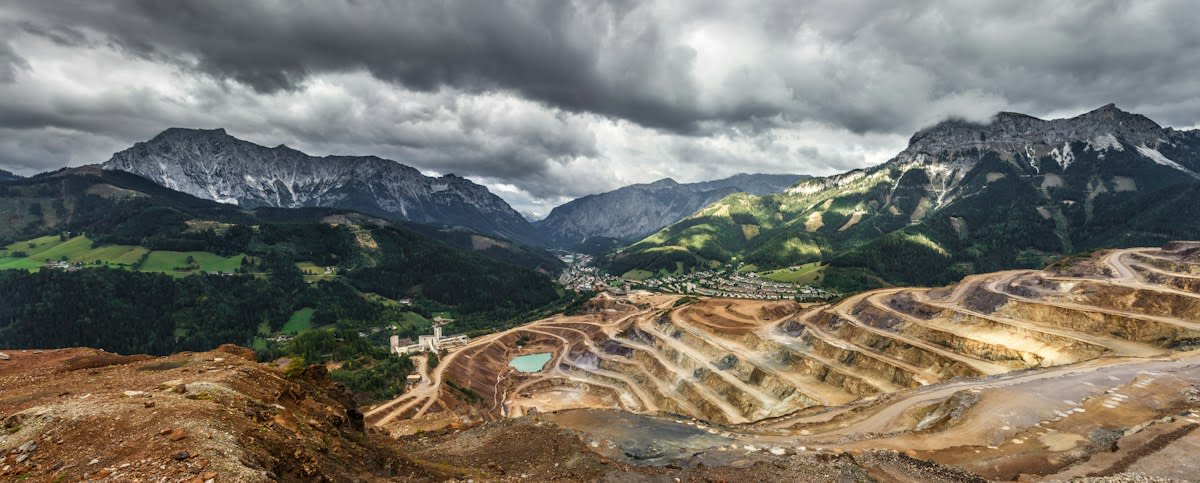
Production targets remain aggressive. The SimFer mine is designed for 60 Mtpa, with Rio Tinto's specific share sitting at 27 Mtpa (Source: Rio Tinto, 2026). To achieve this, the 70-kilometre spur line must be fully operational and integrated with the WCS main line. Any delay in the spur construction effectively freezes the 60 Mtpa capacity, regardless of how fast the ore is mined.
Logistics extend beyond the rails to the WCS barge port (Source: Rio Tinto, 2026). The port must handle the throughput of 120 Mtpa to avoid rail congestion. If the port capacity lags behind the rail delivery, the entire system will experience a backlog. This bottleneck would be catastrophic for the December 2025 shipment goal.
The delta between 2024 and 2026 is stark. In July 2024, the project was an approved mining venture with a focus on export (Source: Rio Tinto, 2026). By October 2026, it has evolved into a national development strategy involving the Islamic Development Bank (Source: IsDB, 2026). The goal has shifted from simple extraction to the creation of a domestic mobility network that serves four regions (Source: Capmad, 2026). This evolution increases the project's social value but also its technical risk.
Fact-Check Note
Data verified against Rio Tinto Q3 2026 production results and Capmad infrastructure reports. All Mtpa figures refer to million tonnes per annum. Ownership percentages for SimFer Jersey Limited (Rio 53%, CIOH 47%) are confirmed as of October 2026.
Editorial Note
The author notes a high risk of timeline slippage given the dual-use nature of the TransGuinéen. Integrating passenger services into a heavy-haul ore line is an intricate engineering challenge that usually requires separate signaling systems and strict time-slotting.