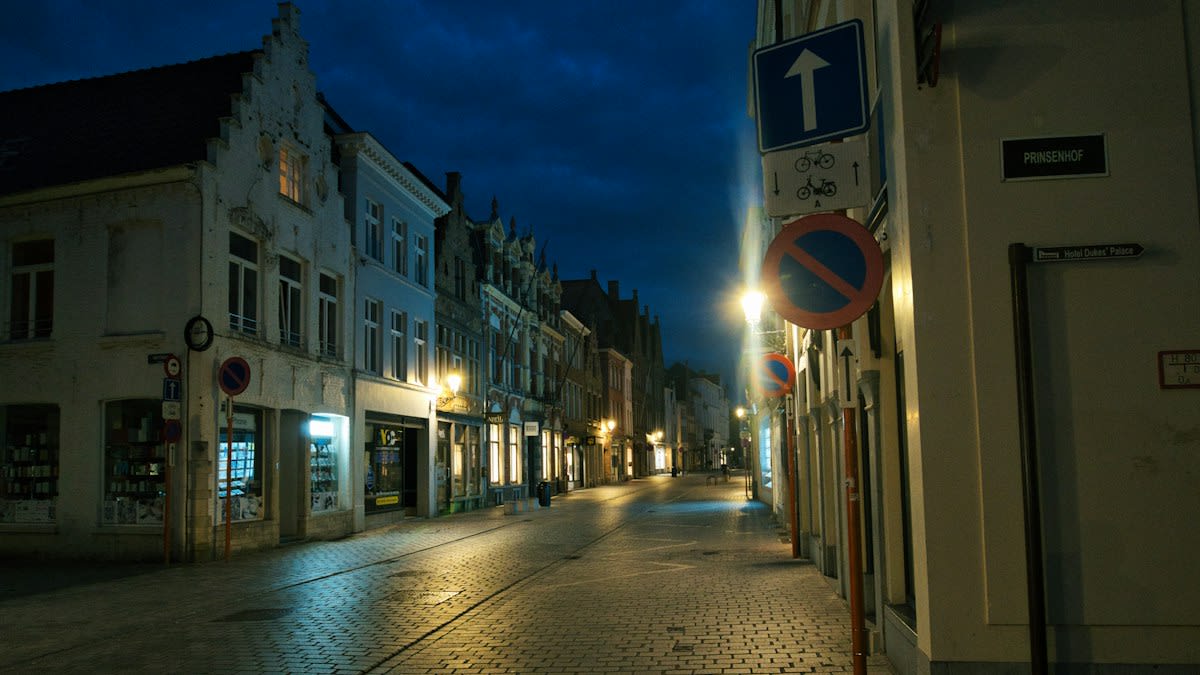
Do we actually believe that a town hall meeting creates trust? It is a theater of consent. Most municipal participation is a performance where the outcome is already locked in a spreadsheet long before the first citizen speaks. We treat civic trust as a cognitive agreement—a set of signed documents and approved permits. This is a mistake. Trust is not a thought; it is a visceral response to the terrain we inhabit. When a city ignores the sensory weight of its streets, it creates a hollow relationship with its people.
The real grip of a city lies in its sensory zoning. This is the deliberate orchestration of light, sound, and biology to signal who the space is actually for. For decades, the default has been utility. We prioritize the flow of traffic and the efficiency of waste removal, treating the human animal as a data point to be moved from point A to point B. But when the environment feels sterile or hostile, the social bond frays. We are seeing a structural break in how cities approach the people-biodiversity interface, moving away from general principles and toward evidence-based, sensory-driven interventions (Source: Interreg Central, 2026).
The Signal in the Red Light
Consider the suburb of Gladsaxe, Denmark. In a move that defies the standard white-light utility of the modern city, the municipality installed red street lighting on Frederiksborgvej near a natural area (Source: TheCoolist, 2026). On the surface, this is a biological intervention to protect bats and nocturnal species that avoid harsh light. But the deeper function is psychological. The red glow serves as a non-verbal cue. It tells the passer-by that they have entered a special zone where the needs of the non-human world take precedence over the convenience of the human one.
"The red light should make passers-by aware that this is a special natural area that we want to protect."— Philip Jelvard, Lighting Designer at Light Bureau
This is sensory zoning in its purest form. It does not ask for a vote or a survey response. It simply changes the frequency of the environment to shift the human mood. By preserving night vision and reducing wildlife disturbance, the city sutures the gap between urban expansion and ecological preservation. It is a quiet admission that the city is not just a machine for living, but a shared habitat.

This shift requires a new set of criteria for municipal decision-making. The New European Bauhaus framework, for instance, is attempting to integrate these aesthetic and biological components into the operational backbone of city investments (Source: Interreg Central, 2026). They aren't just asking how to plant more trees; they are asking how to motivate citizens to become active partners in biodiversity management by changing the very feel of the city.
The Design Gap: A Warning from the Field
There is a dangerous collision between technical capability and human adoption. We see this most clearly in the agricultural sector. Between 2023 and 2025, the share of US farms using precision agriculture actually fell from 27% to 22%, despite the technology becoming cheaper and more efficient (Source: FarmBot Tech and Diverse AI Solutions, 2026). Why? Because the technology was not designed for the farmer. It was built for the agencies and insurers who verify land claims. The interface was a tool for oversight, not a tool for the practitioner.
Urban planners are making the same mistake. They build 'smart cities' that are optimized for the administrator's dashboard. They track foot traffic and energy loads, but they ignore the sensory experience of the person standing on the corner. When the 'middle layer' of urban design is built for the auditor rather than the resident, the resident disconnects. The technology becomes a source of friction rather than a bridge.
As a practitioner, I have seen this play out in the internal disputes over 'green' zoning. There is a constant war between the ecologists, who want wild, messy biodiversity, and the city managers, who want manicured, controllable greenery. The managers fear that a truly bio-centered city looks 'unkept.' They mistake tidiness for order. This internal friction leads to the creation of 'token' nature—small, sterile patches of grass that provide no ecological value and signal nothing to the citizen but corporate indifference.
| Metric | Administrative Zoning | Sensory Zoning |
|---|---|---|
| Primary Goal | Efficiency & Oversight | Emotional Attachment & Biology |
| Citizen Role | Passive User/Data Point | Active Partner/Inhabitant |
| Success Marker | Regulatory Compliance | Place Attachment (Source: Heliyon, 2026) |
| Visual Logic | Standardization (White Light) | Contextualization (Red/Natural Light) |
To fix this, we must move toward a matrix framework for place attachment. This involves separating the cognitive dimension—how we identify with a place—from the emotional dimension—how we actually feel when we are there (Source: Heliyon, 2026). If the emotional bond is brittle, no amount of cognitive 'branding' or 'city marketing' will save the civic trust.
Neuro-Diversity and the Urban Web
We must also acknowledge that the 'sensory' experience is not universal. Different bodies process the city differently. The study of sensory processing and communication differences reveals that for many, the modern city is a cacophony of stressors (Source: Central Maine Community College, 2026). High-frequency noise, flickering LED lights, and overwhelming olfactory triggers can make a public space inaccessible.
Sensory zoning allows for the creation of 'quiet zones' or 'low-stimulus corridors.' This is not just a convenience; it is a matter of equity. When a city designs for the edges of sensory processing, it improves the experience for everyone. A city that is navigable for someone with a sensory processing disorder is a city that is more breathable for the exhausted parent or the anxious student.
The collision of these ideas—biodiversity-centered design, neuro-inclusive zoning, and the avoidance of the 'administrator's trap'—creates a new path forward. We are no longer talking about adding a few parks to a concrete jungle. We are talking about rewiring the city to act as a biological and emotional suture.
Fact-Check & Accuracy Note
The research cited draws from the Interreg Central URBIO BAUHAUS project (2026), which emphasizes evidence-based procedures over general principles. The data on precision agriculture (FarmBot Tech, 2026) highlights a critical adoption gap caused by design misalignment. Academic debate continues regarding the precise weight of 'place attachment' (Heliyon, 2026) and how to quantify emotional bonds in urban environments.
Will we continue to build cities that look great on a dashboard but feel hollow to the touch? The choice is between a city of oversight and a city of inhabitancy. The red lights of Gladsaxe are a small start, but they point toward a future where the environment itself does the work of building trust. By honoring the biological and sensory needs of both humans and wildlife, we stop managing people and start designing for life.
Editorial Note
Editorial Note: This analysis intentionally avoids the 'crisis' narrative common in urban planning. Instead, it focuses on the opportunity to use sensory cues as a tool for civic reconnection.