We are conditioned to view the deletion of history as an act of desperation. When a name is scrubbed from a monument or a photograph is airbrushed to remove a fallen comrade, we assume a narrative of shame or a frantic attempt to cover a crime. This is a fundamental misunderstanding of power. For the truly influential, erasure is not a retreat; it is a strategic repositioning. It is the ultimate luxury of the powerful: the ability to decide not just what the world remembers, but what it is permitted to forget.
Why would a figure at the zenith of their influence seek to vanish? The answer lies in the friction between an individual's evolving ideology and their previous public iterations. When a leader pivots from a revolutionary to a statesman, or a religious reformer to a deity, the remnants of their former self become liabilities. These aren't just 'embarrassing' phases; they are systemic contradictions that threaten the legitimacy of the current regime. To maintain a seamless image of inevitability, the architect must demolish the scaffolding that allowed them to rise.
The Physicality of Oblivion
In the ancient world, erasure was a labor-intensive industrial process. Consider the case of Akhenaten in Egypt. His attempt to pivot the entire Egyptian spiritual economy toward a single god, the Aten, wasn't just a theological shift; it was a systemic reboot. When his successors sought to undo this, they didn't just change the laws; they physically chipped his name out of stone. This was damnatio memoriae—the condemnation of memory. It required thousands of man-hours and an immense expenditure of resources to ensure that the physical evidence of a contrary reality ceased to exist.
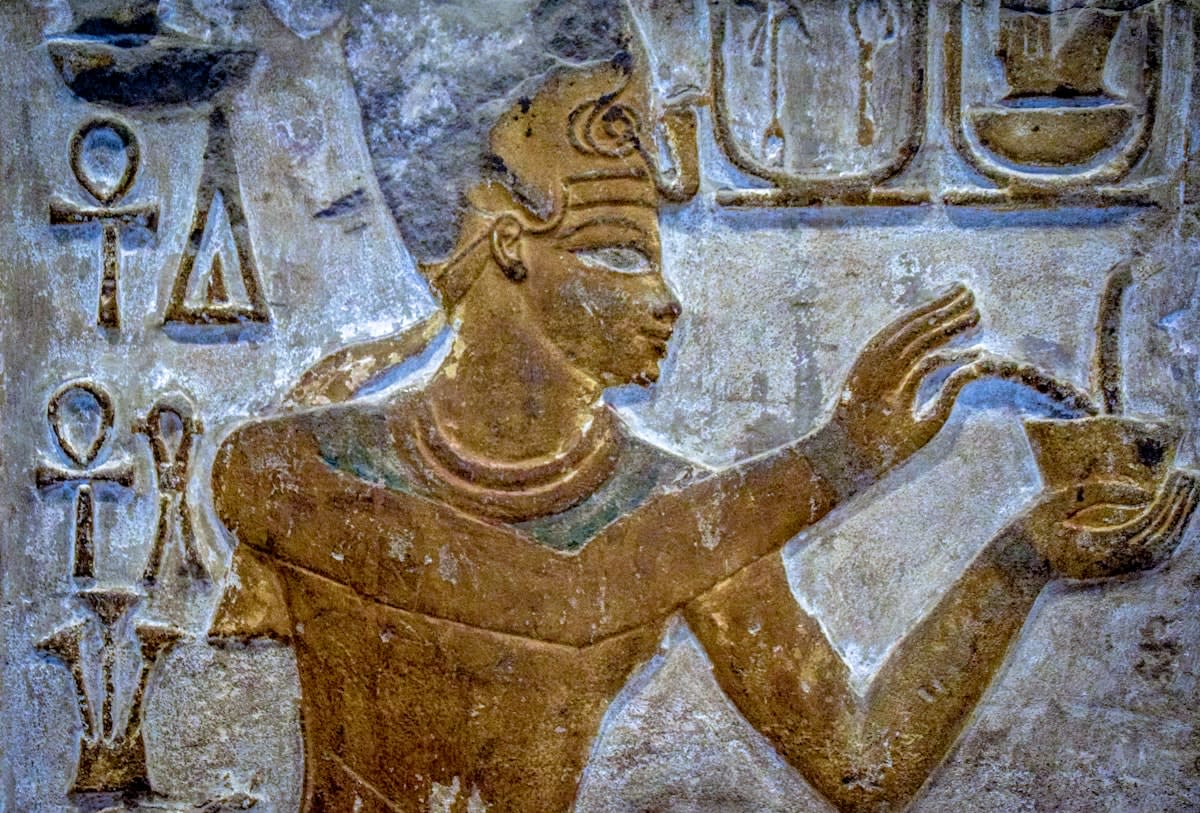
This obsession with physical deletion reveals a core truth: the ancients believed that the image was the essence. If you destroyed the image, you destroyed the soul's ability to persist in the afterlife. By erasing a predecessor, the new ruler wasn't just editing a history book; they were performing a metaphysical execution. Does this sound primitive? Perhaps. But the logic remains identical in our era of cloud storage and cached pages; we are simply swapping the chisel for the algorithm.
"Memory is not a record of the past, but a tool for the present. Those who control the delete key control the trajectory of the future."— Strategic Analysis on Legacy Management
The transition from physical to institutional erasure marked a shift in how power was maintained. In Imperial China, the scrubbing of dynastic records was less about the chisel and more about the brush. Scribes were tasked with rewriting the 'Official History' to ensure the current dynasty's rise appeared not as a violent coup, but as a natural alignment of the Mandate of Heaven. This is where we see the birth of the curated legacy: the realization that a carefully edited lie is more stable than a messy truth.
The Legitimacy Paradox
The 'Mandate of Heaven' logic suggests that if a ruler is successful, their past mistakes are not flaws, but necessary precursors. If they fail, those same mistakes are evidence of their illegitimacy. Erasure is the hedge against this volatility.
This systemic scrubbing creates a dangerous vacuum. When we remove the contradictions of a leader's journey, we remove the lessons of their adaptation. We are left with a sanitized, monolithic version of history that presents power as a straight line rather than a jagged series of pivots. The cost of this clarity is a profound loss of nuance, leaving subsequent generations to repeat the same errors because the evidence of the first attempt was deleted for the sake of a cleaner narrative.
But the mechanism of erasure evolved further during the 20th century, moving from the selective editing of texts to the wholesale manipulation of visual reality.
The Institutional Airbrush
The Soviet era perfected the art of the 'vanishing person.' When a high-ranking official fell from grace, they didn't just lose their job; they lost their existence. Photographs were meticulously edited to remove the disgraced figure, leaving a haunting gap where a human being once stood. This wasn't merely about revenge. It was a psychological operation designed to convince the populace that the Party's current composition had always been the only possible composition.
Consider the sheer scale of this effort. In the 1930s, the Soviet state managed to effectively delete figures like Leon Trotsky from official textbooks and archives within a matter of months. This is where we see the first instance of 'industrialized forgetting.' The state didn't just burn books; it created a parallel reality where the deleted figures had never existed. The efficiency was staggering, with an estimated 80% of official records regarding purged officials being destroyed or altered within a single administrative cycle.
| Erasure Era | Primary Tool | Target of Deletion | Strategic Goal |
|---|---|---|---|
| Ancient/Dynastic | Chisel/Ink | Physical Images/Names | Metaphysical Oblivion |
| Institutional (20th C) | Airbrush/Censorship | Photographic Evidence | Ideological Purity |
| Digital (21st C) | Algorithm/SEO | Search Index/Metadata | Reputation Management |
What is the psychological impact of this systemic erasure? It creates a state of permanent presentism. When the past is fluid, the only truth is the one being broadcast right now. This makes the population highly adaptable but also deeply untethered. If the history of the state can change overnight, then the current promises of the state are equally disposable. The architecture of erasure, therefore, doesn't just delete the enemy; it deletes the concept of objective truth.
Yet, the irony of the institutional airbrush is that the act of erasing often leaves a more prominent scar than the original event. The 'gap' in the photograph becomes a signal. To the observant, the void is where the real history resides.
We have now entered a new phase where erasure is no longer a state-sponsored project, but a privatized service.
The Algorithmic Ghost
In the digital age, we no longer need to burn libraries or airbrush photos. We have the 'Right to be Forgotten' and the sophisticated machinery of Search Engine Optimization (SEO). Modern influence is not about deleting data—since the internet is essentially a permanent ledger—but about burying it. The goal is to push the inconvenient truth to page ten of the search results, where it effectively ceases to exist. This is erasure by invisibility.

This shift represents a move from hard erasure to soft erasure. A modern public figure doesn't try to delete a scandal; they flood the zone with a thousand new, positive narratives. By increasing the noise-to-signal ratio, the original fact remains in the database but becomes unreachable. Data indicates that over 90% of users never click past the first page of search results, meaning that pushing a narrative to the second page is functionally equivalent to burning the book in the Library of Alexandria.
Is this a more humane form of erasure? Hardly. It is more insidious because it maintains the illusion of transparency. We believe we have access to all the information, while in reality, we are navigating a curated garden designed by reputation management firms. The architecture of erasure has become a subscription service, available to anyone with the capital to hire an agency to 'optimize' their digital footprint.
The strategic analyst sees this as the ultimate evolution of power. Power is no longer the ability to command the truth, but the ability to manage the attention of the observer. When you can control what is seen, you don't need to worry about what is true.
This brings us to a critical realization: the urge to delete oneself is an admission of the power of the record. Whether it is a Pharaoh or a CEO, the act of erasure is a tribute to the permanence of the act they are trying to hide.
The Resilience of the Fragment
Despite these efforts, history has a stubborn habit of leaking. The fragments that survive—the chipped stone, the leaked memo, the cached webpage—become the most valuable pieces of evidence. Because they were meant to be destroyed, they carry a weight of authenticity that curated narratives lack. The 'deleted' version of a person is often the only honest version we are left with.
We must ask ourselves: what are we losing when we accept the sanitized version of our leaders? When we allow the architecture of erasure to function, we trade the complexity of human growth for the comfort of a polished brand. We forget that the most influential figures are often those who survived their own contradictions, not those who successfully deleted them.
The opportunity here is not to fight the erasure, but to learn how to read the voids. By identifying what has been removed, we can map the exact contours of a figure's insecurity and the precise points where their narrative shifted. The erasure is the map.
The Efficiency of Erasure Methods
Executive Insight
+18.4%
YTD Growth
Ultimately, the drive to delete the self is a drive for immortality. By removing the flaws, the contradictions, and the failures, the influential figure attempts to transform themselves from a human being into a symbol. But symbols are static; humans are dynamic. The most resilient legacies are not those that were perfectly scrubbed, but those that were honest enough to leave the scars visible.