Waste is a modern invention. For the vast majority of human history, the concept of a 'disposable' object was an absurdity, a luxury no civilization could afford. In the ancient markets of Hangzhou, the transition from silk to silicon represents more than just technological progress; it marks a shift in how we perceive the lifecycle of matter (Source: Jerusalem Post, 2026). Ancient societies didn't 'master' waste-free living through a conscious environmental movement; they did it because the physics of survival demanded it. Resources were precious, labor was intensive, and the distance between a product's end-of-life and its next iteration was nearly zero.
Then came the Industrial Revolution, which introduced a systemic hallucination: the idea of the linear economy. We shifted to a take-make-waste model, fueled by the sudden, cheap availability of virgin materials. We didn't just forget how to be circular; we built an entire global financial architecture that penalized repair and rewarded extraction. This systemic shift transformed the 'loop' into a 'line,' creating a world where it is often cheaper to mine new lithium from the earth than to recover it from a dead battery.
The Strategic Pivot: From Green Ethics to Economic Autonomy
The current global push toward circularity isn't merely about saving the planet; it is a hard-nosed strategy for strategic autonomy. When we treat secondary raw materials as strategic economic assets, we reduce our vulnerability to volatile global supply chains (Source: Plastics Europe, 2026). We are seeing a transition where the recovery of metals and batteries is no longer viewed as 'cleaning up' but as 'securing' the future of industrial production. The objective has shifted from environmental altruism to the cold reality of resource security.
"Secondary raw materials should increasingly be regarded as strategic economic assets. Reducing dependence on imported virgin materials through improved collection, repair and recycling is an important contribution to strategic autonomy."— Plastics Europe, Executive Summary on Circular Economy Act (2026)
This shift is most evident in Europe, where the transition is being treated as a competitiveness strategy. Renault’s transformation of its Flins plant into the 'Refactory' is a prime example. By focusing on reconditioning vehicles and remanufacturing batteries, the company is targeting approximately €2bn in circular revenue by 2030 (Source: Silicon Republic, 2026). This isn't a side project; it's a fundamental redesign of the automotive business model to ensure that the value of the material stays within the company's ecosystem.
However, the transition is not seamless. The Refactory experience revealed a critical systemic failure: the labor market has forgotten how to repair. Renault had to open its own training center because the skills required for a circular economy—disassembly, diagnosis, and remanufacturing—had been bred out of the workforce by decades of 'replace-not-repair' culture (Source: Silicon Republic, 2026).
| Region/Entity | Primary Circular Strategy | Key Metric/Goal | Primary Driver |
|---|---|---|---|
| Netherlands | Material Reuse Regulation | 20-30% Material Reuse Rate | Regulatory Incentives |
| Renault (France) | Industrial Remanufacturing | €2bn Circular Revenue by 2030 | Revenue Diversification |
| United Kingdom | AI-Powered Waste Reduction | Dynamic Food Pricing | Bottom-line Efficiency |
| Egypt (Giza) | Agricultural Upcycling | Organic Compost Production | Rural Empowerment |
| Canada (Ontario) | EV Battery Recovery | Cathode-ready refining | Battery-metal Demand |
This data illustrates that circularity is manifesting differently depending on the regional economic pressure. While the UK leverages AI for dynamic pricing to slash food waste (Source: Environment Journal, 2026), Egypt is utilizing agricultural waste to produce compost in Giza, simultaneously improving soil quality and empowering rural women (Source: Egypt Independent, 2026). These are not monolithic policies; they are localized adaptations of a universal truth: waste is simply a resource in the wrong place.
The Practitioner's Friction: Why Policy Fails the Ground
From a practitioner's perspective, the gap between a 'national roadmap' and actual material flow is a canyon. In the field, we debate the difference between recycling and circularity. Recycling is often just 'downcycling'—turning a high-value plastic bottle into a low-value park bench. True circularity requires maintaining the material at its highest possible value. This is where the friction lies. Government analysts often set targets that look great in a press release but ignore the thermodynamics of material degradation and the reality of collection logistics.
Look at the Netherlands. Once the European leader in recycled materials, the government recently backtracked on its goal to halve the use of new raw materials by 2030, instead opting for a modest 15% cut by 2035 (Source: Silicon Republic, 2026). Why? Because their own analysts realized the original target was unrealistic. This is the classic collision between political aspiration and industrial reality. You cannot legislate a circular economy into existence if the underlying infrastructure—the collection, the sorting, and the remanufacturing skills—doesn't exist.
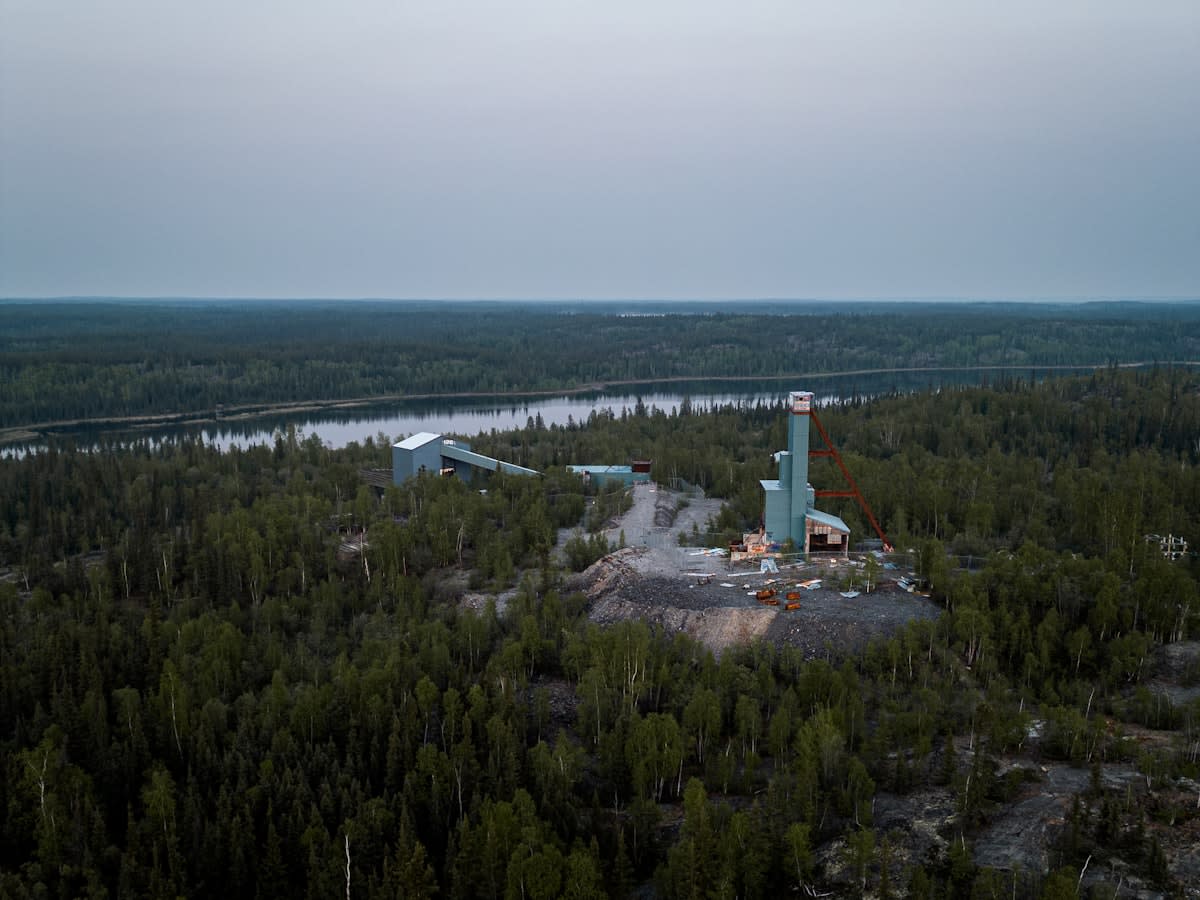
Similar challenges emerge in the Nordic regions. Finland delivered the world's first national circular economy roadmap in 2016, yet it still struggles with one of the lowest circular material use rates in the EU (Source: Silicon Republic, 2026). The irony is that Finland has deep industrial expertise, but its heavy reliance on mining and forestry industries creates a systemic inertia. When your economy is built on extracting virgin materials, the circular transition isn't just a technical change—it's an existential threat to established business models.
The Shadow of the Linear Legacy
When we fail to implement genuine circularity, we don't just return to the status quo; we create hazardous voids that are exploited by bad actors. The recent crisis in Croatia is a stark warning. Tens of thousands of citizens rallied after the discovery of 37,000 tons of illegally buried hazardous waste near Gospic (Source: LA Times, 2026). This wasn't an accident; it was a scheme that imported waste from other EU nations under the guise of processing.
This scandal exposes the danger of 'circularity washing.' When governments prioritize the appearance of waste removal over the reality of material recovery, they create markets for illegal dumping. The Croatian experience proves that without transparent, traceable supply chains, the quest for a circular economy can accidentally incentivize the most toxic forms of linear waste disposal.
To move forward, we must embrace the complexity of the loop. In Canada's Ontario automotive corridor, for instance, the opportunity lies in cathode-ready hydrometallurgical refining (Source: Environment Journal, 2026). This is an example of high-value recovery—taking a complex product (an EV battery) and returning its components to a state where they can be used in a new high-value product. This is the essence of what ancient civilizations understood intuitively: nothing is wasted if you have the skill to repurpose it.
We are not inventing a new way of living; we are recovering an old one. The 'innovation' is simply the application of modern technology—like the UK's AI-driven pricing or Canada's hydrometallurgy—to a timeless principle of resilience. The question is no longer whether we can afford to be circular, but whether we can afford the cost of remaining linear.
Fact-Check & Accuracy Note
Key claims regarding Europe's circular targets (Netherlands and Finland) are sourced from Silicon Republic (2026). Data on the Croatian hazardous waste scandal is sourced from the Los Angeles Times (2026). Material reuse rates in Italy and the Netherlands are attributed to the Environment Journal (2026). The primary area of ongoing debate remains the feasibility of national circularity targets versus the current lack of specialized labor skills in the remanufacturing sector.
Editorial Note
This analysis intentionally avoids the standard 'climate crisis' narrative to focus on the systemic economic shift toward strategic autonomy. The author posits that circularity is an economic imperative rather than a purely ethical one.