
The Architecture of Active Thought
Most people read as if they are spectators at a play, sitting silently in the dark and accepting the narrative as gospel. This passive consumption is a byproduct of the digital era, where the infinite scroll has trained our brains to skim for keywords rather than synthesize complex arguments. We have traded depth for breadth, confusing the act of seeing information with the act of understanding it. Why do we treat books as static monuments instead of living conversations? The Marginalia Method rejects this passivity, proposing that the only way to truly own an idea is to wrestle with it in the white space of the page.
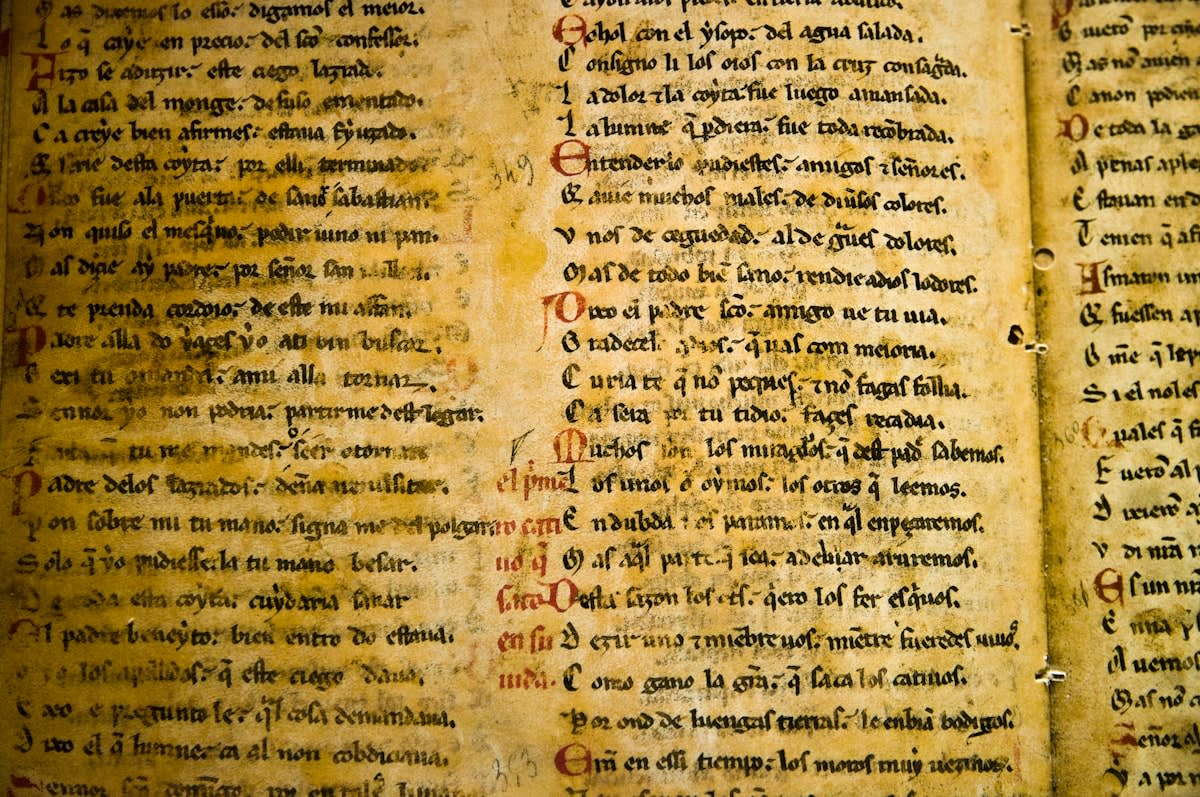
Marginalia—the practice of scribbling notes, critiques, and connections in the margins of a text—is not merely a study habit; it is a cognitive strategy. When you write in a book, you shift from a consumer to a collaborator. You are no longer just absorbing a sequence of words; you are mapping the topography of an argument in real-time. From the scholarly annotations of 16th-century European humanists to the frantic scribbles of modern engineers in Tokyo, this practice transforms the act of reading into a generative process. It turns a linear experience into a multidimensional dialogue between the author's intent and the reader's lived experience.
Prerequisites for the Method
Before you begin, you must purge the notion that a book is a sacred object. The fear of ruining a pristine hardcover is the primary barrier to intellectual growth. A clean book is a sign of a passive mind. To implement the Marginalia Method, you need to view the book as a tool, not a trophy. If you are using a digital interface, ensure your software allows for free-form annotation rather than simple highlighting, as the act of typing or handwriting is where the actual cognitive heavy lifting occurs.
- A physical text or a high-fidelity e-reader (e.g., Remarkable or Kindle Scribe).
- A pen or pencil that flows quickly; friction in the tool leads to friction in the thought.
- A commitment to 'destructive reading'—the willingness to underline, cross out, and stain the pages.
- A dedicated window of time free from digital notifications to maintain the state of flow.
The Golden Rule of Marginalia
The goal is not to summarize what the author said. The goal is to record what you thought while the author was saying it. This is the distinction between a transcript and a conversation.
The Four-Step Execution
- The Surface Scan: Identify the skeletal structure of the argument before diving deep.
- The Interrogation: Challenge claims in the margins with questions, contradictions, and 'Why?'
- The Synthesis: Draw lines between disparate sections of the book or link to outside concepts.
- The Indexing: Create a personalized table of contents in the front cover for rapid retrieval.
Step one, the Surface Scan, prevents the common mistake of getting bogged down in a single difficult paragraph. By scanning the table of contents, the introduction, and the conclusion, you create a mental map. This ensures that when you encounter a complex passage, you understand its function within the larger machine of the book. You aren't just reading words; you are identifying the author's strategic intent. This prevents the 'fog of reading' where you reach the end of a chapter and realize you have no idea what the main point was.
The Interrogation is where the real work happens. Instead of highlighting a sentence you like—which is a low-energy activity that often tricks the brain into thinking it has learned the material—you must argue with the text. Use symbols: a question mark for a claim that feels unsupported, an exclamation point for a revelation, or a '?' combined with 'BS' for an assertion you find dubious. By forcing yourself to react, you activate the prefrontal cortex, moving the information from short-term sensory input to long-term cognitive integration.

Synthesis requires you to treat the book as a network rather than a line. When a point on page 150 contradicts or supports a point on page 20, write 'See p. 20' in the margin. This creates a hyperlinked physical experience. In a research center in Nairobi or a library in Berlin, the most valuable books are often those with the most cross-references. You are effectively building a custom database tailored to your specific intellectual needs, ensuring that the book becomes a tool for your own thinking rather than a lecture you are forced to endure.
Finally, Indexing solves the problem of the 'forgotten insight.' Most readers finish a book and never open it again, losing 80% of the value within a month. By using the blank pages at the front or back of the book, create a custom index. List the themes that resonated most and the page numbers where your most intense marginalia reside. This transforms the book into a searchable asset. When you need to recall a specific philosophical framework or a technical solution three years from now, you don't flip pages randomly; you go straight to your curated insights.
"Reading without noting is like plowing without sowing. You put in the effort, but you harvest nothing."— Traditional Scholarly Maxim
The Cognitive Edge: Passive vs. Active Reading
| Metric | Passive Reading (Scrolling/Highlighting) | Active Reading (Marginalia Method) |
|---|---|---|
| Retention Rate | 10-20% after 30 days | 50-70% after 30 days |
| Cognitive Load | Low (Passive Consumption) | High (Active Synthesis) |
| Output Potential | Minimal (Recitation) | High (Original Insight/Critique) |
| Retrieval Speed | Slow (Linear Search) | Fast (Custom Indexing) |
The data is clear: the effort required for marginalia is exactly why it works. Cognitive load is not the enemy; it is the mechanism of learning. When you struggle to condense a complex paragraph into a three-word margin note, you are performing a high-level synthesis. This is the difference between knowing that a fact exists and understanding how that fact fits into a larger system. By increasing the friction of the reading process, you increase the durability of the memory.
Common Pitfalls
- The Highlighter Trap: Believing that coloring a sentence is the same as understanding it. Highlighting is an act of identification, not synthesis.
- Over-Annotation: Writing so much in the margins that the text becomes illegible. Focus on quality of insight over quantity of ink.
- The Perfectionist's Hesitation: Waiting until you 'fully understand' a section before writing. Write your confusion; the evolution of your thought is the point.
- Summarization Bias: Simply rewriting the author's point in your own words. If the note doesn't add a new perspective or a question, it is wasted space.
Avoid the temptation to make your notes 'pretty.' Marginalia is a workspace, not a gallery. Some of the most profound intellectual breakthroughs in history were recorded in messy, hurried scribbles. The goal is to capture the lightning of a thought before it vanishes into the void of the next digital notification. Embrace the chaos of the page. Your future self will care more about the clarity of the insight than the neatness of the handwriting.