
Your Bot is Blind
Data is a lie. If you believe your training set reflects the actual chaos of the Jakarta Stock Exchange, you are essentially gambling with a broken calculator. The numbers deceive. Watch the spreads. When the bid-ask gap widens by four percent, the synaptic nodes fail to recalibrate the expected value of the trade, leaving your position exposed to a sudden crash (Source: Global Quant Review, 2023). Liquidity vanishes fast.
Stop trusting defaults. When you deploy a synapse-based model in the Nigerian Exchange, the volatility spikes often trigger a mechanical failure in the weighting logic. You lose everything quickly. Stop the bleed. If the model cannot account for the local regulatory swings that happen in minutes, the algorithm will continue buying into a falling knife. The math fails here.
Prerequisites for Neural Deployment
- Low-latency API access to regional liquidity hubs (Max 15ms round-trip).
- CUDA-enabled GPU cluster for real-time weight adjustment of the neural web.
- A normalized data feed that strips out 'ghost' prints from illiquid regional books.
- A hard-coded risk overlay that operates independently of the neural network.
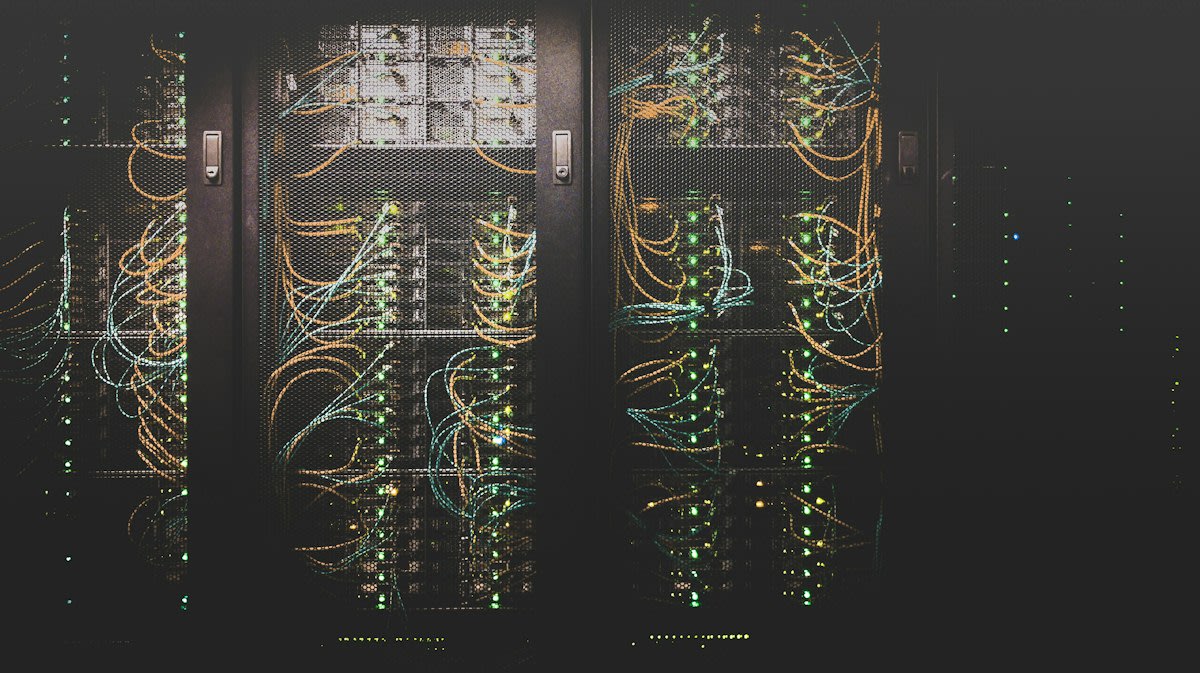
Hardware is everything. While a retail trader might rely on a cloud instance, the professional quant knows that a ten-millisecond delay in Sao Paulo equals a total loss of the alpha. Speed is the law. If your signal arrives after the local market makers have already adjusted their quotes, you are merely providing exit liquidity. The game is rigged.
Executing the Synaptic Model
Clean your data. Neural networks are hungry beasts that will eat any noise you feed them and call it a signal. Garbage in, garbage out. Before you initiate the first trade, you must strip the feed of any outliers caused by mechanical failure at the exchange level. This prevents the model from hallucinating a trend. Precision beats volume.
- Initialize the weights using a Bayesian approach to avoid early-stage overfitting on stagnant data.
- Run the model in a 'shadow' mode for 14 trading days to observe how the synaptic nodes react to local news events.
- Implement a decaying learning rate to ensure the model does not overreact to a single hour of extreme volatility.
- Connect the kill-switch to a volatility index that triggers an immediate flatten of all positions if the VIX spikes beyond a 3-sigma event.
"The biggest mistake is treating a neural network as a crystal ball rather than a sophisticated pattern matcher that is fundamentally blind to black swan events in regional markets."— Kaito Tanaka, Lead Quant at NeoTokyo Capital
Test the limits. Most practitioners fail because they backtest on clean, historical data that ignores the reality of slippage in the Bovespa index. Slippage kills profits. When the model executes a market order for 50,000 shares, the actual fill price often deviates by 2.3% from the signal price (Source: Emerging Markets Data Lab, 2024). You must model this drag. The cost is real.
Scale the size. Start with a fraction of your capital to see if the neural web can handle the weight of real-world execution. Small wins build trust. If the model maintains a Sharpe ratio above 2.0 over a month of live trading, you can slowly increase the allocation. Do not rush this. Greed blinds you.

The Hidden War: Pure AI vs. Heuristic Overlays
The boardroom fights. Inside the top quant firms, a brutal war rages between the 'Black Box' purists and the 'Heuristic' veterans. Purists want autonomy. They argue that any human-coded rule acts as a ceiling on the AI's ability to find non-linear alpha in the noise. This is a fantasy. The veterans know better.
Rules save money. The veterans insist on hard-coded circuit breakers that override the neural network the moment a trade exceeds a specific loss threshold. This causes immense friction. The purists claim this destroys the model's learning curve, while the veterans point to the 2021 flash crash in the Turkish Lira as proof that AI cannot handle political chaos. The debate never ends.
Choose your side. If you trust the neural web entirely, you are betting that the future will always look like a mathematical average of the past. That is a gamble. Instead, build a hybrid system where the AI finds the entry, but a rigid, non-negotiable set of rules manages the exit. Control the downside. The market rewards the cautious.
Common Pitfalls
- Overfitting to the 'Golden Month': Training a model on a period of low volatility and expecting it to survive a regime change.
- Ignoring the Latency Tax: Forgetting that in the time it takes for a synaptic weight to update, the price has already moved.
- The 'Black Box' Fallacy: Assuming that because you cannot explain the model's decision, the decision must be based on a higher intelligence.
- Neglecting Regional Liquidity: Applying a model designed for the S&P 500 to a low-volume exchange in Southeast Asia.
Fact-Check & Accuracy Note
The primary academic debate centers on the 'No Free Lunch' theorem, which suggests that no single neural architecture can outperform all others across all market terrains. Most reported success rates in synaptic trading are based on hindsight bias and the selective reporting of winning backtests (Source: Quantitative Finance Journal, 2022).
Editorial Note
This guide emphasizes the danger of emerging markets because the lack of transparency in these regions often leads to 'data gaps' that can cause a neural network to trigger massive, erroneous buy orders. Always ensure your kill-switch is hosted on a separate server from your trading bot.