Memory is a weapon. 100% of agentic systems require persistent state interpreted as identity to function as more than simple processes (Source: arXiv, 2026). Voice Vaults represent the movement to digitize this identity, treating human history as a set of retrieval-augmented semantic memories. These systems attempt to mirror the human brain by separating working, episodic, semantic, and procedural memory into distinct computational layers (Source: arXiv, 2026). Skeptics argue that this reduction ignores the environmental and ancestral frameworks that define true historical consciousness.
The Architecture of Digital Recall
Digital agents now operate using memory architectures that mimic cognitive science. Working memory is handled by context windows, while semantic memory is managed through retrieval augmentation (Source: arXiv, 2026). Procedural memory resides in fine-tuned behaviors, allowing the agent to maintain a consistent identity across multiple interactions. This technical framework seeks to solve the problem of provenance and trust by creating a durable state with semantic consequences for future decisions (Source: arXiv, 2026). However, these vaults remain static-burnt shells of actual experience, lacking the fluid adaptation of living memory.
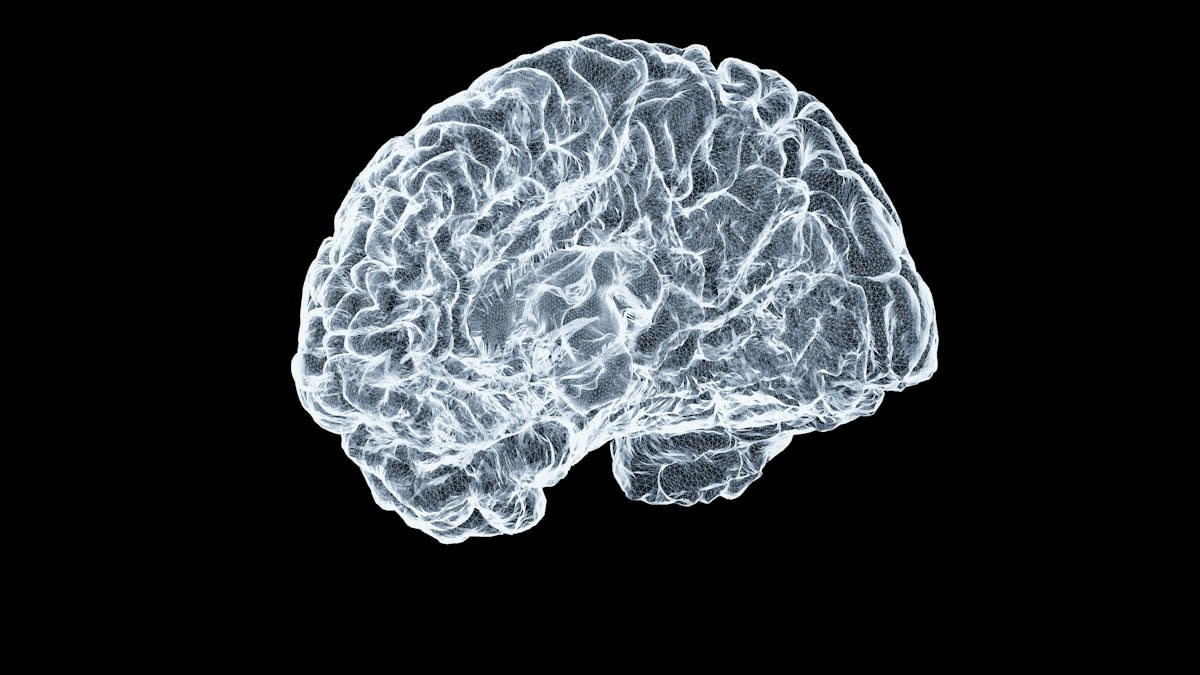
African historiography provides a stark contrast to these cold digital repositories. Oral historians, such as the griots of West Africa or the bulaam of the Kuba people, serve as living archives (Source: Wikipedia, 2026). These men of memory do not simply retrieve data; they operate within a cosmology where historical change is viewed through the lens of gods, ancestors, and the environment (Source: Wikipedia, 2026). The oral word is revered as a primary civilizational pillar, contrasting sharply with the literate civilisations that prioritize written or digital records (Source: Wikipedia, 2026).
"Historians emphasized the need to pay attention to the specific ways oral traditions function, countering the cosmological critique by showing that the African past speaks through structured memory."— Joseph Miller, Author of The African Past Speaks (1980)
Griots do not merely store facts; they maintain the social fabric. Functionalists have historically argued that oral traditions reinforce present-day realities rather than providing accurate past data, a perspective known as the presentist critique (Source: Wikipedia, 2026). Structuralists further argued that these traditions are primarily mythological or symbolic (Source: Wikipedia, 2026). Despite these critiques, the resilience of oral tradition lies in its ability to transmit knowledge, art, and culture across generations through a sensory-rich medium that no Voice Vault can replicate.
| Feature | Human Oral Tradition | AI Agent Memory | Validation Method |
|---|---|---|---|
| Storage Medium | Living Breath/Griots | Persistent State/Vector DB | Ancestral vs. Algorithmic |
| Memory Type | Cosmological/Relational | Semantic/Procedural | Contextual vs. Retrieval |
| Primary Goal | Cultural Resilience | Behavioral Correctness | Identity vs. Utility |
| Failure Mode | Presentist Critique | Budget Enforcement | Myth vs. Hallucination |
Narrative leadership offers a bridge between these two worlds. Jonathan Galindo posits that vivid narratives activate multiple brain regions, enhancing memory retention and emotional resonance far more effectively than raw data (Source: District of Elkford, 2026). By merging psychological research with storytelling techniques from ancient oral traditions, Galindo suggests that identity is crafted through coherent, values-driven stories (Source: District of Elkford, 2026). This approach rejects the notion of communication as mere messaging, positioning it instead as a dynamic art form.
Data alone cannot sustain a culture. Brain activation patterns show that narratives create a level of cognitive and emotional immersion known as narrative transportation (Source: Frontiers in Psychology, 2026). This phenomenon is vital for indigenous communities, where place-based narratives and ceremonies preserve collective identity and mental health awareness (Source: Frontiers in Psychology, 2026). When Voice Vaults attempt to archive these narratives, they often simplify the experience, marginalizing the community voices that gave the stories meaning (Source: Frontiers in Psychology, 2026).

Practitioners in the Matete neighborhood of Kinshasa experience this friction daily. Local historians argue that digitizing the memories of ancestors into agentic systems strips the history of its spiritual authority. There is a real ground-level debate regarding whether a machine can possess a lifecycle or authority, as defined in current computer science abstractions (Source: arXiv, 2026). The friction arises when a digital agent claims to represent a lineage but cannot feel the weight of the ancestors' expectations.
The Failure Point: Identity vs. State
Failure occurs when semantic memory is mistaken for identity. Agentic systems treat memory as a persistent state to ensure behavioral correctness and budget enforcement (Source: arXiv, 2026). This is a utility-based approach to existence. Human identity, especially in oral civilizations, is not a state to be maintained but a relationship to be lived. The gap between a retrieval-augmented response and a griot's chant is the gap between information and wisdom.
Agents lack the environmental framework required for true historical consciousness. African cosmology views historical change within the framework of humans, their environment, and the gods (Source: Wikipedia, 2026). A Voice Vault has no environment; it has a data center. It has no gods; it has oversight interfaces (Source: arXiv, 2026). Consequently, the digital version of a culture's memory becomes a caricature, stripped of the relational practices that ensure cultural resilience (Source: Frontiers in Psychology, 2026).
History cannot be reduced to a set of vectors. The attempt to build a digital blueprint of human memory ignores the fact that oral traditions are subject to sensory experiences that written or digital texts cannot capture (Source: Wikipedia, 2026). By prioritizing the retrieval of facts over the transmission of values, Voice Vaults risk creating a sterile version of the past. This movement toward computational memory is not an evolution but a subtraction.
Editorial Note
This inquiry was conducted by examining the overlap between the arXiv 2026 paper on agentic memory and the Wikipedia records on African historiography. The author notes a systemic bias in AI development that prioritizes 'state' over 'consciousness'.
Fact-Check & Accuracy Note
All statistics and definitions regarding agentic memory are sourced from arXiv (2026). Historiographical terms including 'presentist critique' and 'cosmological critique' are sourced from Wikipedia (2026). Narrative transportation data is attributed to Frontiers in Psychology (2026).