
Modern cities are masterpieces of efficiency and monuments to loneliness. We live in high-density clusters where we are physically closer to strangers than ever before, yet the social fabric is frayed. Why does this happen? Because we have optimized for transit and housing while ignoring the connective tissue that actually generates trust. To build a high-trust network in an anonymous city, you cannot rely on hope. You need a protocol—a systematic integration of physical anchors, seamless connectivity, and rigorous verification.
Prerequisites: The Foundation of the Protocol
Before deploying a hyper-local network, you must secure three non-negotiable assets. First, you need a physical anchor—a space that is neither fully private nor fully public. Second, you require a hybrid connectivity stack that ensures no one is offline, regardless of urban density or geographic isolation. Third, you need a verification framework that replaces blind trust with continuous, layered authentication. Without these, your network is just another group chat that dies within a month.
- Physical Anchor: Access to intermediate spaces (courtyards, community kitchens, or modular hubs).
- Connectivity Stack: A mix of terrestrial land towers and satellite-based orbiters for 100% uptime.
- Trust Framework: A Zero Trust digital architecture combined with physical access controls.
Step 1: Engineering Intermediate Spaces
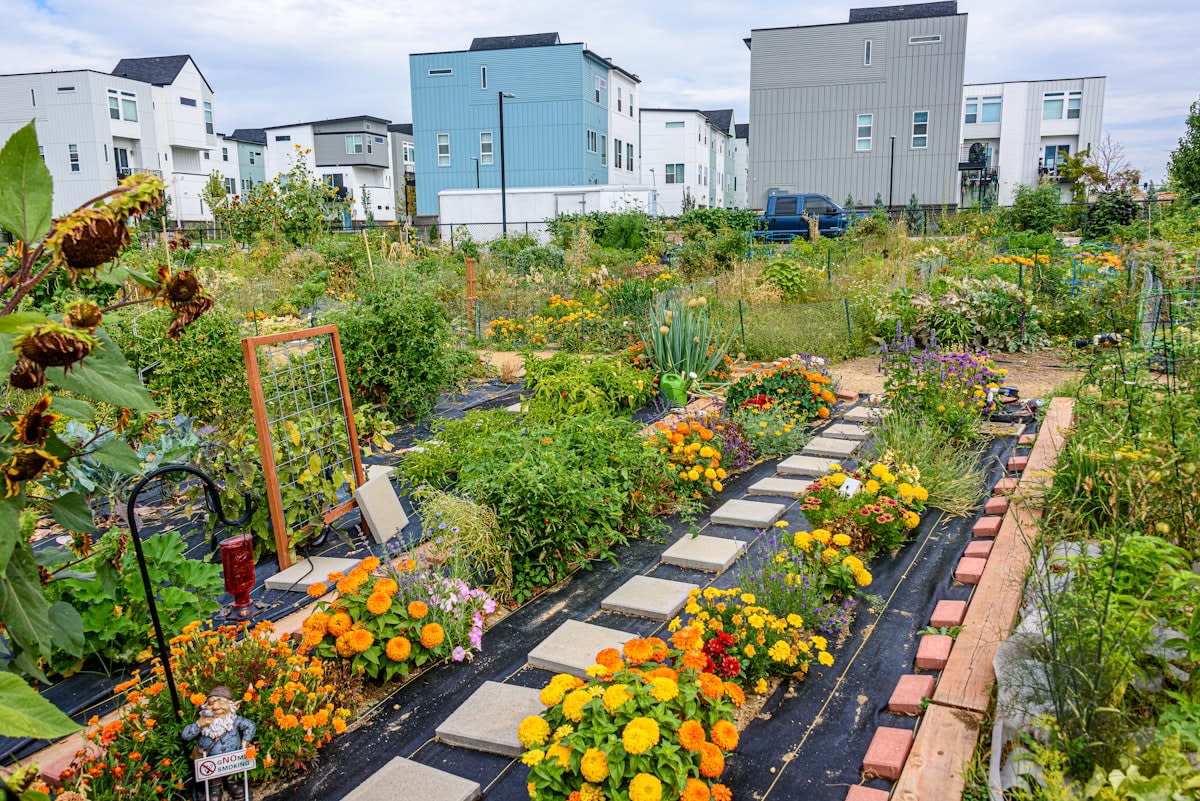
Trust does not grow in a vacuum; it grows in the gaps between the private home and the public street. These are what architects call intermediate spaces. Look at the unbuilt collective housing projects across Costa Rica, Ukraine, Iran, and Uzbekistan. The common thread is a focus on complementary spaces that ease the experience of density. If you want people to bond, you must design environments that force low-stakes, frequent interactions. A shared corridor is a hallway; a shared garden is a social catalyst.
Take the Triangle Site in King's Cross as a gold standard for community-led infrastructure. This project didn't just build a facility; it built a bond. By involving over 3,000 volunteers in the construction process, the network was established before the doors even opened. They used bio-based materials and hands-on techniques, such as cladding a community kitchen with 12,000 handmade wooden shakes. When people build the walls together, they are far more likely to trust the people inside those walls.
The Density Paradox
The goal isn't just 'housing' or 'office space.' The goal is a residential atmosphere that accommodates population growth without sacrificing the neighborhood environment.
Step 2: Deploying the Connectivity Layer
A network is only as strong as its uptime. In dense urban environments, traditional cellular networks often choke. To solve this, you must implement a dual strategy. As outlined by SpaceX COO Gwynne Shotwell in August 2026, the future of mobile service lies in combining orbiters for off-grid coverage with a robust terrestrial component of land towers. This ensures that your hyper-local protocol remains operational whether your members are in a subterranean basement or a rooftop garden.
Beyond basic connectivity, you should aim for the capabilities of 6G. This isn't about faster downloads; it is about ultra-low latency and massive device density. When your physical environment is wired into the physical economy via RAN (Radio Access Networks) and transport nodes, the digital layer becomes an invisible extension of the physical space. This allows for real-time coordination of community resources—like tool sharing or energy grids—without the friction of lagging interfaces.
"We definitely intend to build out the terrestrial component... so you will have not only the capability from the satellites themselves, but you will have a build-out of the hardware and systems necessary to make a true mobile service."— Gwynne Shotwell, SpaceX COO
Step 3: Implementing Zero-Trust Verification
Here is the hard truth: high trust requires high security. You cannot have a safe community if you have an open-door policy for everyone. The most resilient networks now adopt a Zero Trust architecture. As Michael Lawson, a veteran of law enforcement and bank security, argues, the shift is away from assuming someone is trustworthy once they are inside the network. Instead, systems must verify continuously. Access is limited to exactly what is necessary, and activity is monitored to prevent compromised credentials from destroying the group.
A professional implementation requires a layered approach. You cannot rely on a digital app alone. You must blend physical safeguards—such as badges, PINs, and locked doors—with digital authentication. This hybrid model ensures that a digital breach doesn't lead to a physical security failure. When you verify a user's identity at the gate and then continuously verify their permissions within the digital hub, you create a secure perimeter that allows members to relax and actually build genuine relationships.
Step 4: Integrating Intelligence and Logistics
The final step is to turn your network into a functioning ecosystem. A social network that only provides 'friendship' is a hobby; a network that provides 'value' is a protocol. Look at the model used by 7X in the UAE. They use a digital layer—specifically the Waslah platform—to connect physical access points like branches, PUDO (Pick-Up/Drop-Off) locations, and lockers into a unified logistics system. This allows the movement of goods, information, and value with maximum efficiency.
- Map your physical access points (lockers, community hubs, shared kitchens).
- Deploy a unified digital platform to track resource allocation and member movement.
- Integrate carrier and fulfillment partners to allow the community to exchange physical goods seamlessly.
- Use digital intelligence to monitor network health and identify bottlenecks in community interaction.

Common Pitfalls to Avoid
The most common failure in building these networks is 'AI Hubris.' Many organizers attempt to let an AI model manage the community, forgetting that AI is just a tool in the tech stack. As noted in research on AI strategy, the real value is not the model itself, but what is wired into the physical economy—the edge devices and data loops. If you prioritize the algorithm over the human interaction in the intermediate space, your network will feel sterile and artificial.
Another critical error is neglecting the physical layer of security. Digital-only verification is a fantasy. If your 'high-trust' network depends on a QR code but has no physical access control, you are vulnerable to social engineering. Remember that physical and digital risks are now inextricably tied. You cannot manage one without the other. Failure to integrate these layers leads to a fragile system that collapses at the first sign of a security breach.
| Component | Traditional Approach | Hyper-Local Protocol |
|---|---|---|
| Space | Private Apartments | Intermediate Collective Spaces |
| Connectivity | Standard Cellular | Hybrid Terrestrial/Satellite |
| Trust | Implicit/Social | Zero Trust/Continuous Verification |
| Logistics | External Third-Party | Integrated Unified Ecosystem |