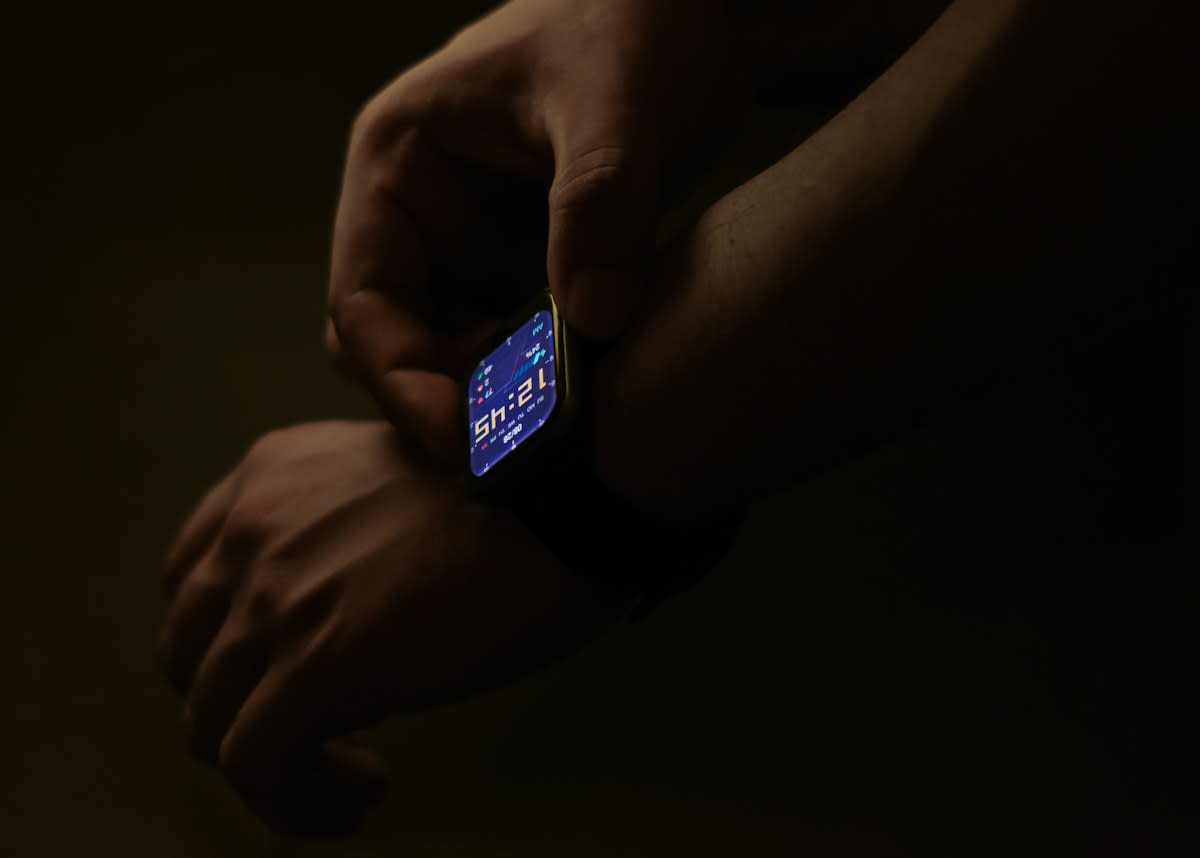
The Lie of the Perfect Metric
We have been sold a lie. The premise is simple: if you track every heartbeat, every milligram of caffeine, and every minute of REM sleep, you can outsmart death. But here is the contradiction. The obsessive pursuit of a perfect biological score often creates a state of chronic psychological tension that does the exact opposite of its intent. When your morning starts with a panic attack because your wearable says your recovery score is low, you aren't optimizing. You are triggering a cortisol spike that signals your body to age faster.
This tension isn't just in your head; it's in your cells. Chronic stress from the pressure to optimize leads to a phenomenon known as inflammaging. This isn't a gradual slide. It is a structural break in how the immune system functions. When the body is perpetually on high alert, it diminishes the anti-inflammatory actions of endogenous cortisol, which allows pro-inflammatory signaling to run unchecked in the central nervous system and peripheral tissues (Source: OAEpub, 2026). You are essentially paying for your data with your longevity.
Fact-Check & Accuracy Note
The research indicates that stressful life events, whether in childhood or adulthood, create a molecular memory. This epigenetic alteration manifests as heightened inflammatory reactivity throughout the life course, contributing to physical, psychological, and cognitive multimorbidity (Source: HRS, ELSA, and CHARLS studies, 2026). In short, the stress of 'trying to be healthy' can mirror the biological damage of actual adversity.
Prerequisites for a Biological Reset
Before you attempt to fix your biological clock, you need to clear the terrain. This is not about adding another supplement to your stack. It is about subtraction. You will need a baseline of your current 'optimization' habits—the apps, the trackers, the rigid fasting windows—and a willingness to accept that your body is not a machine to be tuned, but a biological system that requires autonomy. If you cannot spend 48 hours without checking a biometric dashboard, you are not the user of the technology; you are the subject of its stress loop.

The Playbook for Biological De-escalation
- Audit your stress-triggers: Identify which optimization habits cause anxiety rather than ease.
- Decouple from the dashboard: Implement a 'dark period' where biometrics are ignored to reset the psychological cortisol loop.
- Individualize your stimulants: Adjust caffeine intake based on genetic sensitivity rather than generic productivity protocols.
- Synchronize with biological life-stages: Adjust expectations during hormonal shifts, such as perimenopause, to avoid unnecessary stress.
- Prioritize relational wellbeing: Use oxytocin-inducing social bonds to temper systemic cortisol surges.
Start by auditing your stress-triggers. Ask yourself: does tracking my glucose levels make me feel empowered, or does it make me obsess over a piece of fruit? Acute cortisol secretion is adaptive; it mobilizes energy and reigns in runaway inflammation (Source: Biomedical Science and Clinical Research, 2026). However, when the trigger is a digital notification about a suboptimal sleep score, the cortisol becomes maladaptive. You are essentially training your brain to perceive your own biology as a threat.
Next, address the molecular memory of your stress. The data from the China Health and Retirement Longitudinal Study (CHARLS) and other global cohorts shows that epigenetic alterations from stress can persist for decades (Source: OAEpub, 2026). This means the 'hustle' of your 20s or the rigid optimization of your 30s can leave a permanent mark. To break this, you must move toward a state of biological safety. This isn't about relaxation; it's about removing the environmental cues that tell your immune system to stay in a pro-inflammatory state.
"Psychosocial stressors and cognitive function are deeply intertwined, with early and adult adversity establishing a molecular memory that manifests as heightened inflammatory reactivity throughout the life course."— Li J, Researcher cited in J Prev Alzheimers Dis, 2025
Stop following generic caffeine protocols. The biohacking community loves a 'perfect' caffeine window, but the biology is far messier. Genetic variation in adenosine-related pathways, specifically the CYP1A2 and ADORA2A genes, dictates how you process caffeine (Source: Frontiers in Nutrition, 2026). For some, a morning espresso is a tool; for others, it is a direct ticket to anxiety and elevated cortisol. If you feel jittery or anxious, you aren't 'pushing through'—you are fighting your own genetic code.

Pay attention to the biological shifts that no amount of optimization can 'hack.' For women, perimenopause is a prime example. A meta-analysis of 24,523 women across multiple countries found that perimenopause and postmenopause are associated with higher odds of reporting anxiety symptoms (Source: News-Medical, 2026). When you try to force a 'high-performance' routine through a major hormonal shift, you create a collision between your expectations and your biology. The resulting anxiety isn't a failure of your routine; it's a biological reality that requires adaptation, not optimization.
Finally, leverage the most underused bio-tool: relational wellbeing. We focus on cold plunges and red light, but we ignore oxytocin. Research shows that intranasal oxytocin increases positive communication and reduces cortisol levels during conflict (Source: Biological Psychiatry, 2009). In the real world, this means that a deep, supportive conversation with a partner or friend does more to temper systemic cortisol surges than any supplement on the market. True staying power comes from the web of human connection, not the isolation of a tracking app.
In the industry, there is a quiet, fierce debate between the 'quantified self' crowd and the clinical longevity experts. The practitioners I know who actually move the needle on patient outcomes often roll their eyes at the latest wearable. They see the friction firsthand: patients who are physically fit but biologically exhausted. They are the ones who have 'optimized' their way into a state of chronic sympathetic dominance. The internal dispute is simple: are we measuring health, or are we measuring our ability to adhere to a set of arbitrary numbers?
Common Pitfalls
- The 'Optimization Spiral': Adding more supplements to fix the anxiety caused by too many supplements.
- Ignoring Genetic Variance: Using a caffeine or fasting protocol that contradicts your CYP1A2 or ADORA2A markers.
- Metric Obsession: Treating a low sleep score as a biological fact rather than a data point, triggering a morning cortisol spike.
- Hormonal Denial: Attempting to maintain pre-menopausal activity levels during perimenopause, leading to increased anxiety (Source: News-Medical, 2026).
- Social Isolation: Prioritizing solo 'bio-hacks' over the cortisol-reducing effects of relational wellbeing.
Editorial Note
This guide is based on the premise that biological aging is not just a result of time, but a result of the cumulative inflammatory load. By reducing the psychological stress of optimization, you reduce the triggers for inflammaging.