
I watched a junior analyst in a Seoul boardroom freeze last year. He had the data. He had the dashboard. But when the screen flickered and the API lagged for ten seconds, he couldn't tell me the primary trend of the last quarter. He didn't know it because he had never actually processed it; he had just outsourced the retrieval to a visualization tool. That is the moment you realize the rot has set in. We aren't using tools to enhance our memory. We are using them to replace the actual biological process of remembering.
The Prerequisites: What You'll Need to Stop the Bleed
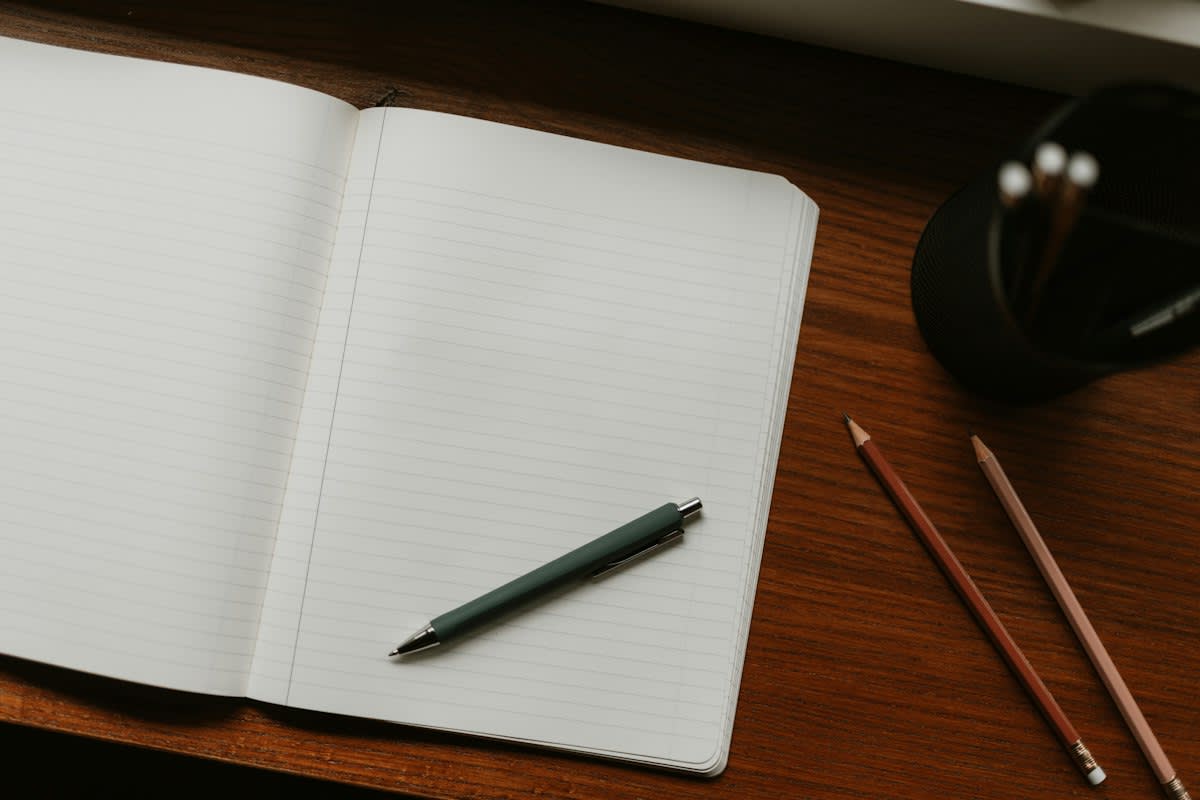
You can't just delete your apps and move to a cabin in the woods. That is a fantasy for people who don't have payroll to meet. To fight algorithmic memory outsourcing, you need a system of intentional friction. You need a way to force your brain to work again. This requires a physical notebook—not a tablet, not a synced app—and a willingness to feel the discomfort of not knowing an answer immediately. You need to accept that being 'efficient' is often just a euphemism for being cognitively lazy.
- An analog capture system (Paper/Ink) to bypass the 'save for later' trap.
- A local-first data archive (NAS or encrypted drive) that doesn't rely on a cloud-based search index.
- A scheduled 'blackout' period where external retrieval tools are forbidden.
- The ego-strength to be wrong in a meeting because you didn't check your phone.
The problem starts with the 'Google Effect'. Research shows that when people know information is stored externally, they are less likely to remember the information itself and more likely to remember where to find it (Source: Science, 2011). We've shifted from storing facts to storing paths. If the path breaks—if the server in Luleå, Sweden goes dark or the algorithm changes its weights—the knowledge is gone. You didn't actually learn the material; you just learned how to query a database.
The Decoupling Process: Step-by-Step Retrieval
Most people treat their digital memory like a landfill. They throw everything in and hope the search bar finds it. That's not a memory; it's a warehouse. To reclaim your cognitive agency, you have to rebuild the bridge between input and long-term storage. This is a manual, grinding process. It is not optimizable. It is not a 'hack'. It is work.
- Audit your 'Save' folders. Go through your bookmarks and 'Read Later' lists. Delete 80% of them. If you didn't read it within a month, the algorithm convinced you it was valuable, but your brain didn't. This kills the illusion of knowledge.
- Implement the 10-Minute Rule. When you need a fact, a date, or a name, forbid yourself from searching for it for ten full minutes. Force your brain to scan its own neural pathways. This creates the synaptic tension required for actual recall.
- Build a 'Zettelkasten' or a manual linking system. Instead of relying on algorithmic tags, manually connect new information to old memories using physical or local digital links. This mimics the associative nature of human memory.
- Practice Active Recall. After reading a report or attending a briefing, close the laptop. Write a three-sentence summary from memory. Do not look back at the source until you have struggled to remember the core point.
Why does this matter? Because algorithms don't just store your memories; they curate them. When you rely on a 'Memories' feature in a photo app, the AI decides which version of your past is worth revisiting based on engagement metrics, not emotional truth. You are essentially letting a piece of software in Mountain View edit your autobiography in real-time.
"The more we rely on digital tools to remember for us, the more we erode the very cognitive structures that allow us to synthesize information into wisdom. We are trading depth for accessibility."— Dr. Betsy Sparrow, Cognitive Psychologist at Columbia University
This is the invisible tax of the modern era. We think we are becoming 'bionic', but we are actually becoming dependents. In the high-stakes environments I've operated in—from the logistics hubs of Singapore to the financial districts of London—the people who survive the crashes are the ones who can function when the system fails. They have the 'hard-coded' knowledge. The 'software-dependent' people just panic when the screen goes blank.
| Feature | Biological Memory | Algorithmic Storage |
|---|---|---|
| Retrieval Method | Associative/Contextual | Keyword/Index-based |
| Reliability | Subjective/Malleable | Binary/Static |
| Cost | High Metabolic Effort | Low User Effort |
| Outcome | Wisdom & Synthesis | Information Access |
Ground-Level Friction: The Ugly Reality
Here is the part the textbooks won't tell you: trying to maintain a non-algorithmic memory in a corporate environment makes you look like a dinosaur. I've been in meetings where a colleague mocked me for taking handwritten notes, claiming I was 'inefficient'. They were right—in the short term. But three months later, when the project lead asked for a synthesis of the initial constraints and the current blockers, my colleague had to spend an hour digging through a messy Notion database. I just flipped back four pages. The friction of writing by hand is exactly what encoded the information in my head.
The political infighting is real. There is a systemic push toward 'centralized knowledge bases' because it makes employees interchangeable. If the knowledge is in the company's Wiki and not in the employee's head, the employee is a replaceable cog. The algorithm isn't just helping you remember; it's helping the organization ensure that you don't own the expertise. It's a power play masked as a productivity tool.
Common Pitfalls: Where Beginners Fail
Most people try to 'optimize' their way out of this. They buy a new app that promises 'better organization' or a 'second brain' framework. Stop it. You cannot use a digital tool to solve a problem caused by digital tools. That is like trying to put out a fire with gasoline. The goal is not a better system of storage; the goal is a better system of retrieval from your own biological hardware.
- The 'Tool-Hopping' Trap: Switching from Evernote to Obsidian to Notion without actually memorizing anything.
- The 'Archive Fallacy': Believing that saving a PDF is the same as understanding the content.
- The 'Digital Detox' Myth: Thinking a weekend without a phone fixes a decade of cognitive atrophy.
- Over-reliance on 'Tags': Using metadata as a substitute for conceptual understanding.
If you find yourself spending more time organizing your notes than thinking about the ideas in them, you've already lost. You've just built a more sophisticated warehouse for things you'll never use. The only metric that matters is: can you explain this concept to a peer while the power is out?
Fact-Check & Accuracy Note
The 'Google Effect' (Digital Amnesia) is a settled scientific observation regarding the tendency to forget information that can be found online. However, the extent to which algorithmic curation (like TikTok's For You page) permanently alters the structural capacity of the hippocampus is currently a subject of intense debate among neuroscientists and psychologists.