The Erosion of the Invisible
Trust is no longer a default setting. For years, the global urban experience was outsourced to the invisible: GPS coordinates, algorithmic recommendations, and digital interfaces that told us where we were and what a place meant. But this reliance on the intangible has created a void. When the source of information becomes opaque, the human psyche instinctively reverts to the tangible. We are seeing this tension play out in the highest halls of governance, where the very nature of truth is being questioned not through philosophy, but through the lens of provenance.
Consider the warnings emerging from the European Parliament. On July 9, 2026, a report presented to the science and technology panel highlighted a precarious intersection between artificial intelligence and research integrity. Julia Priess-Buchheit, a professor at Kiel University in Germany, argued that the rise of AI necessitates a rigorous focus on research provenance. The core issue is simple: if we cannot trace where a result came from or how it was produced, the result itself becomes suspect. This is not merely an academic concern. It is a mirror of our urban condition. When the digital layer of our cities becomes a hall of mirrors, we stop looking at our screens and start looking at the walls.
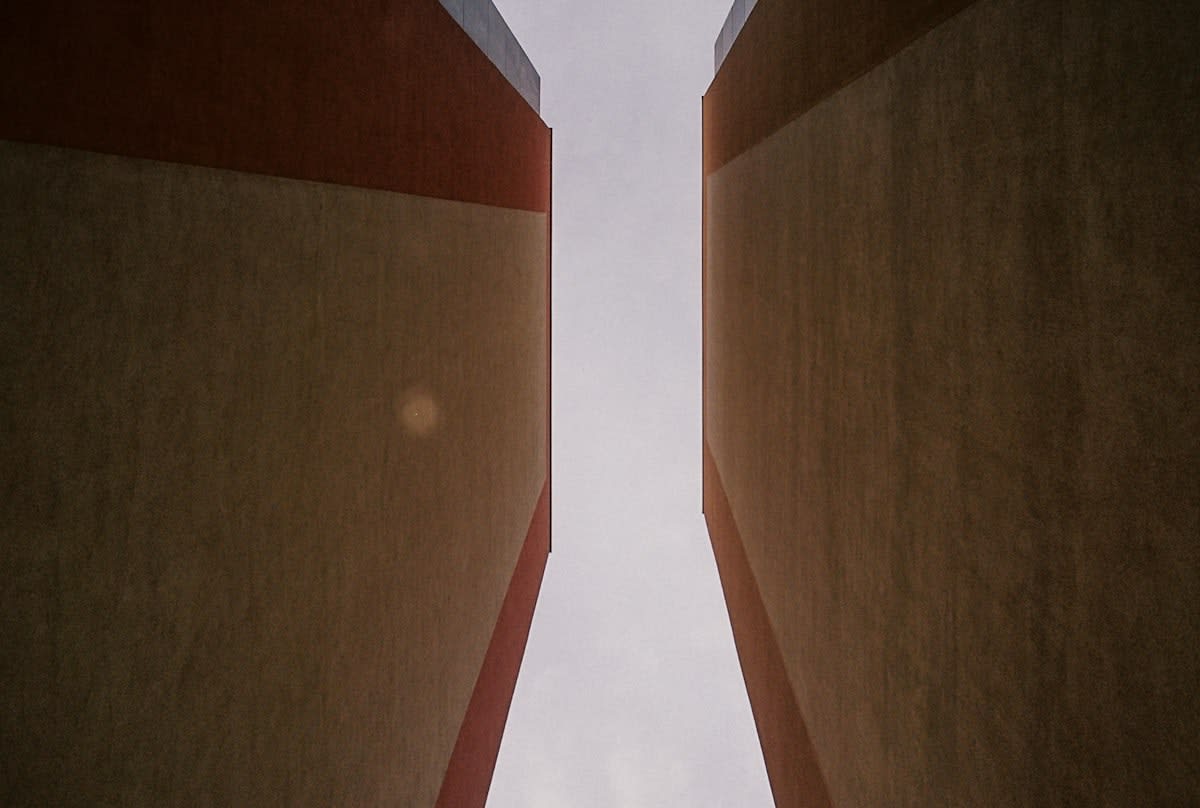
Why does this matter for the way we move through a city? Because provenance is the physical history of a thing. It is the patina on a brass railing, the specific grit of a concrete wall, or the intentional weight of a door. These are the tactile markers that verify our location in a way a blue dot on a map never can. The invisible is failing us. The result is a quiet, aggressive return to materiality as the primary method of wayfinding.

The Semiotics of the Storefront
Commercial architecture is the first line of defense against this abstraction. Brands are no longer just designing for aesthetics; they are designing for immediate, tactile recognition. Midas, a leading automotive services chain, provides a precise case study in this shift. In July 2026, the company began rolling out two distinct design concepts across the United States and Canada: Contemporary Industrial and Urban Modern. This is not a mere cosmetic update. It is a strategic deployment of material cues to signal function and location to the user.
The Contemporary Industrial model is built for high-traffic suburban and highway-adjacent zones. Here, wayfinding happens at speed. The environment demands bold signage and high-contrast branding. The materials are loud because the context is chaotic. In contrast, the Urban Modern concept is tailored for denser, walkable markets. It utilizes large storefront windows and warm accents to invite a slower, more intimate form of navigation. The architecture itself tells the pedestrian that they have transitioned from the rush of the city to a place of service and stability.
| Design Concept | Target Environment | Tactile Markers | Navigational Goal |
|---|---|---|---|
| Contemporary Industrial | Suburban / Highway | Bold signage, high-contrast branding | High-speed recognition |
| Urban Modern | Walkable / Dense Urban | Large windows, warm accents | Pedestrian integration |
Lenny Valentino, Jr., president and COO of Midas International, notes that these designs are driven by customer and franchisee insights. This suggests a market-wide realization: the customer no longer wants a generic corporate box. They want a space that feels intentional. When a building's materials match its environment, it creates a sense of provenance. The building belongs there. It is a physical truth that requires no digital verification.
Living Within the Archive
If the storefront is the public face of tactile provenance, the home is its sanctuary. We are seeing a move away from the pristine, impersonal minimalism that dominated the early 21st century. Instead, there is a return to the home as a curated archive. In Paris, designer Hugues de Blignières has pioneered this approach in a pied-a-terre on Avenue Montaigne. The space is not merely decorated with books and art; the collection is integrated into the very architecture of the home.
"A home that allows its owner to not just exist around his collection, but in the most natural and meaningful way, to live within it."— Hugues de Blignières
This is the ultimate expression of wayfinding. In Blignières' design, the books and art are not ornaments; they are landmarks. The resident navigates the space through a relationship with physical objects that hold history and meaning. This is the antithesis of the digital experience. While an AI can suggest a book, it cannot provide the scent of old paper or the weight of a hardcover. By turning a collection into architecture, the home becomes a map of the owner's intellectual provenance.

Does this reflect a broader societal hunger for authenticity? Almost certainly. When our digital lives are curated by algorithms that lack a physical origin, the act of surrounding oneself with tangible, traceable objects becomes a political act. It is a reclamation of the self through the material world.
The Macro-Restructuring of the Physical
This shift toward the tactile is not limited to interiors or storefronts; it is manifesting in the very way we restructure the planet. A recent study published in Nature suggests that by 2050, the transformation of food systems toward healthy diets—specifically the adoption of the EAT-Lancet reference diet—will result in a fundamental restructuring of global agriculture. This is not a subtle tweak to existing systems. It is a break with historical trends.
The restructuring of agriculture is, at its core, a restructuring of the land. It changes how we interact with the soil, how we perceive the landscape, and how we navigate the rural-urban divide. Just as we are moving away from digital-first wayfinding, we are moving toward a more intentional, provenance-based relationship with the earth. The EAT-Lancet diet is not just a nutritional guideline; it is a blueprint for a physical world where productivity and waste reduction are etched into the geography of the land.
Analytical Insight
The 'Provenance Gap' occurs when the digital representation of a space or a fact diverges so far from its physical reality that the user experiences a cognitive break. Tactile provenance is the bridge used to close this gap.
When we combine these threads—the European Parliament's demand for AI provenance, Midas's material-driven storefronts, Blignières' architectural archives, and the Nature report's agricultural restructuring—a clear pattern emerges. We are exiting the era of the abstract. The global urban experience is shifting back toward the concrete, the heavy, and the traceable.
The future of wayfinding is not a better app or a more precise sensor. It is a return to the sensory. It is the realization that the most reliable map is the one we can touch. Whether it is through the bold signage of a highway shop or the curated shelves of a Parisian flat, we are rediscovering that truth is found in the material. Physicality is no longer just a container for our activities; it is the primary evidence of our existence.