
The modern city is an administrative relic. For centuries, the municipal monopoly operated on a simple, brutal logic: if you live within these geographic coordinates, you accept this specific set of laws, taxes, and services, regardless of their quality or relevance. It is a captive market. But the monopoly is cracking. We are witnessing the emergence of Private Governance Zones (PGZs)—territories where the traditional social contract is replaced by a contractual agreement between a provider and a resident.
The Failure of the Geographic Monopoly
Why is this happening now? Because the gap between the speed of global capital and the speed of municipal bureaucracy has become an abyss. Traditional cities are designed for stability, not agility. Their decision-making processes are bogged down by legacy systems and political inertia that make rapid infrastructure deployment or regulatory pivoting nearly impossible. When a city cannot provide basic security or reliable electricity, the residents stop seeing themselves as citizens and start seeing themselves as victims of an inefficient provider.
This systemic inefficiency creates a vacuum. When the state fails to provide the 'minimum viable product' of governance, private entities step in to fill the void. This is not merely about privatizing a few roads or waste management contracts; it is about the privatization of the regulatory framework itself. The goal is to create a 'regulatory sandbox' where the rules of engagement are optimized for growth, innovation, and efficiency rather than political survival.
"The city of the future is not a place you are born into, but a service you subscribe to. The shift from citizenship to residency is the most significant political evolution of the century."— Strategic Analyst, Global Governance Initiative

The Logic of Competitive Governance
At its core, the move toward private governance is an exercise in regulatory arbitrage. By carving out a zone with its own legal code, a governing entity can attract specific types of human and financial capital that are repelled by the surrounding jurisdiction's inefficiencies. Think of it as a 'startup city.' If the surrounding region has a 30% corporate tax rate and a three-year permit process, a zone with a 5% rate and a 48-hour digital approval process becomes an irresistible magnet.
This transforms the resident from a passive subject into a customer. In a traditional municipality, if the trash isn't collected, you complain to a council member who might ignore you for a decade. In a private governance zone, the relationship is governed by a Service Level Agreement (SLA). If the provider fails to meet the agreed-upon standards, the resident has the leverage of exit. This introduces a market mechanism into the one area where it was previously forbidden: the law.
| Feature | Traditional Municipality | Special Economic Zone (SEZ) | Private Governance Zone (PGZ) |
|---|---|---|---|
| Legal Framework | Uniform State Law | Modified State Law | Custom Contractual Law |
| Revenue Model | Taxation (Compulsory) | Tax Incentives | Service Fees/Leases |
| Resident Status | Citizen/Subject | Economic Participant | Contractual Resident |
| Decision Speed | Slow (Bureaucratic) | Moderate (Directed) | Rapid (Executive) |
| Primary Goal | Social Stability | Industrial Growth | Operational Efficiency |
The transition from the second column to the third in the table above represents a systemic migration. While SEZs have existed for decades—with over 5,000 such zones globally—they were primarily industrial tools. The new PGZs are different. They aren't just for factories; they are for living, working, and evolving. They seek to unbundle the state entirely, separating the provision of security and law from the traditional baggage of national identity.
Global Experiments in Autonomy
We see this trend manifesting differently across the globe. In Asia, the evolution of SEZs has moved toward integrated 'Smart Cities' where the data layer governs the physical layer. These zones often operate as semi-autonomous city-states, where the primary objective is to integrate the local economy into the global supply chain with zero friction. The focus here is on the efficiency of the flow—of goods, of data, and of people.
In Latin America, the experiment has taken a more radical turn with the concept of Charter Cities. These projects attempt to import a foreign, high-quality legal system into a territory to bypass local institutional decay. By establishing a zone where the law is predictable and property rights are absolute, these zones attempt to jumpstart development in regions where the state has historically been a predator rather than a protector.
Meanwhile, in the Gulf States, we are seeing 'Giga-projects' that function as sovereign laboratories. These are not just luxury developments; they are attempts to build entirely new social and economic operating systems from scratch. By controlling every variable—from the urban grid to the visa requirements—these zones are testing how much of the traditional municipal experience can be optimized through technology and centralized private management.
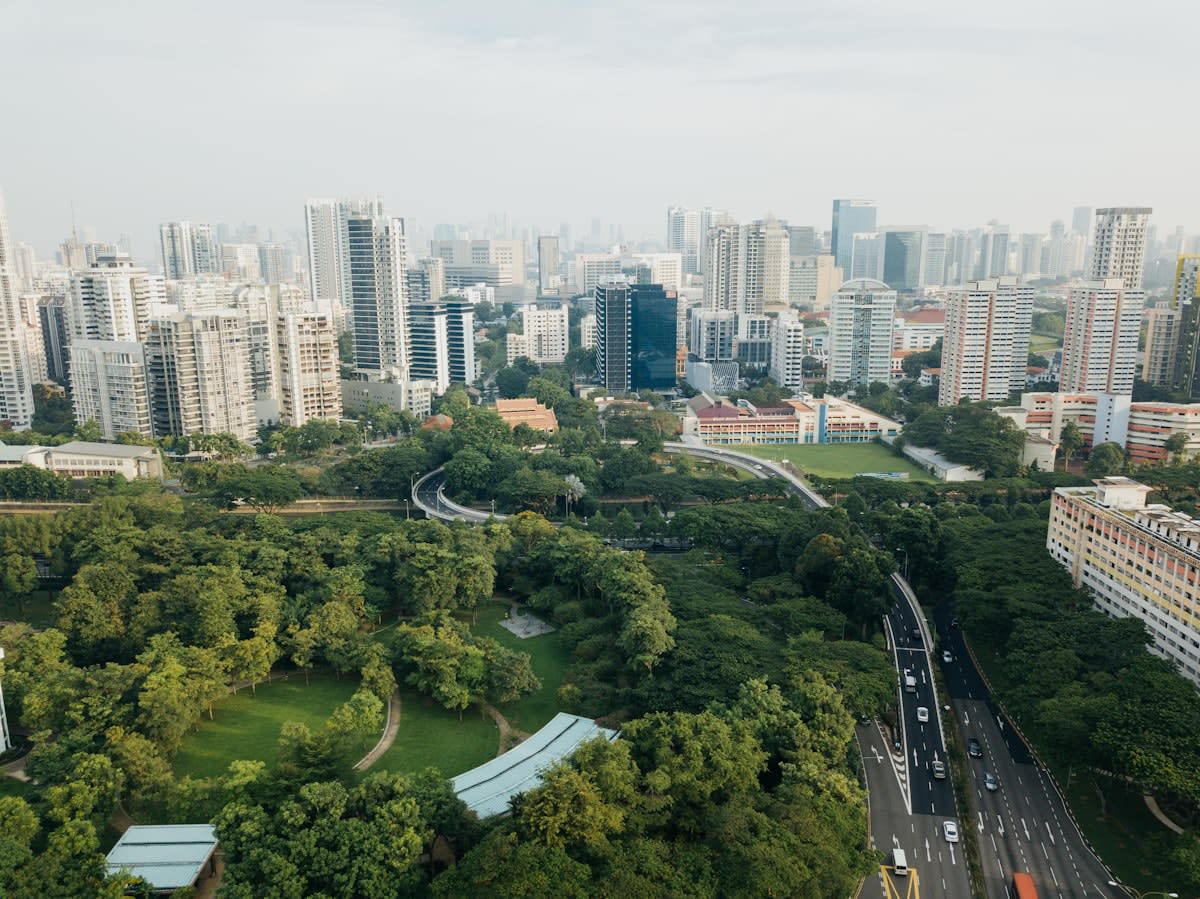
The GaaS Paradigm
Governance as a Service (GaaS) is the ultimate endgame. In this model, the 'government' is a vendor. You pay for a package of services—security, sanitation, dispute resolution—and if the vendor underperforms, you switch providers or move your residency to a competing zone.
The Friction of the Transition
This shift is not without profound tension. The most immediate conflict is legal: how does a private zone interact with the surrounding sovereign state? When a contractual law clashes with a national law, who wins? This creates a 'gray zone' of jurisdiction that can lead to instability if the relationship between the zone and the host state is not meticulously managed. The risk is not the private zone itself, but the fragility of the bridge connecting it to the old world.
Then there is the question of inclusivity. If governance becomes a subscription service, what happens to those who cannot afford the premium tier? We risk creating a bifurcated world: high-efficiency, high-security enclaves for the global elite, surrounded by decaying municipal ruins for everyone else. This is the central paradox of the PGZ movement—it solves the efficiency problem but potentially exacerbates the inequality problem.
- Jurisdictional Clash: The conflict between contractual law and sovereign state mandates.
- The Equity Gap: The risk of 'governance apartheid' where quality of law depends on wealth.
- Accountability Void: The difficulty of auditing private governors who are not democratically elected.
- Externalities: How private zones handle environmental or social impacts that bleed into neighboring public lands.
Conclusion: The Era of Modular Jurisdictions
The municipal monopoly is not dying overnight, but it is losing its grip. The world is moving toward a modular approach to governance. We are entering an era where the 'where' of your location matters less than the 'how' of your governance. The ability to choose a jurisdiction based on its performance, its legal clarity, and its alignment with your values is an inevitable outcome of a hyper-connected, mobile global economy.
The challenge for the next generation of policymakers is not to fight this trend, but to steer it. The goal should be to move from a model of 'exclusive enclaves' to a model of 'competitive benchmarks.' If private zones can prove that a certain way of managing a city is 10x more efficient, the traditional municipality must either adapt or face obsolescence. The monopoly is over; the competition has begun.