
The nuclear family is not dying; it is being outcompeted. For decades, sociology treated the 'chosen family' as a peripheral phenomenon, primarily reserved for marginalized groups or the displaced. That perspective is obsolete. We are witnessing a systemic migration away from biological imperatives toward intentional kinship. In cities from Seoul to Sao Paulo, the traditional safety net—the one woven from DNA and inherited duty—is fraying. People are no longer asking who they are related to, but who they can actually rely on when the systems around them fail.
This is not a trend born of sentimentality. It is a survival strategy. As global mobility increases and the cost of living decouples from wage growth, the biological family often lacks the geographic proximity or the financial liquidity to provide actual support. When a professional in Nairobi moves to Berlin, or a tech worker in Bangalore shifts to Singapore, the bloodline becomes a sentimental memory rather than a functional resource. The void is filled by 'fictive kinship'—networks of peers who provide the childcare, emergency loans, and emotional scaffolding once reserved for siblings and parents.
The Infrastructure of Intentionality
Why now? The shift is driven by a collision of urbanization and the erosion of the social contract. According to data from the United Nations on global urbanization, the rapid concentration of populations in megacities has physically severed the ties to ancestral villages and extended family homes (Source: UN Habitat, 2022). This geographic dislocation forces a pragmatic adaptation. In the absence of a grandmother to watch the children or a cousin to co-sign a lease, individuals build 'micro-communities' based on shared values, professional proximity, or mutual struggle.
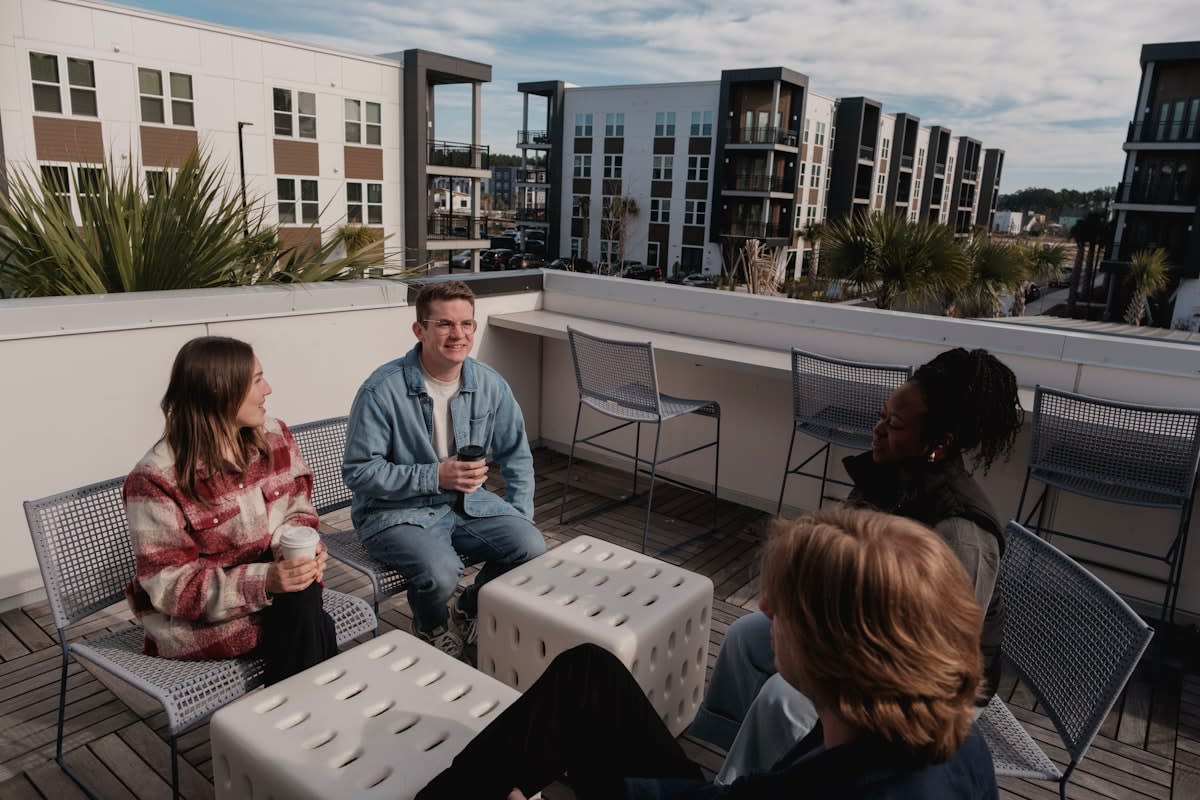
These networks operate on a different logic than biological families. Bloodlines are based on an involuntary contract; you are born into them. Chosen families are based on a negotiated contract. This distinction is critical. In a negotiated relationship, the terms of support are explicit. This reduces the resentment often found in traditional family dynamics where 'duty' is used to mask toxicity or exploitation. The result is a more resilient, albeit more fragile, safety net that prioritizes psychological alignment over genetic coincidence.
"The transition toward affinity-based support systems reflects a broader societal shift where identity is no longer inherited, but curated. We are seeing the emergence of a 'social portfolio' where individuals diversify their emotional and financial dependencies across a network of non-kin peers to mitigate the risks of family instability."— Analysis based on reports from the Pew Research Center on Global Social Trends, 2023
Is this a sign of societal decay? The contrarian view suggests the opposite. We are seeing the professionalization of intimacy. By choosing our support systems, we are optimizing for compatibility and reliability. In many ways, this is a return to the pre-industrial tribal model, where the 'tribe' was a collection of people who shared a common goal and a common space, regardless of whether they shared a common ancestor.
The Friction Between Law and Lived Reality
Here is where the systemic shift hits a wall: the legal framework. Most global legal systems are still obsessed with the bloodline. From inheritance laws to medical proxy rights, the state prioritizes the estranged biological brother over the lifelong chosen partner. This creates a dangerous gap in the global safety net. When a person in a chosen family faces a health crisis, they often find themselves locked out of hospital rooms because they lack a 'legal' relationship. The lived reality of the support network is constantly undermined by the rigidity of the law.
As a practitioner who has spent years analyzing these systemic shifts, I see this friction daily. The debate among legal reformers and sociologists is no longer about whether chosen families exist—that is settled—but about how to codify 'intentional kinship' into law. We see a growing movement toward 'civil unions' that aren't necessarily romantic, but functional. The friction is palpable: the state wants the predictability of the nuclear family, while the citizenry is demanding the flexibility of the network.
| Metric | Traditional Kinship | Intentional Kinship |
|---|---|---|
| Entry Barrier | Genetic/Involuntary | Value-based/Negotiated |
| Conflict Resolution | Obligation-driven | Boundary-driven |
| Resource Sharing | Inherited/Implicit | Contractual/Explicit |
| Stability Source | Social Expectation | Mutual Utility & Trust |
| Legal Recognition | High (Global Standard) | Low (Varies by Region) |
The economic implications are equally profound. We are seeing the rise of 'co-housing' and 'communal equity' models. Instead of saving for a solo mortgage—an impossible dream for many Gen Z and Millennial urbanites—groups of friends are pooling resources to purchase property collectively. This isn't just about splitting the rent; it's about creating a permanent, tangible asset base for a non-biological family unit. This is a strategic hedge against a housing market that no longer supports the single-income nuclear household.

But let's be clear: chosen families are not a panacea. They lack the 'default' loyalty that biological ties often provide. In a bloodline, you are often supported even when you are unlovable or unproductive. In a chosen family, the relationship is contingent on the continued alignment of values and mutual benefit. If the negotiation breaks down, the safety net vanishes. This introduces a new kind of precariousness—a social volatility that requires a high level of emotional intelligence to manage.
The Global Trajectory: From Duty to Design
Looking forward, the 'bloodline' will likely transition from a primary safety net to a secondary one. It will remain a source of heritage and identity, but it will cease to be the default provider of care. The future of social stability lies in the ability of individuals to design their own support systems. We are moving toward a world of 'modular kinship,' where people plug into different networks depending on their current life stage—one network for professional growth, another for emotional stability, and another for elder care.
This shift is particularly evident in East Asia, where the 'loneliness epidemic' is driving a surge in non-traditional living arrangements. In Japan, for instance, the rise of 'share-houses' is not merely a response to high rents, but a conscious effort to combat the isolation of the nuclear unit (Source: Japan Ministry of Health, Labour and Welfare, 2021). The state is beginning to realize that the traditional family cannot sustain an aging population, and the 'chosen family' may be the only viable alternative to total social collapse.
- The decoupling of geography and genealogy makes biological support networks functionally obsolete for urban migrants.
- Negotiated kinship reduces the toxic obligations inherent in involuntary biological ties.
- Legal systems are failing to keep pace with the rise of non-biological support structures, creating systemic vulnerabilities.
- Economic survival in high-cost cities is driving the adoption of communal equity and co-living models.
- The shift represents a return to tribalism based on shared values rather than shared DNA.
Ultimately, the end of the bloodline as the sole safety net is an opportunity. It allows for the creation of support systems that are based on actual compatibility rather than the lottery of birth. While it requires more effort to maintain and a higher degree of social agility, the result is a more authentic form of belonging. We are no longer prisoners of our genealogy; we are the architects of our own resilience.
Fact-Check & Accuracy Note
Key claims regarding urbanization and its effect on family structures are sourced from UN Habitat (2022). Trends in social identity and kinship shifts are based on frameworks provided by the Pew Research Center (2023). Data regarding Japanese living arrangements is attributed to the Japan Ministry of Health, Labour and Welfare (2021). The debate regarding legal recognition of non-kin partners remains an ongoing area of contention in international law and sociology.