See if you can spot an AI deepfake with our test
Source Entity
BBC News
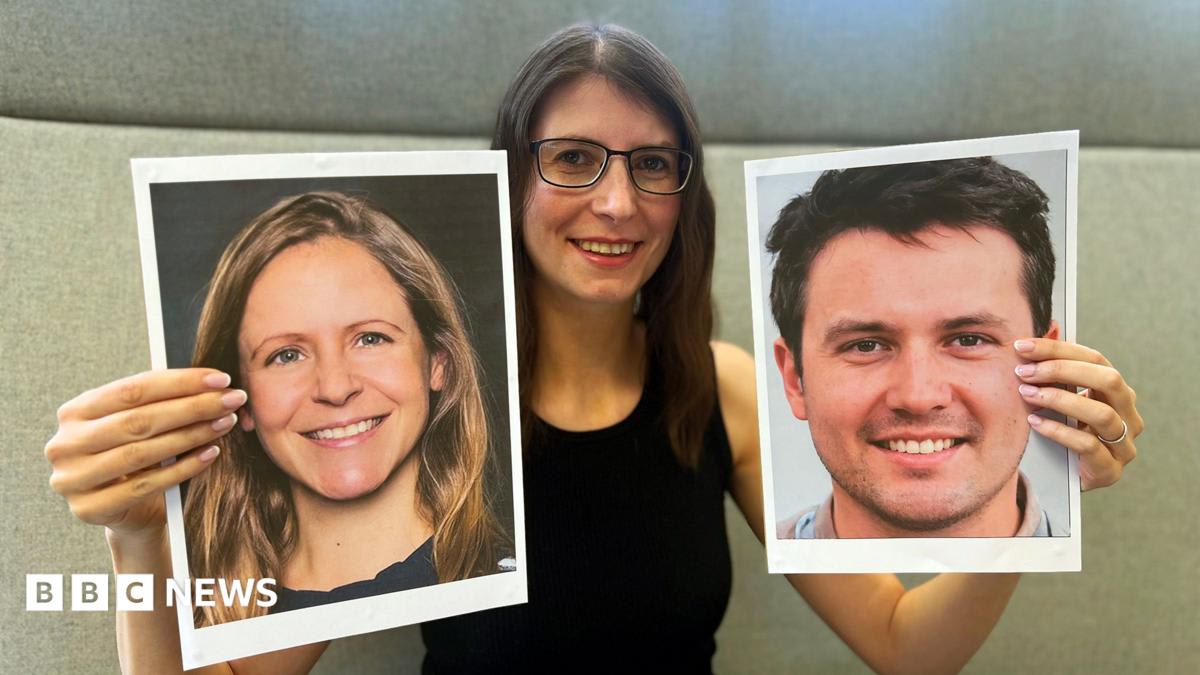
Researchers in Aberdeen have been finding out if you can train people to identify computer-generated facial images.
The Battle for Visual Truth: Analyzing the Aberdeen Deepfake Study
In an era where the boundary between synthetic media and reality is increasingly blurred, researchers in Aberdeen have embarked on a critical mission: determining whether the human eye can be trained to spot AI-generated facial images. As generative adversarial networks (GANs) and diffusion models evolve to produce photorealistic imagery, the ability to discern truth from fabrication is no longer just a technical challenge but a societal necessity. This study represents a proactive approach to digital literacy, moving beyond the assumption that humans are inherently incapable of spotting deepfakes.
The Technical Challenge of Synthetic Imagery
To understand the significance of the Aberdeen research, one must first understand the mechanics of the 'deepfake.' AI-generated faces are typically created using architectures that pit two neural networks against each other—one creating the image and the other attempting to detect if it is fake. This iterative process continues until the 'generator' can fool the 'detector' consistently. For the average person, this means that the subtle artifacts that once gave away AI images—such as asymmetrical earrings, distorted pupils, or unnatural blending at the hairline—are rapidly disappearing. The Aberdeen study seeks to find if there are still 'tells' that a trained human can identify more reliably than an untrained one.
The Psychology of Pattern Recognition
The core of this research lies in the intersection of computer science and cognitive psychology. By training participants, the researchers are essentially testing the limits of human pattern recognition. Historically, humans have been adept at spotting anomalies in faces (a phenomenon linked to the fusiform face area of the brain), but AI is specifically designed to mimic these patterns perfectly. If the Aberdeen team finds that training significantly increases detection rates, it suggests that there are still consistent, albeit subtle, mathematical errors in AI generation that the human brain can be taught to prioritize.
The 'Arms Race' of Detection
This study takes place within a broader, global 'arms race' between AI creators and AI detectors. While software-based detection tools are often the first line of defense, they frequently suffer from 'catastrophic forgetting' or become obsolete as soon as a new model (like a newer version of Midjourney or DALL-E) is released. By focusing on human training, the Aberdeen researchers are exploring a more flexible layer of defense. Unlike a static algorithm, a trained human can apply critical thinking and contextual analysis to an image, potentially offering a more resilient form of verification in real-world scenarios.
Societal Implications and Digital Literacy
The implications of this research extend far beyond the laboratory. In a political climate where 'fake news' and synthetic evidence can sway elections or destroy reputations, the ability to critically analyze visual media is a vital component of modern citizenship. If the Aberdeen study proves that training is effective, it could lead to the development of wide-scale digital literacy programs. Such initiatives would empower the general public to question the provenance of the images they encounter on social media, reducing the efficacy of disinformation campaigns that rely on the 'seeing is believing' fallacy.
Future Trends in Media Authentication
Looking forward, the results from Aberdeen will likely contribute to a hybrid model of authentication. We are moving toward a future where 'detection' (spotting the fake) will be supplemented by 'provenance' (proving the real). While training humans to spot fakes is a crucial short-term stopgap, the long-term trend is shifting toward cryptographic watermarking and C2PA standards that track an image's history from the camera to the screen. However, until these standards are universal, the human-centric approach championed by the Aberdeen researchers remains our most accessible line of defense.
Summary
The Aberdeen study is a timely intervention in the fight against synthetic misinformation. By investigating whether humans can be trained to identify AI-generated faces, the researchers are addressing a fundamental vulnerability in our digital ecosystem. Whether the results show a high or low success rate, the study will provide invaluable data on the current state of AI realism and the capacity of human cognition to adapt to a world of artificial imagery.