Air quality emergency: Massive smoke and dust cloud triggers urgent health alerts in these states
Source Entity
Latest News: Today's Latest News Headlines from India & World | Hindustan Times | Hindustan Times
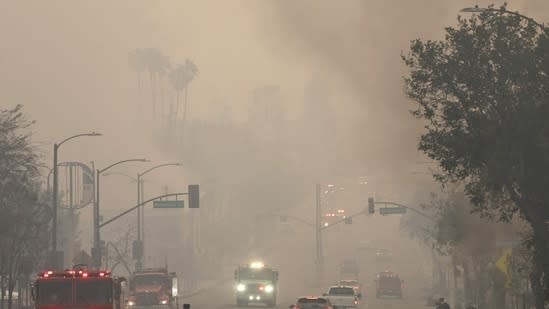
Emergency air quality advisories are in place across Arizona and Colorado as dust and wildfire smoke create hazardous conditions.
Atmospheric Crisis: Analyzing the Air Quality Emergency in Arizona and Colorado
Arizona and Colorado are currently facing a severe environmental health crisis as a synergistic combination of wildfire smoke and massive dust clouds has degraded air quality to hazardous levels. This dual-threat event has triggered urgent health alerts, forcing residents to limit outdoor activities and implement protective measures. The convergence of these two distinct pollutants—organic carbon and ash from fires, and mineral particulates from dust—creates a complex atmospheric cocktail that significantly exceeds safe particulate matter thresholds, posing an immediate risk to vulnerable populations across the American Southwest and Rocky Mountain regions.
The Science of Particulate Matter: Smoke vs. Dust
To understand the severity of this event, it is critical to distinguish between the two primary pollutants involved. Wildfire smoke is primarily composed of PM2.5 (fine particulate matter), which consists of microscopic particles that can penetrate deep into the lung tissue and enter the bloodstream. In contrast, dust clouds—often associated with the 'haboobs' common in Arizona—typically contribute higher levels of PM10 (coarser particles). When these two phenomena overlap, as is the case in the current emergency, the respiratory system is attacked on two fronts. The coarser dust particles irritate the upper respiratory tract, while the fine smoke particles cause systemic inflammation, leading to a compounding effect that can trigger acute respiratory distress even in healthy individuals.
Regional Vulnerabilities and Geographic Drivers
The susceptibility of Arizona and Colorado to these events is rooted in their unique geography and current climatic conditions. Arizona's arid basins are prone to wind-driven soil erosion, which fuels massive dust storms during seasonal transitions. Meanwhile, Colorado's vast forests, stressed by years of drought and rising temperatures, have become tinderboxes for high-intensity wildfires. The prevailing wind patterns in the Western United States often transport smoke across state lines, meaning that a fire in one region can plunge a distant city into a haze of hazardous air. This inter-state transport of pollutants transforms a local fire or dust storm into a regional health emergency, complicating the coordination of public health responses.
Acute and Chronic Health Implications
From a medical perspective, the 'hazardous' designation of these air quality alerts is not hyperbolic. For individuals with pre-existing conditions such as asthma, chronic obstructive pulmonary disease (COPD), or cardiovascular disease, this environment can be life-threatening. The inhalation of high concentrations of PM2.5 and PM10 triggers an inflammatory response in the lungs, which can lead to decreased lung function and an increase in hospital admissions for respiratory failure. Furthermore, there is strong evidence that such extreme pollution events correlate with a spike in myocardial infarctions (heart attacks) and strokes, as the fine particles from smoke can trigger systemic oxidative stress and blood clotting.
The 'New Normal': Climate Context and Future Trends
This event is not an isolated incident but rather a symptom of a broader climatic shift. The increasing frequency and intensity of 'smoke seasons' and dust events are directly linked to the aridification of the West. As the region experiences prolonged droughts, soil stability decreases, leading to more frequent dust storms. Simultaneously, the 'wildfire-weather feedback loop'—where hotter, drier conditions lead to more fires, which in turn release more carbon and alter local weather—is accelerating. Experts predict that these hazardous air quality events will become more frequent and last longer, shifting from rare anomalies to predictable seasonal threats that will require permanent changes to urban planning and public health infrastructure.
Conclusion and Mitigation Strategies
In summary, the current emergency in Arizona and Colorado serves as a stark reminder of the fragility of air quality in the face of environmental instability. The immediate priority remains the protection of public health through the use of N95 respirators and HEPA air filtration systems. However, the long-term solution requires a comprehensive approach to land management and climate adaptation. Until systemic changes are made to combat the root causes of drought and wildfire proliferation, the residents of the American West must prepare for a future where the air they breathe is periodically compromised by the very landscape they inhabit.
Verification Required?