Datacentres drive up big tech’s carbon emissions to a third of those of France
Source Entity
Aisha Down and Dan Milmo
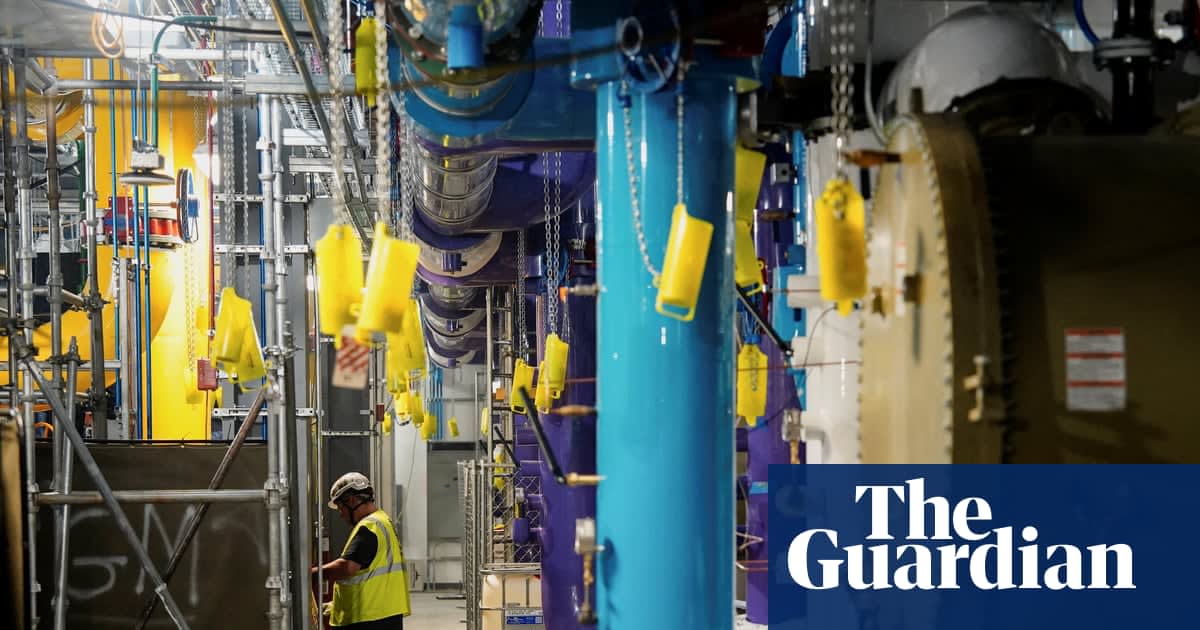
<p>Microsoft, Amazon and Google say they still aim to achieve net zero output despite construction boom</p><p>Microsoft, Amazon and Google’s collective <a href="https://www.theguardian.com/technology/2026/jul/06/ai-climate-crisis">carbon emissions</a> have increased by nearly a fifth in the past year, driven largely by datacentre construction.</p><p>In the financial year ending March 2026, the three tech companies emitted 119m mTCO₂e (metric tonnes of carbon dioxide equivalent), or about a third of those of France.</p> <a href="https://www.theguardian.com/us-news/2026/jul/11/microsoft-amazon-google-datacentre-carbon-emissions-france">Continue reading...</a>
The Collision of AI Ambition and Climate Reality
The recent revelation that the collective carbon emissions of Microsoft, Amazon, and Google have surged by nearly a fifth in a single year marks a critical turning point in the narrative of 'Green Tech.' With a combined output of 119 million metric tonnes of carbon dioxide equivalent (mTCO₂e) for the financial year ending March 2026, these three entities now possess a carbon footprint equivalent to roughly one-third of the entire nation of France. This staggering scale highlights a growing contradiction: while these companies are the primary architects of the digital future, the physical infrastructure required to sustain that future is placing an unprecedented strain on the planet.
The Infrastructure Engine: The Datacentre Boom
At the heart of this emissions spike is the aggressive construction of datacentres. The current 'AI arms race' has shifted the requirements for computing power from standard cloud storage to high-density AI processing. Large Language Models (LLMs) and generative AI require specialized hardware, such as GPUs, which consume significantly more power and generate more heat than traditional servers. This has triggered a global construction boom, where the 'embodied carbon'—the emissions resulting from the production of steel, concrete, and the logistics of building massive facilities—is driving the numbers upward even before the servers are powered on.
The Net-Zero Paradox
Despite these rising numbers, Microsoft, Amazon, and Google maintain that they are still pursuing 'net zero' targets. This creates a profound paradox. Historically, tech giants have relied heavily on carbon offsets—investing in reforestation or renewable energy projects to 'cancel out' their emissions. However, as the physical growth of their infrastructure accelerates, the gap between actual emissions and offset capabilities widens. The fact that emissions rose by nearly 20% suggests that the rate of infrastructure expansion is currently outpacing the companies' ability to decarbonize their supply chains and energy sources.
Comparative Scale and Global Implications
Comparing corporate emissions to those of a G7 nation like France is not merely a rhetorical device; it is a necessary analytical tool to understand the scale of corporate environmental impact. When a handful of companies emit a third of what an entire industrialized country does, it suggests that corporate carbon accounting may need to be subject to the same rigorous international treaties and regulations as sovereign states. This trend indicates that the digital economy is no longer 'weightless' or 'invisible' but has a massive, tangible, and damaging physical footprint.
Future Trends: Beyond Traditional Renewables
Looking forward, it is unlikely that standard wind and solar arrays will be sufficient to neutralize the growth of AI-driven datacentres due to the need for 24/7 baseload power. We can predict a strategic shift toward more controversial or cutting-edge energy sources. This likely includes an increased investment in Small Modular Reactors (SMRs) and a revival of nuclear energy partnerships, as these provide the consistent, high-output power required for massive compute clusters without the carbon intensity of natural gas or coal.
Conclusion
In summary, the surge to 119m mTCO₂e reveals the hidden cost of the AI revolution. While the software side of technology promises efficiency and optimization, the hardware side is currently operating in a state of unsustainable expansion. The tension between the companies' net-zero rhetoric and their operational reality will likely lead to increased regulatory scrutiny and a desperate search for new energy paradigms to prevent the digital boom from accelerating the climate crisis.