China lands a reusable rocket for the first time: Why this matters for the space race
Source Entity
Arav Shah
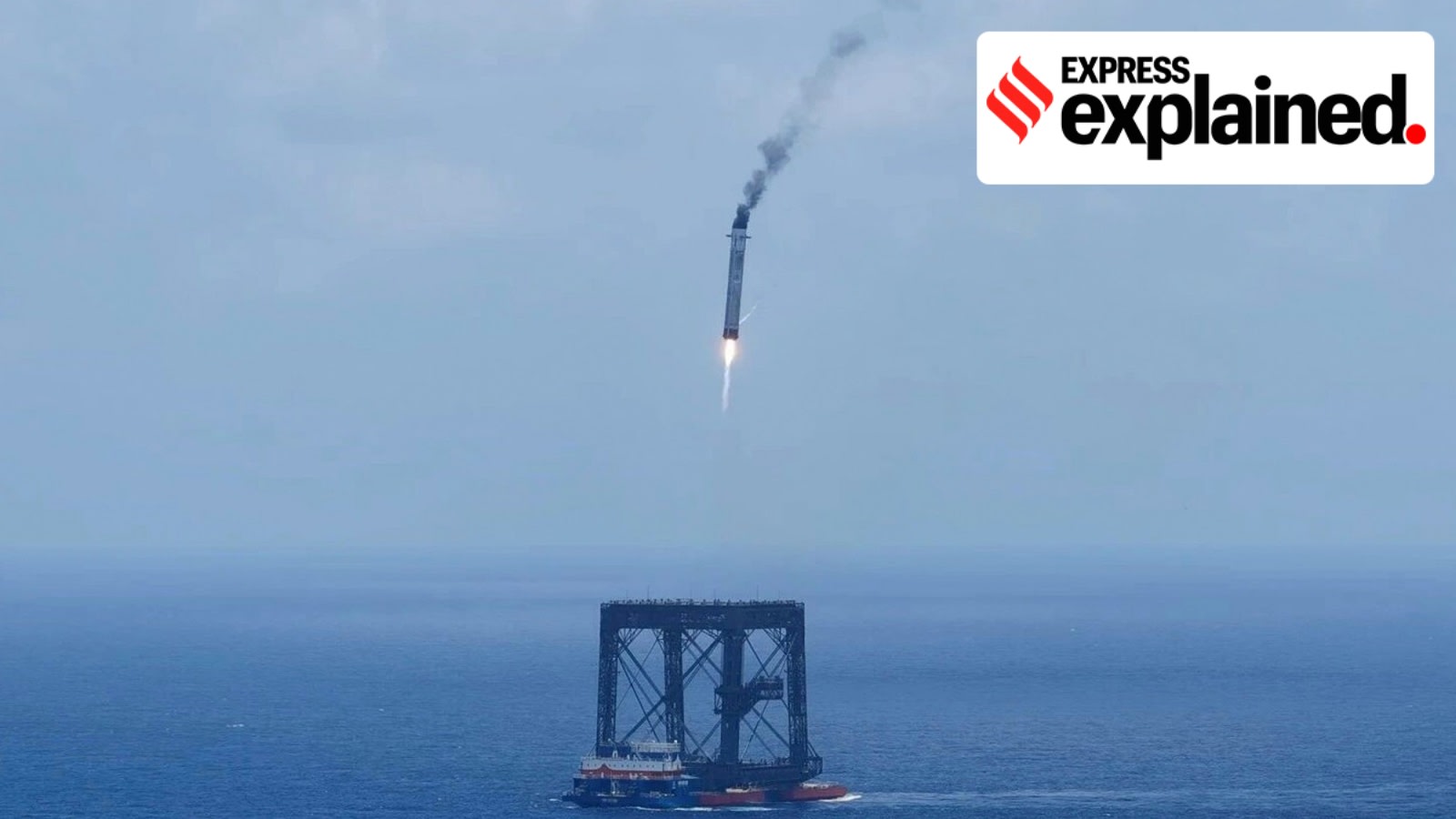
China on Friday successfully landed a reusable rocket for the first time — a milestone for the country’s space programme that will challenge American companies’ dominance in the technology. The Long ...
A New Era in Aerospace: China’s Reusable Milestone
The successful landing of a reusable rocket by China represents a watershed moment in the history of astronautics. This achievement transitions China from a participant in the global space arena to a direct competitor in the cutting-edge field of orbital recovery technology. By mastering the complex physics required to return a booster to a precise landing site, China has signaled its intent to redefine the economics of space access and challenge the existing hierarchy of spacefaring nations.
Breaking the Tradition of Expendability
Historically, space exploration was characterized by "expendable" launch vehicles—rockets that were discarded into the ocean after a single use. This method, while effective for early missions, made space travel prohibitively expensive and limited the frequency of launches. The paradigm shift toward reusability, famously championed by private entities like SpaceX in the United States, has fundamentally changed how we view the cost-to-orbit ratio. China's entry into this specific technical tier demonstrates that it has successfully bridged the gap between traditional state-led engineering and the modern, high-efficiency models that define the current era.
The Economic Engine of Reusability
The primary driver behind the pursuit of reusability is economic efficiency. When a rocket can be refurbished and reflown, the cost per kilogram to reach orbit drops significantly. This reduction in cost is the "holy grail" of the space industry, as it enables the deployment of massive satellite constellations, more frequent scientific research missions, and eventually, the logistics required for long-term lunar or Martian habitation. China's ability to land a booster implies they are building the infrastructure necessary to sustain a high-cadence launch schedule, which is essential for any modern space superpower.
Challenging the American Hegemony
This milestone directly impacts the geopolitical landscape of the "Space Race 2.0." For much of the last decade, the United States has held a significant technological advantage through its commercial space sector. However, China's state-backed ability to funnel immense resources into specific strategic goals allows it to move with incredible speed. This successful landing is a clear message that the monopoly on low-cost, reliable access to space is ending, potentially leading to a period of intense technological and political competition between Washington and Beijing in the orbital domain.
Looking Toward the Lunar and Deep Space Frontier
Moving forward, we can expect this achievement to catalyze a surge in both domestic and international space innovation. As reusability becomes the standard, the focus will likely shift toward optimizing landing precision, increasing payload capacity for reused vehicles, and developing more robust thermal protection systems. Furthermore, this technology is a prerequisite for any serious ambition regarding the Moon or Mars; without reusable transport, the logistics of moving humans and cargo across interplanetary distances remain economically unfeasible.
Summary of Impact
In conclusion, China's successful reusable rocket landing is far more than a domestic technical victory; it is a strategic shift in the global balance of power. It marks the end of the era of single-use dominance and the beginning of a highly competitive, cost-driven race to colonize and utilize the space environment. The world must now prepare for a multi-polar space economy where the ability to land and relaunch is the ultimate metric of capability.